Get your free personalized podcast brief
We scan new podcasts and send you the top 5 insights daily.
Etched builds its own chips, boards, cold plates, interconnects, and even its own racks. This full-stack ownership allows for extreme parallelization and iteration speed, a key advantage over startups that rely on a fragmented supply chain and multiple vendors.
![Etched - Building AI Hardware to Make Inference Faster and Cheaper - [Invest Like the Best, EP.480] thumbnail](https://megaphone.imgix.net/podcasts/532910c4-743d-11f1-b7dc-b31915c88b79/image/810c9e3a23b5c4ea0a56e5e4cc8d7e47.jpg?ixlib=rails-4.3.1&max-w=3000&max-h=3000&fit=crop&auto=format,compress)
Related Insights
The AI supply chain is crunched not just by obvious components like TSMC wafers and HBM memory. A significant, often overlooked bottleneck is rack manufacturing—including high-speed cables, connectors, and even sheet metal—which are "sneaky hard" due to extreme power, heat, and signal integrity demands.

Etched uses a strategy called "prefetching" to compress timelines. Before their silicon arrived, they built racks with mock thermal chips and ran their full software stack on FPGAs. This ensured everything was ready the moment the real chips landed, collapsing their bring-up time.
With AI infrastructure spend topping $100B annually, hyperscalers like Amazon and Google are vertically integrating. They now manage everything from data center construction and micro-nuclear power to designing their own custom chips. For them, custom silicon has become a 'rounding error' in their budget and a key strategy to optimize costs.

Nebius's competitive edge is full vertical integration. By controlling the stack "down" to building its own data centers, it gains cost and speed advantages. By building "up" with software platforms, it accesses enterprise markets that competitors focused on raw compute cannot.

Impulse Space accelerates development by being 'extremely vertically integrated.' Co-locating the machine shop, assembly areas, and a test area enables a tight 'build, assemble, test' loop, allowing the team to iterate on hardware designs with maximum speed.

According to Poolside's CEO, the primary constraint in scaling AI is not chips or energy, but the 18-24 month lead time for building powered data centers. Poolside's strategy is to vertically integrate by manufacturing modular electrical, cooling, and compute 'skids' off-site, which can be trucked in and deployed incrementally.

Boom Supersonic accelerates development by manufacturing its own parts. This shrinks the iteration cycle for a component like a turbine blade from 6-9 months (via an external supplier) to just 24 hours. This rapid feedback loop liberates engineers from "analysis paralysis" and allows them to move faster.

For hard tech startups, the decision to vertically integrate and build a factory shouldn't be automatic. It's a strategic imperative only when "cadence"—the speed of iteration and delivery—is the primary competitive advantage. In such cases, the in-house capability to move fast outweighs the high capital cost.

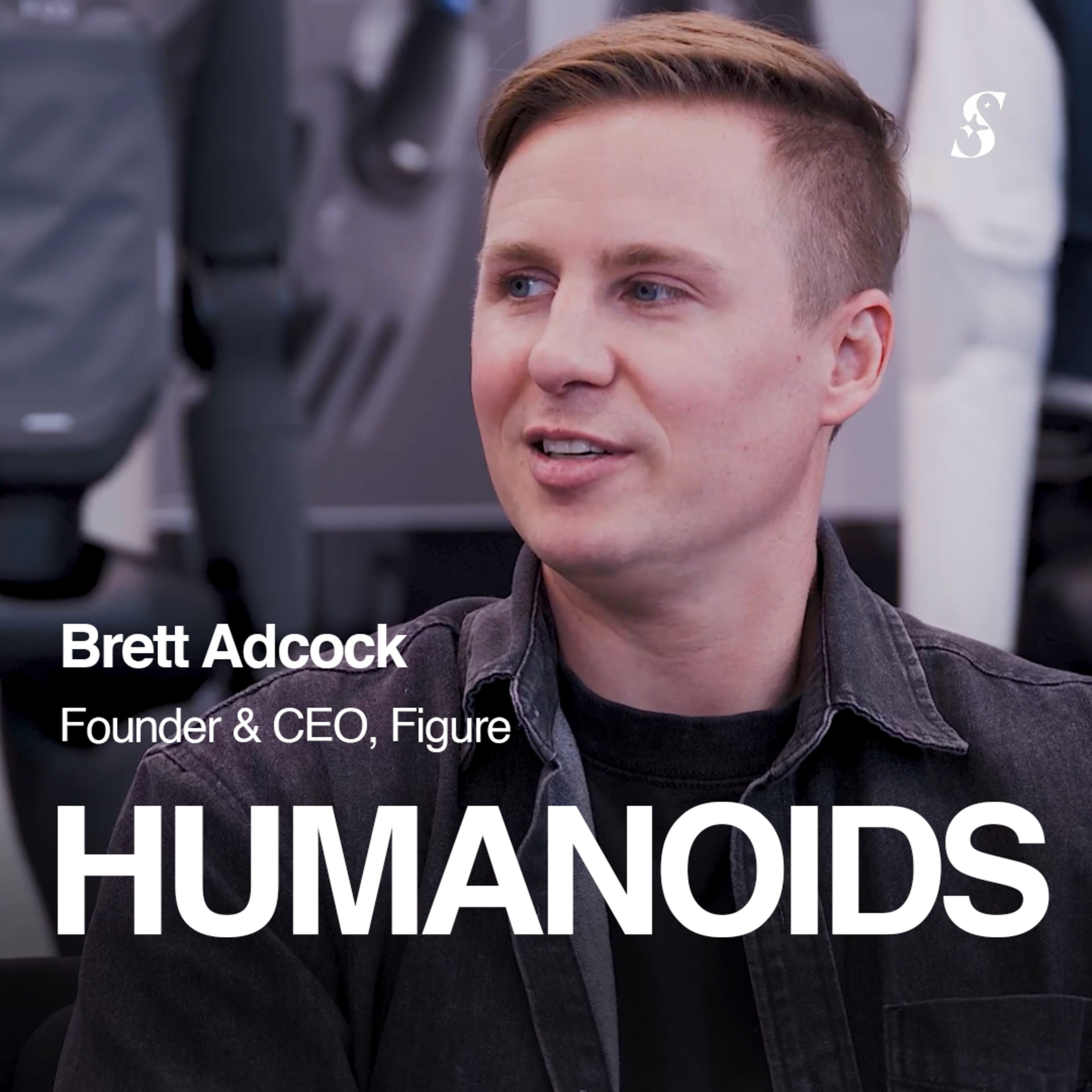
Figure designs nearly every component of its robots in-house, from motors to batteries. This extreme vertical integration, though costly upfront, prevents being at the mercy of third-party vendor timelines, code problems, or supply chain issues, enabling faster iteration and deeper system control.
Instead of focusing on on-chip memory bandwidth, Etched optimized for cluster-scale memory. They built a custom interconnect that cuts chip-to-chip latency by over 5x compared to GPUs. This allows the memory of the entire cluster to function as a single, low-latency pool, dramatically improving performance.