Get your free personalized podcast brief
We scan new podcasts and send you the top 5 insights daily.
When deciding whether to buy or build a component, Reflect Orbital uses a non-traditional factor: vendor friction. If a supplier is unresponsive or difficult, the pain of dealing with them becomes a strong motivator to bring that capability in-house.

Related Insights
Integrating capabilities like machining isn't just a cost-saver. For startups, it's a strategic advantage that grants direct control over the development lifecycle, enabling rapid iteration and faster time-to-market by eliminating vendor dependencies.

SpaceX measures the ratio of a part's market price to its raw materials' cost (the "idiot index"). A high ratio signals an opportunity for radical cost savings by building it in-house, dismantling supplier dependency and rethinking cost from first principles.

Citing the space industry's cost-plus contracting culture, Impulse Space adopted extreme vertical integration to gain control over cost, schedule, and quality. This move is a direct response to the unreliability of traditional aerospace vendors, who are often slow and overpriced.

For D2C fashion brands, the inability of third-party suppliers to quickly fulfill reorders on trending products is a key trigger for vertical integration. Larroudé's co-founder realized the cost of one large factory order was equivalent to buying the machinery himself, enabling them to meet demand in weeks, not months.

Underwater drone company Ulysses adopted heavy vertical integration after discovering the maritime industry's massive "Idiot Index" (the ratio of a part's cost to its raw material cost). Buying 20-year-old sensor technology at inflated prices was untenable, forcing them to build components like cameras and pressure vessels in-house to lower costs.

SpaceX's iconic vertical integration wasn't an initial strategic choice but a reaction to crisis. An early plan to outsource manufacturing was shattered when their fastest vendor abruptly closed. This forced them to insource talent and machinery out of necessity, creating the model they are known for today.

For hard tech startups, the decision to vertically integrate and build a factory shouldn't be automatic. It's a strategic imperative only when "cadence"—the speed of iteration and delivery—is the primary competitive advantage. In such cases, the in-house capability to move fast outweighs the high capital cost.

Zipline had to build its own components because the market only offered two extremes: cheap, unreliable consumer drone parts or prohibitively expensive military-grade systems. This "automotive grade" gap for reliable, cost-effective components forced them to vertically integrate to achieve their performance and cost goals.
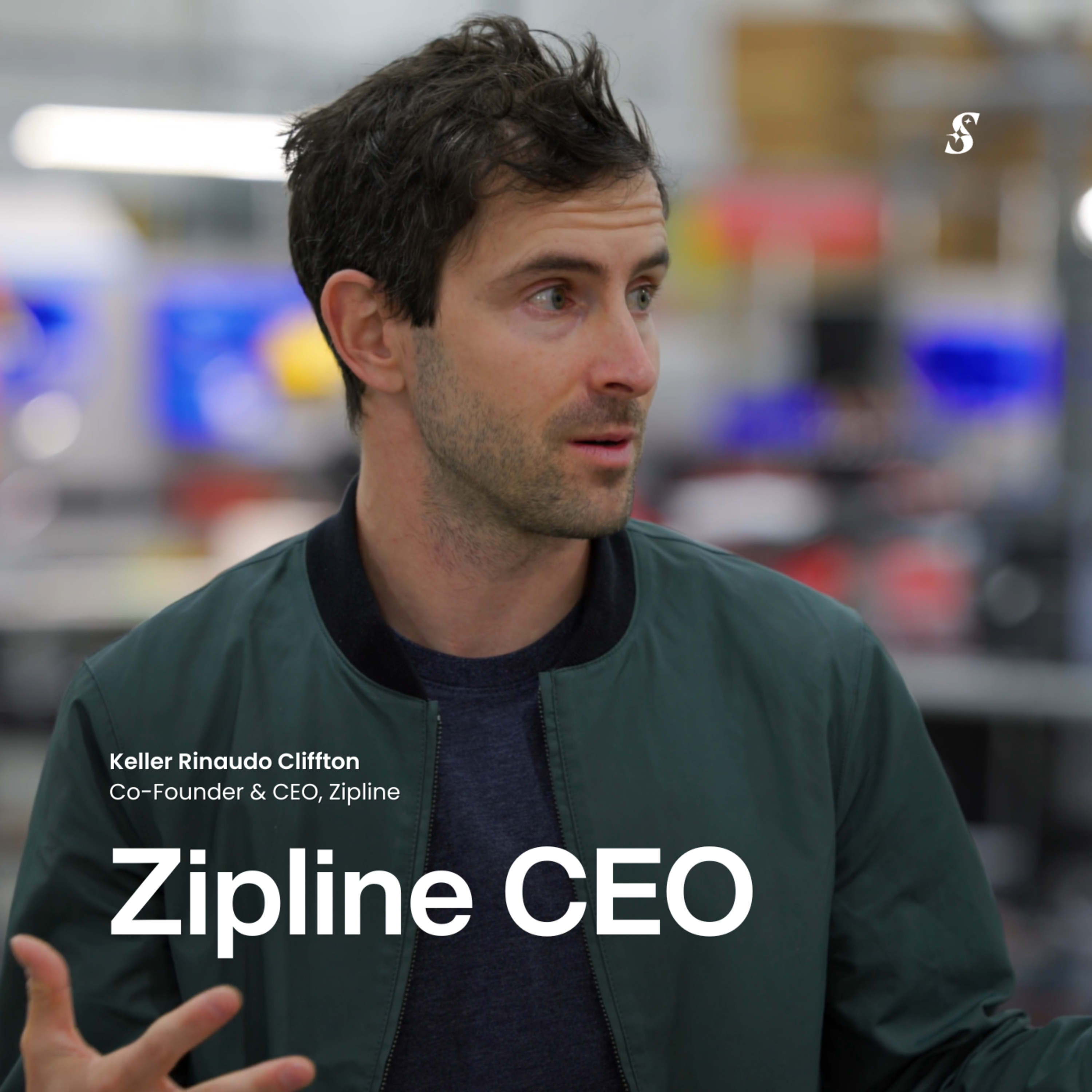
Figure designs nearly every component of its robots in-house, from motors to batteries. This extreme vertical integration, though costly upfront, prevents being at the mercy of third-party vendor timelines, code problems, or supply chain issues, enabling faster iteration and deeper system control.

For early-stage hard tech startups, the decision to vertically integrate isn't about margin improvement. It's a question of survival. You should only take on the immense risk and capital intensity of vertical integration if the company literally cannot exist without controlling that part of the supply chain or tech stack.
