Get your free personalized podcast brief
We scan new podcasts and send you the top 5 insights daily.
When sharing personal health struggles online, the audience defaults to scrutiny. Without presenting clear evidence of hardship, like doctor testimonies, your experience may be dismissed as mere complaining, especially if you appear outwardly healthy.

Related Insights
Younger generations aren't inherently weaker; they are reacting to an unprecedented volume of external voices from social media. Previous generations contended with a few dozen key influencers (family, teachers), not the thousands that now amplify the inner critic daily.

While increased awareness is positive, mental health terminology is often misused as a shield. People can use labels to deflect responsibility, expecting empathy without accountability, which complicates professional and personal development.

For individuals whose symptoms have been repeatedly dismissed, a serious diagnosis can feel like a relief. It provides validation that their suffering is real and offers a concrete problem to address, overriding the initial terror of the illness itself.

Complex environmental illnesses are often dismissed by doctors and friends as being "all in your head" because their symptoms are invisible and difficult to test for. This parallels the historical misdiagnosis of "hysteria" to label real but poorly understood medical conditions.
Fear of negative feedback prevents many professionals from posting content. Reframe this fear by understanding the psychology of trolls. People who leave hateful comments are often in pain themselves, and lashing out is their way of seeking temporary relief. Their comments are a reflection of them, not you.

Face-to-face contact provides a rich stream of non-verbal cues (tone, expression, body language) that our brains use to build empathy. Digital platforms strip these away, impairing our ability to connect, understand others' emotions, and potentially fostering undue hostility and aggression online.

The strong cultural expectation in America to find a positive outcome from adversity (a "redemption story") can be harmful. This "master narrative" can pressure those experiencing trauma, like a severe illness, to invent a positive spin, leading to feelings of failure and isolation if they cannot.

Forcing positivity on someone suffering invalidates their authentic feelings of fear, anger, and grief. This "toxic positivity" creates pressure to perform as a "graceful patient," preventing the honest conversations needed to process trauma and isolation. True support makes space for the "uglier aspects" of an experience.
As many as 80% of patients hide information from their doctors due to shame. This can have life-threatening consequences, with documented cases of patients nearly undergoing unnecessary appendectomies to avoid admitting drug use or risking fatal bleeding rather than disclosing the use of weight-loss supplements.
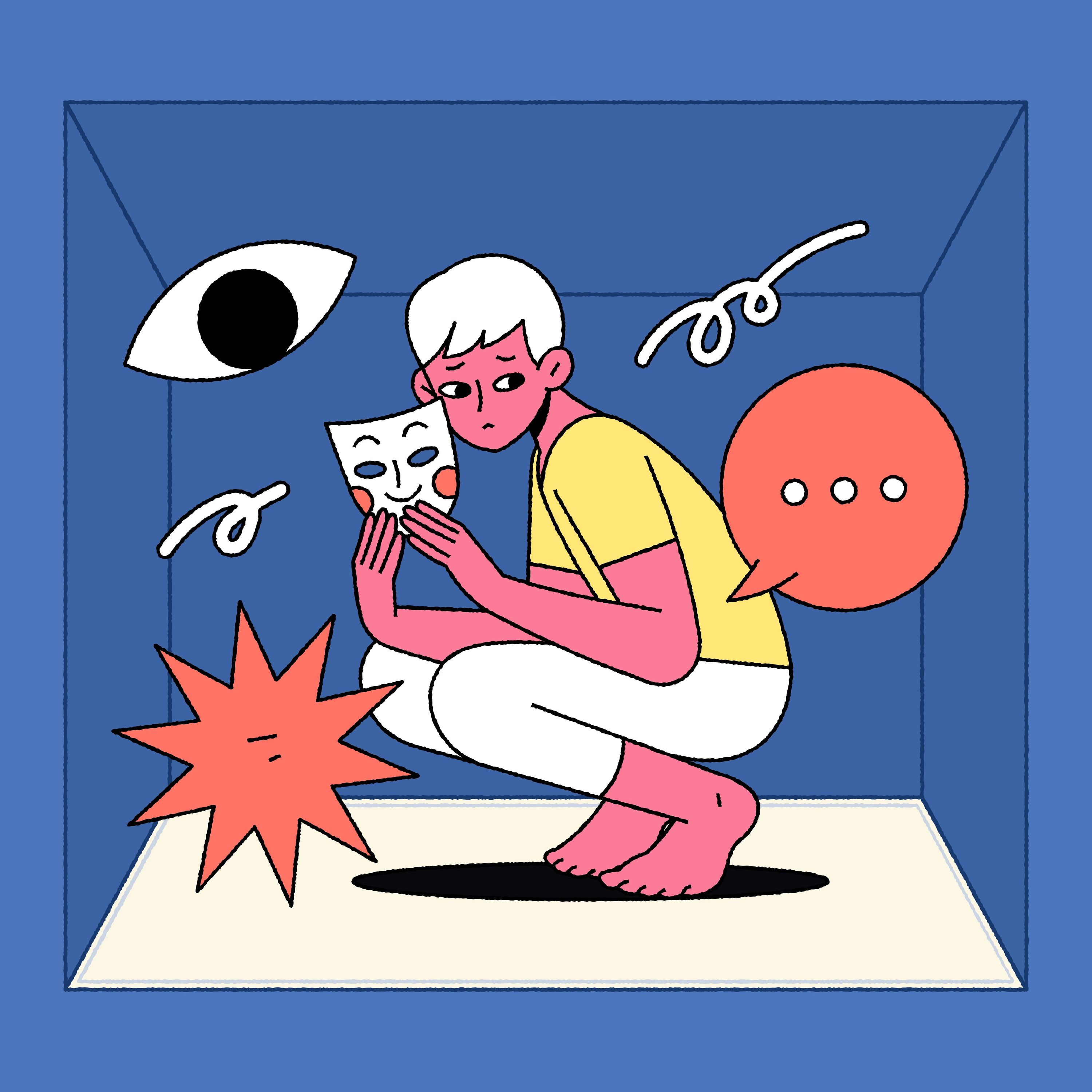
Because secrets are inherently invisible, we only see our own. This creates a psychological bias where we falsely assume we are the only ones harboring shameful thoughts or experiences. This isolation amplifies the burden of our secrets, a feeling that is often exacerbated by the curated perfection seen on social media.