Get your free personalized podcast brief
We scan new podcasts and send you the top 5 insights daily.
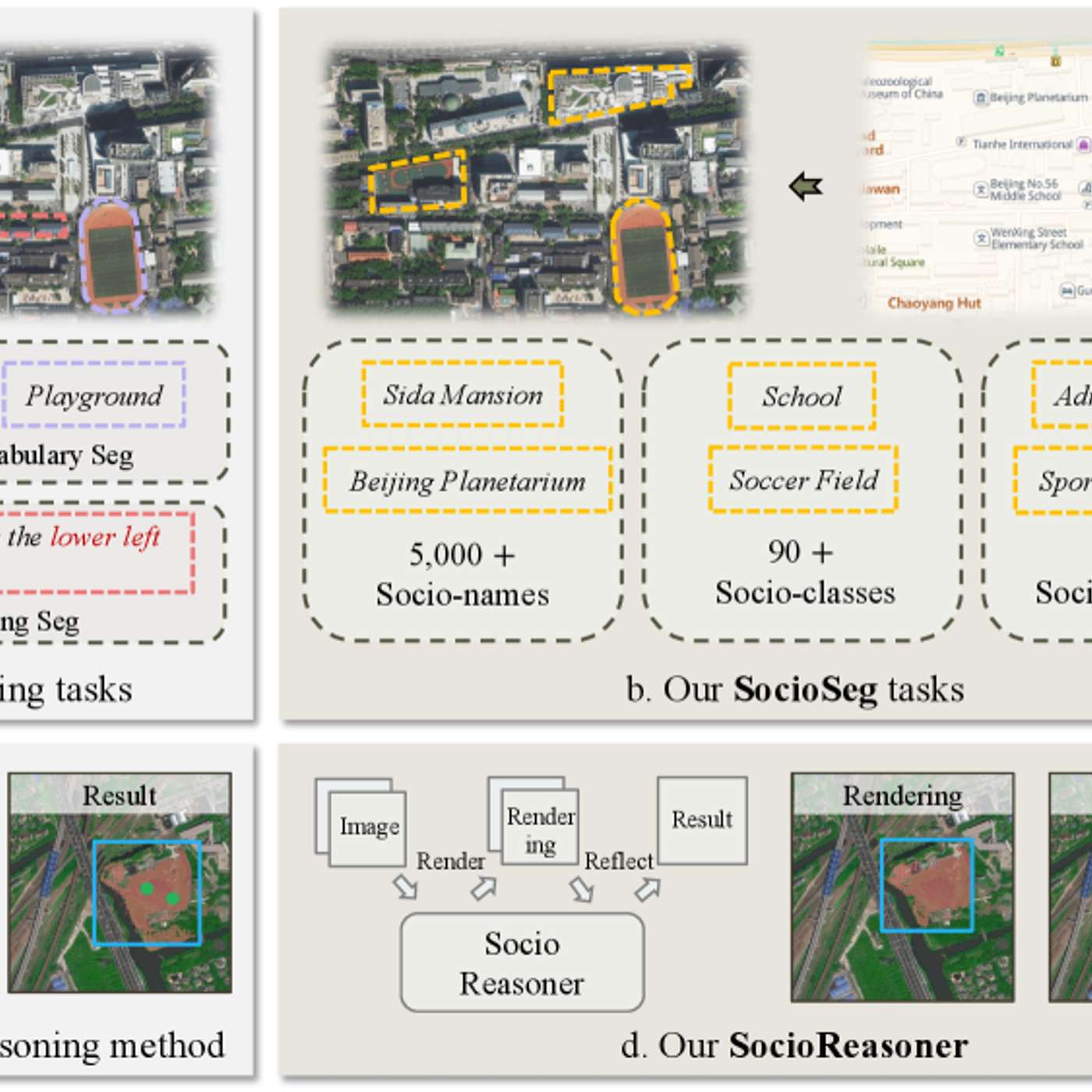
The AI system is fine-tuned using reinforcement learning (RL) instead of standard backpropagation. This allows it to learn from a simple reward signal (correct segmentation), cleverly bypassing the problem that key parts of its process are not mathematically differentiable.
Related Insights
DeepMind's core breakthrough was treating AI like a child, not a machine. Instead of programming complex strategies, they taught it to master tasks through simple games like Pong, giving it only one rule ('score go up is good') and allowing it to learn for itself through trial and error.

Modern LLMs use a simple form of reinforcement learning that directly rewards successful outcomes. This contrasts with more sophisticated methods, like those in AlphaGo or the brain, which use "value functions" to estimate long-term consequences. It's a mystery why the simpler approach is so effective.

Pre-training on internet text data is hitting a wall. The next major advancements will come from reinforcement learning (RL), where models learn by interacting with simulated environments (like games or fake e-commerce sites). This post-training phase is in its infancy but will soon consume the majority of compute.
![Dylan Patel - Inside the Trillion-Dollar AI Buildout - [Invest Like the Best, EP.442] thumbnail](https://megaphone.imgix.net/podcasts/799253cc-9de9-11f0-8661-ab7b8e3cb4c1/image/d41d3a6f422989dc957ef10da7ad4551.jpg?ixlib=rails-4.3.1&max-w=3000&max-h=3000&fit=crop&auto=format,compress)
Training AI agents to execute multi-step business workflows demands a new data paradigm. Companies create reinforcement learning (RL) environments—mini world models of business processes—where agents learn by attempting tasks, a more advanced method than simple prompt-completion training (SFT/RLHF).

AI labs like Anthropic find that mid-tier models can be trained with reinforcement learning to outperform their largest, most expensive models in just a few months, accelerating the pace of capability improvements.
Beyond supervised fine-tuning (SFT) and human feedback (RLHF), reinforcement learning (RL) in simulated environments is the next evolution. These "playgrounds" teach models to handle messy, multi-step, real-world tasks where current models often fail catastrophically.

Reinforcement Learning with Human Feedback (RLHF) is a popular term, but it's just one method. The core concept is reinforcing desired model behavior using various signals. These can include AI feedback (RLAIF), where another AI judges the output, or verifiable rewards, like checking if a model's answer to a math problem is correct.

The transition from supervised learning (copying internet text) to reinforcement learning (rewarding a model for achieving a goal) marks a fundamental breakthrough. This method, used in Anthropic's Opus 3 model, allows AI to develop novel problem-solving capabilities beyond simple data emulation.

As reinforcement learning (RL) techniques mature, the core challenge shifts from the algorithm to the problem definition. The competitive moat for AI companies will be their ability to create high-fidelity environments and benchmarks that accurately represent complex, real-world tasks, effectively teaching the AI what matters.

On-policy reinforcement learning, where a model learns from its own generated actions and their consequences, is analogous to how humans learn from direct experience and mistakes. This contrasts with off-policy methods like supervised fine-tuning (SFT), which resemble simply imitating others' successful paths.
