Get your free personalized podcast brief
We scan new podcasts and send you the top 5 insights daily.
Training AI agents to execute multi-step business workflows demands a new data paradigm. Companies create reinforcement learning (RL) environments—mini world models of business processes—where agents learn by attempting tasks, a more advanced method than simple prompt-completion training (SFT/RLHF).

Related Insights
Algorithms like GRPO are powerful but require parallel rollouts in a reproducible environment. Building and maintaining these high-fidelity sandboxes, complete with realistic data and failure modes, is the hardest part of implementing RL today and a significant barrier for most companies.

To ensure AI reliability, Salesforce builds environments that mimic enterprise CRM workflows, not game worlds. They use synthetic data and introduce corner cases like background noise, accents, or conflicting user requests to find and fix agent failure points before deployment, closing the "reality gap."

Treating AI evaluation like a final exam is a mistake. For critical enterprise systems, evaluations should be embedded at every step of an agent's workflow (e.g., after planning, before action). This is akin to unit testing in classic software development and is essential for building trustworthy, production-ready agents.
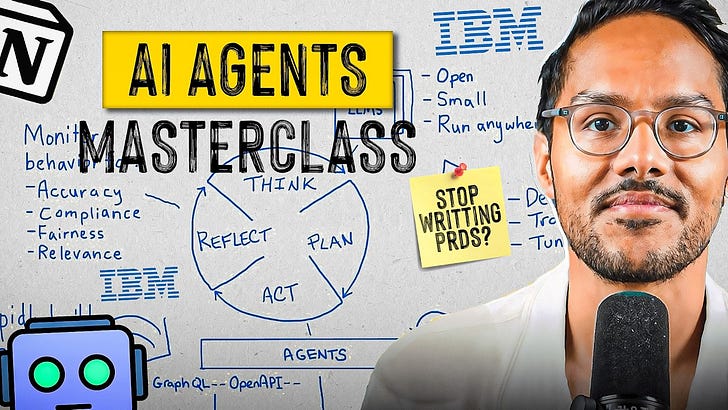
Beyond supervised fine-tuning (SFT) and human feedback (RLHF), reinforcement learning (RL) in simulated environments is the next evolution. These "playgrounds" teach models to handle messy, multi-step, real-world tasks where current models often fail catastrophically.

Reinforcement Learning with Human Feedback (RLHF) is a popular term, but it's just one method. The core concept is reinforcing desired model behavior using various signals. These can include AI feedback (RLAIF), where another AI judges the output, or verifiable rewards, like checking if a model's answer to a math problem is correct.

The early focus on crafting the perfect prompt is obsolete. Sophisticated AI interaction is now about 'context engineering': architecting the entire environment by providing models with the right tools, data, and retrieval mechanisms to guide their reasoning process effectively.

Companies like OpenAI and Anthropic are spending billions creating simulated enterprise apps (RL gyms) where human experts train AI models on complex tasks. This has created a new, rapidly growing "AI trainer" job category, but its ultimate purpose is to automate those same expert roles.
A niche, services-heavy market has emerged where startups build bespoke, high-fidelity simulation environments for large AI labs. These deals command at least seven-figure price tags and are critical for training next-generation agentic models, despite the customer base being only a few major labs.
Instead of focusing on foundational models, software engineers should target the creation of AI "agents." These are automated workflows designed to handle specific, repetitive business chores within departments like customer support, sales, or HR. This is where companies see immediate value and are willing to invest.

As reinforcement learning (RL) techniques mature, the core challenge shifts from the algorithm to the problem definition. The competitive moat for AI companies will be their ability to create high-fidelity environments and benchmarks that accurately represent complex, real-world tasks, effectively teaching the AI what matters.