Get your free personalized podcast brief
We scan new podcasts and send you the top 5 insights daily.
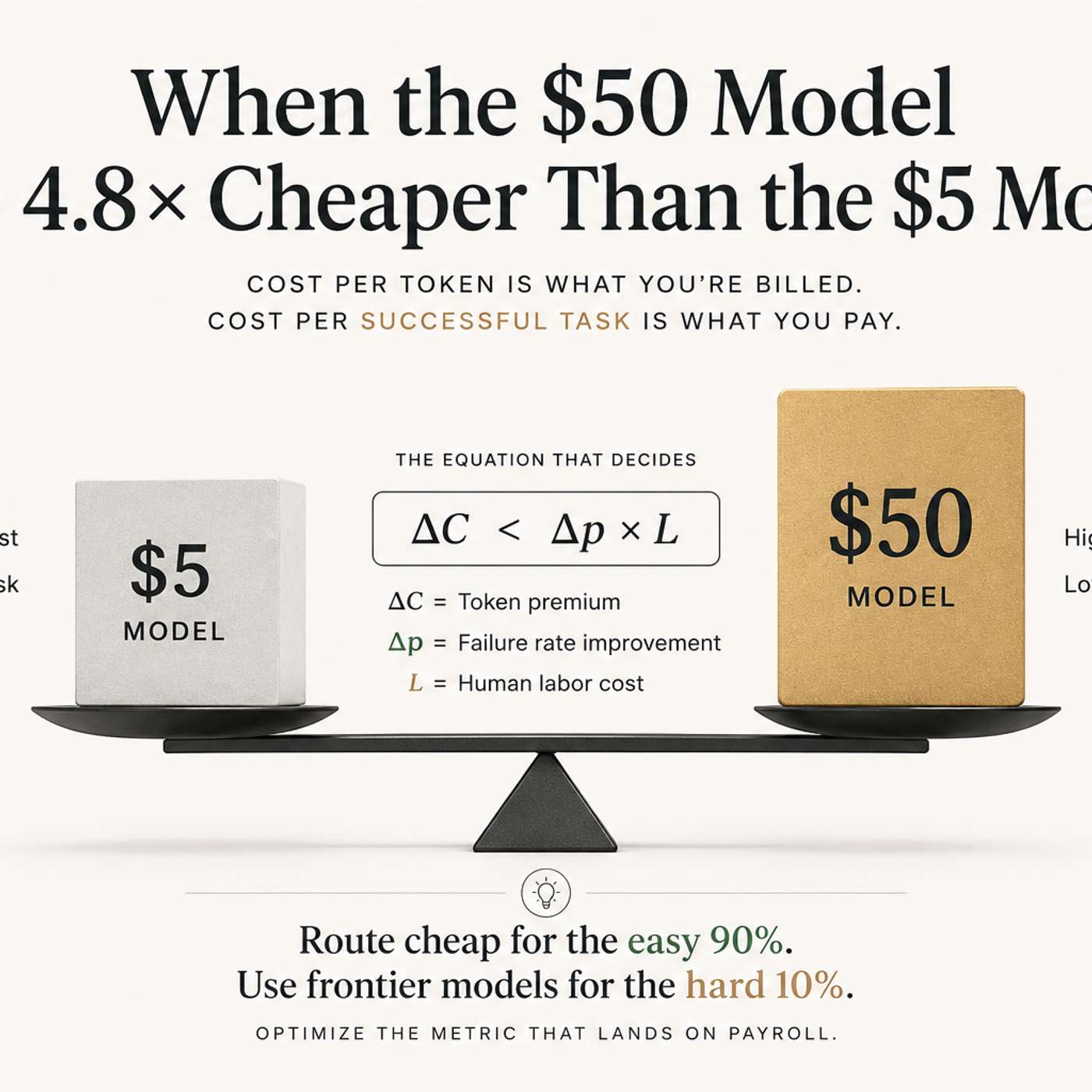
Structure your AI development workflow by matching tools to task complexity. Use powerful, expensive models for core work, but switch to cheaper, faster, or free models for smaller tasks and quick fixes to optimize both cost and development speed.

Related Insights
Don't use your most powerful and expensive AI model for every task. A crucial skill is model triage: using cheaper models for simple, routine tasks like monitoring and scheduling, while saving premium models for complex reasoning, judgment, and creative work.

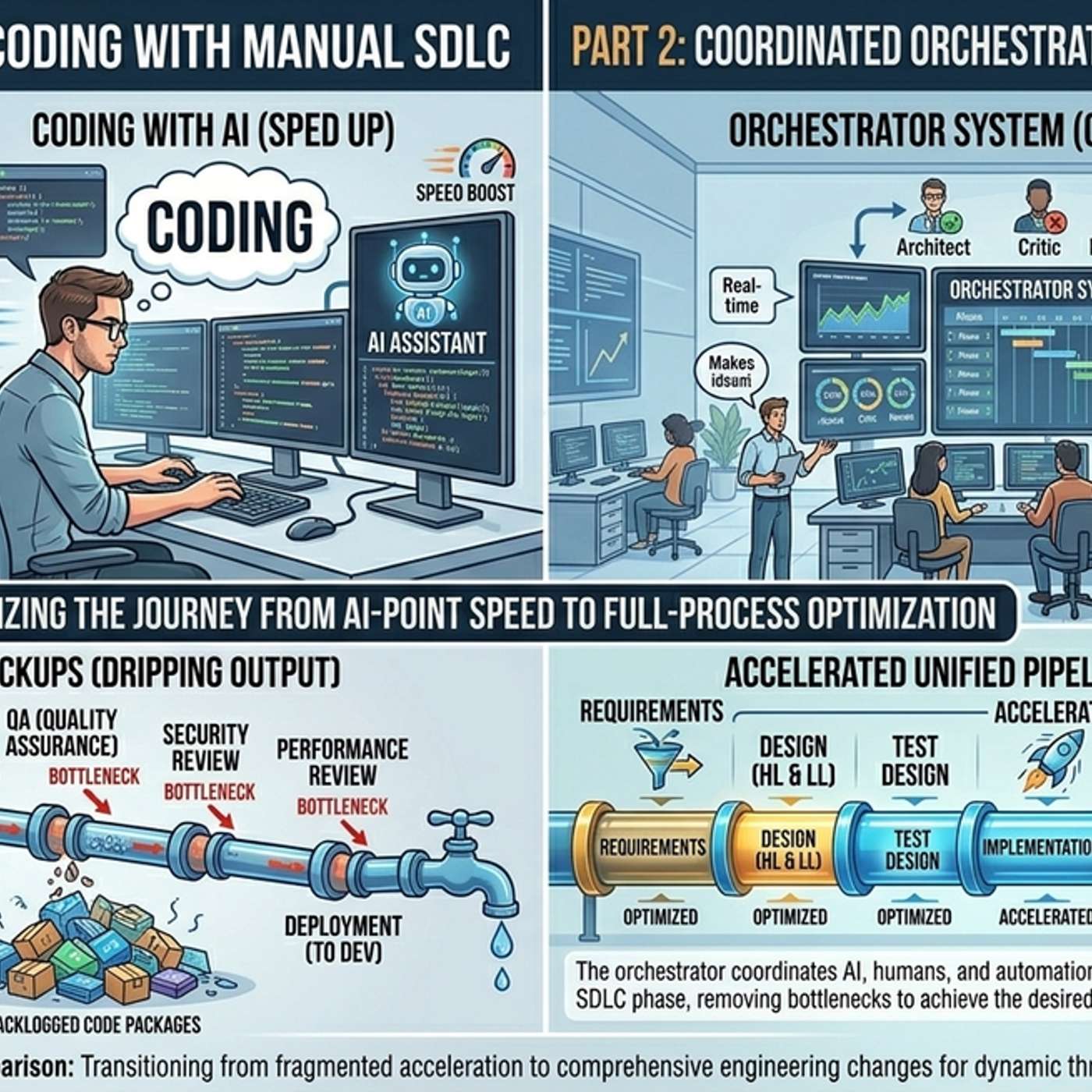
Breaking down the software development lifecycle into small, well-defined subtasks is not just for improving AI success rates. It creates a significant cost-saving opportunity by allowing teams to use cheaper, specialized AI models for most steps, reserving expensive frontier models only for high-complexity tasks like architectural design.
Don't use the most powerful and expensive AI model for every task. Use cheaper, faster models like Anthropic's Haiku for high-volume, simple jobs and reserve powerful models like Opus for complex reasoning. This strategy can reduce costs by over 99%, turning a potential $150 task into a $1.50 one.

The era of using the most powerful AI model for every task is ending. Companies are now focused on the trade-off between quality, cost, and latency. The key question is no longer "Which model is best?" but "Which model is good enough for this task at the lowest price point?"

To manage AI costs effectively, companies should avoid simply capping token usage, as this kills innovation. A better strategy is to build intelligent routers that assess a task's complexity and dynamically route it to the most appropriate model—powerful models for hard tasks, cheaper ones for simple tasks.

The critical new AI skill isn't just using the most powerful model, but discerning when a free, private local model is sufficient versus when an expensive cloud model is necessary. This model-to-task matching instinct separates amateurs from pros by optimizing for cost, speed, and privacy.

The smartest 'AI-pilled' companies adopt a two-tiered model strategy. They use expensive, frontier models for internal, high-leverage tasks like creating new knowledge and optimizing processes. However, they use cheaper, open-weight models in the 'bill of materials' for the customer-facing product to manage costs effectively.
State-of-the-art models like Claude Opus are often overkill and unnecessarily expensive for simple, routine tasks like summarizing emails. Using cheaper, less powerful models for these straightforward automations provides significant cost savings without sacrificing performance where it's not needed.
To optimize AI costs in development, use powerful, expensive models for creative and strategic tasks like architecture and research. Once a solid plan is established, delegate the step-by-step code execution to less powerful, more affordable models that excel at following instructions.

An optimal AI architecture routes tasks to different models based on complexity and risk. Simple, low-stakes work like data extraction should go to the cheapest models. Ambiguous, high-stakes work like system design warrants expensive frontier models, where preventing one engineering mistake justifies the premium token cost.