Get your free personalized podcast brief
We scan new podcasts and send you the top 5 insights daily.
The critical new AI skill isn't just using the most powerful model, but discerning when a free, private local model is sufficient versus when an expensive cloud model is necessary. This model-to-task matching instinct separates amateurs from pros by optimizing for cost, speed, and privacy.

Related Insights
Don't use your most powerful and expensive AI model for every task. A crucial skill is model triage: using cheaper models for simple, routine tasks like monitoring and scheduling, while saving premium models for complex reasoning, judgment, and creative work.

A common beginner mistake is judging AI's capabilities based on the default free model in a tool like ChatGPT. Power users get better results by using an average of 3.5 different models, selecting the best one for each specific task, such as writing, data analysis, or image generation.
The goal of testing multiple AI models isn't to crown a universal winner, but to build your own subjective "rule of thumb" for which model works best for the specific tasks you frequently perform. This personal topography is more valuable than any generic benchmark.
A 'GenAI solves everything' mindset is flawed. High-latency models are unsuitable for real-time operational needs, like optimizing a warehouse worker's scanning path, which requires millisecond responses. The key is to apply the right tool—be it an optimizer, machine learning, or GenAI—to the specific business problem.

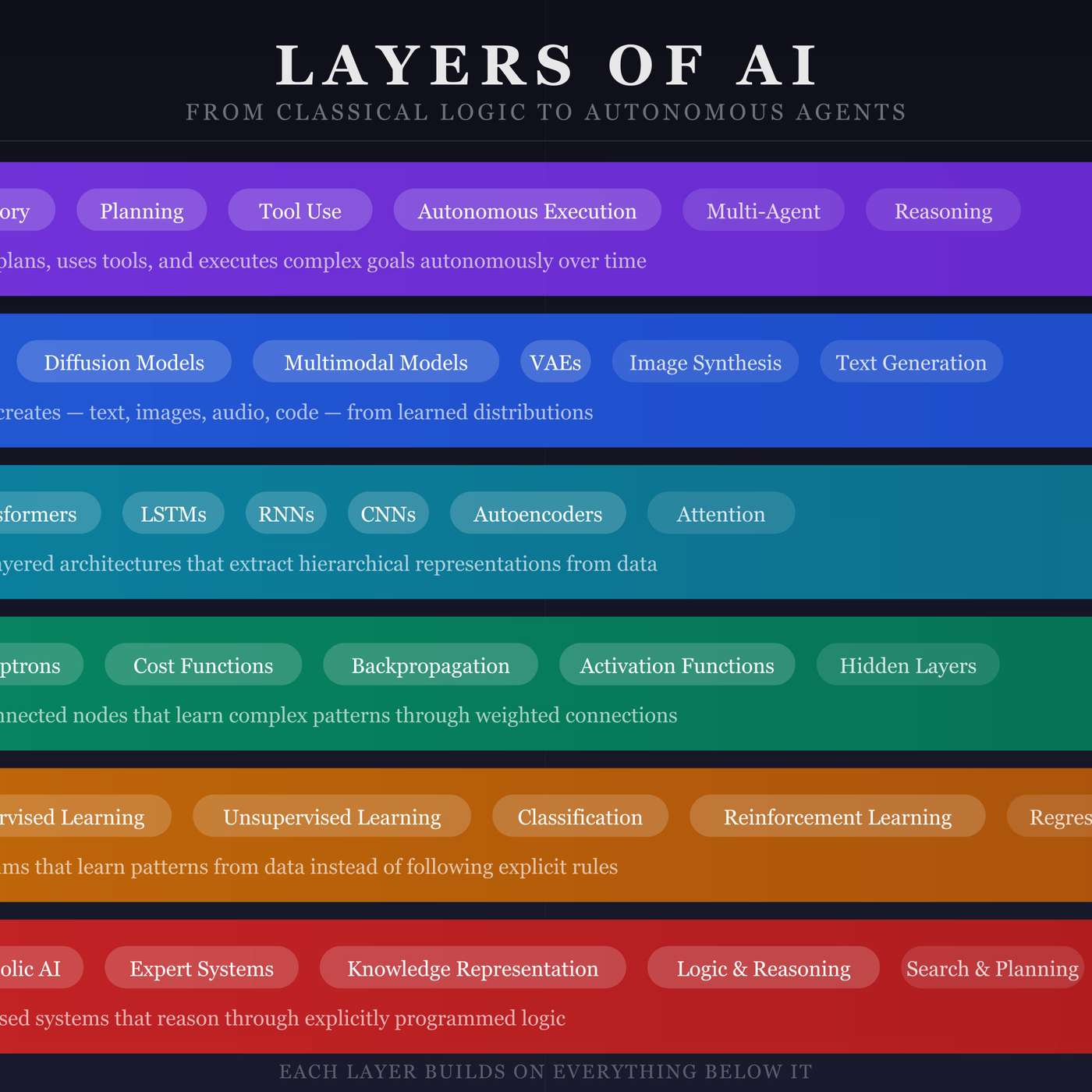
Not every business problem requires an LLM. Using a simple classifier (Layer 2) for email sorting or a deep learning model (Layer 4) for recommendations is more efficient than defaulting to the latest generative AI (Layer 5/6). This layered thinking saves costs, reduces complexity, and builds better products.
The "agentic revolution" will be powered by small, specialized models. Businesses and public sector agencies don't need a cloud-based AI that can do 1,000 tasks; they need an on-premise model fine-tuned for 10-20 specific use cases, driven by cost, privacy, and control requirements.

Relying solely on premium models like Claude Opus can lead to unsustainable API costs ($1M/year projected). The solution is a hybrid approach: use powerful cloud models for complex tasks and cheaper, locally-hosted open-source models for routine operations.

Companies are building intelligent systems that analyze a user's prompt and automatically route it to the most cost-effective model that can handle the task. This avoids using expensive frontier models for simple requests, with some companies like Coinbase successfully keeping costs flat despite exponential usage growth.

As AI costs rise, using one powerful frontier model for every task is no longer financially viable. The solution is to create a dedicated "Model Sommelier" role responsible for curating a portfolio of models, continuously testing and selecting the most cost-effective option for each specific business use case.
The metric for evaluating AI models is shifting. Early on, maximum quality was paramount for adoption. Now, sophisticated users are focusing on efficiency, evaluating models based on "quality per dollar spent," making cost-effectiveness a key competitive advantage.
