Get your free personalized podcast brief
We scan new podcasts and send you the top 5 insights daily.
State-of-the-art models like Claude Opus are often overkill and unnecessarily expensive for simple, routine tasks like summarizing emails. Using cheaper, less powerful models for these straightforward automations provides significant cost savings without sacrificing performance where it's not needed.

Related Insights
Don't use your most powerful and expensive AI model for every task. A crucial skill is model triage: using cheaper models for simple, routine tasks like monitoring and scheduling, while saving premium models for complex reasoning, judgment, and creative work.

An effective cost-saving strategy for agentic workflows is to use a powerful model like Claude Opus to perform a complex task once and generate a detailed 'skill.' This skill can then be reliably executed by a much cheaper and faster model like Sonnet for subsequent use.

For most enterprise tasks, massive frontier models are overkill—a "bazooka to kill a fly." Smaller, domain-specific models are often more accurate for targeted use cases, significantly cheaper to run, and more secure. They focus on being the "best-in-class employee" for a specific task, not a generalist.

PMs often default to the most powerful, expensive models. However, comprehensive evaluations can prove that a significantly cheaper or smaller model can achieve the desired quality for a specific task, drastically reducing operational costs. The evals provide the confidence to make this trade-off.

Relying solely on premium models like Claude Opus can lead to unsustainable API costs ($1M/year projected). The solution is a hybrid approach: use powerful cloud models for complex tasks and cheaper, locally-hosted open-source models for routine operations.
To optimize costs, users configure powerful models like Claude Opus as the 'brain' to strategize and delegate execution tasks (e.g. coding) to cheaper, specialized models like ChatGPT's Codec, treating them as muscles.
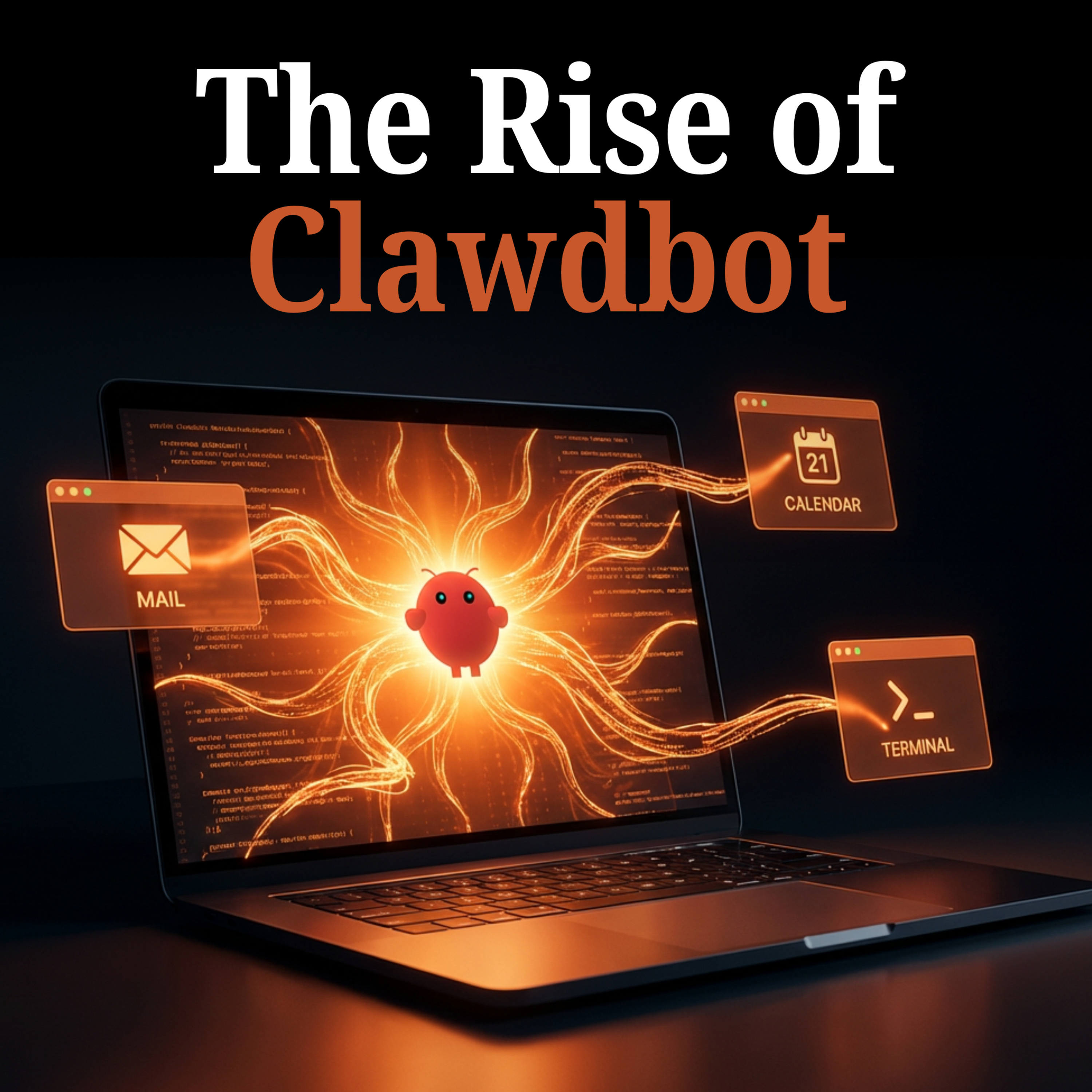
As enterprises scale AI, the high inference costs of frontier models become prohibitive. The strategic trend is to use large models for novel tasks, then shift 90% of recurring, common workloads to specialized, cost-effective Small Language Models (SLMs). This architectural shift dramatically improves both speed and cost.

An emerging rule from enterprise deployments is to use small, fine-tuned models for well-defined, domain-specific tasks where they excel. Large models should be reserved for generic, open-ended applications with unknown query types where their broad knowledge base is necessary. This hybrid approach optimizes performance and cost.

A single AI agent can run multiple "sub-bots" for different tasks. To optimize performance and cost, assign different underlying models to each. Use a powerful model like Claude Opus for complex tasks, and a cheaper model like Sonnet for routine functions.

As AI costs rise, using one powerful frontier model for every task is no longer financially viable. The solution is to create a dedicated "Model Sommelier" role responsible for curating a portfolio of models, continuously testing and selecting the most cost-effective option for each specific business use case.