Get your free personalized podcast brief
We scan new podcasts and send you the top 5 insights daily.
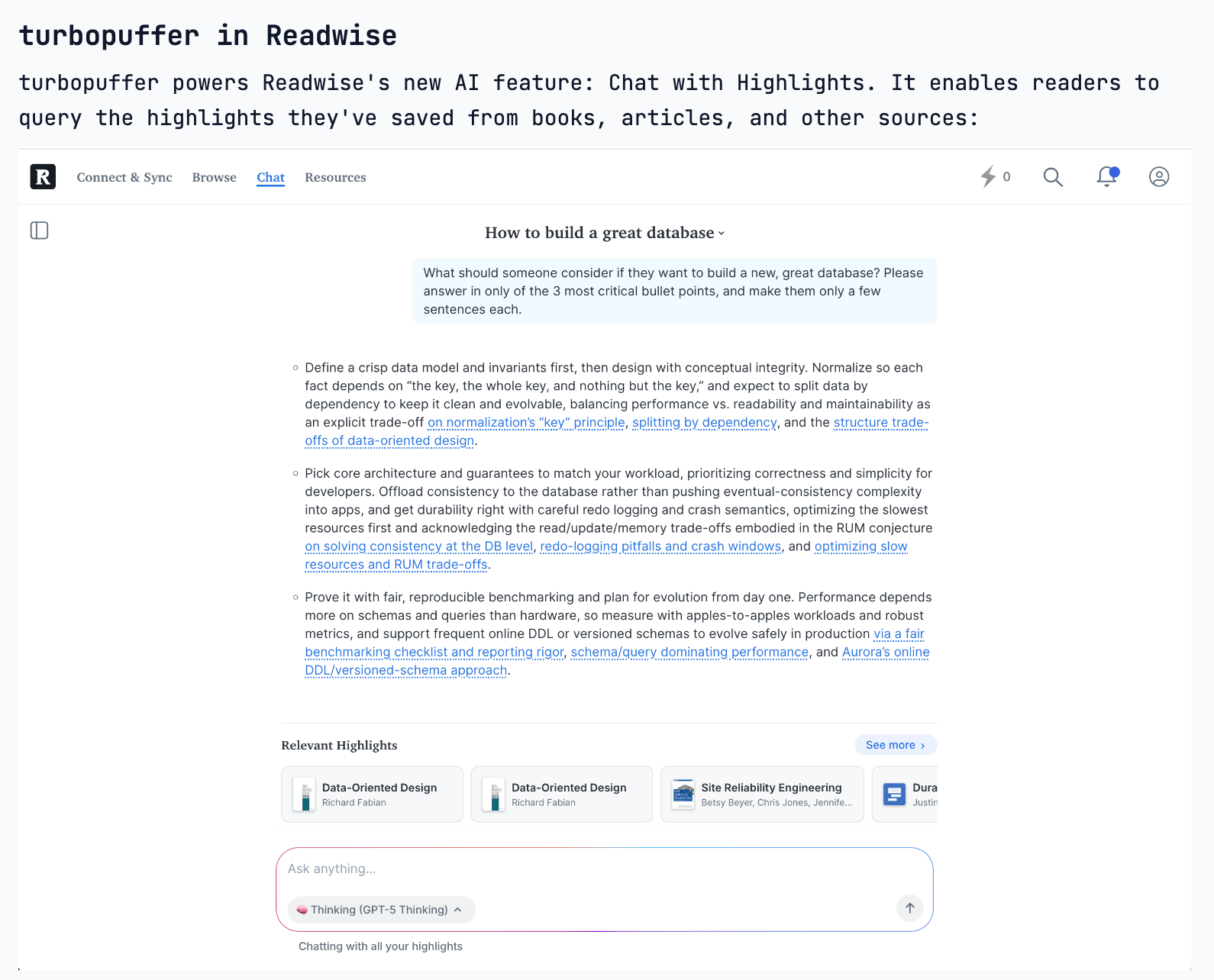
M0's retrieval system runs four parallel signals: vector and full-text search across both the title and description of knowledge records. This hybrid approach captures semantic similarity for paraphrased queries (vector search) and exact matches for specific terms like API names (full-text), resulting in highly relevant, compact results.

Related Insights
To move beyond keyword search in their media archive, Tim McLear's system generates two vector embeddings for each asset: one from the image thumbnail and another from its AI-generated text description. Fusing these enables a powerful semantic search that understands visual similarity and conceptual relationships, not just exact text matches.
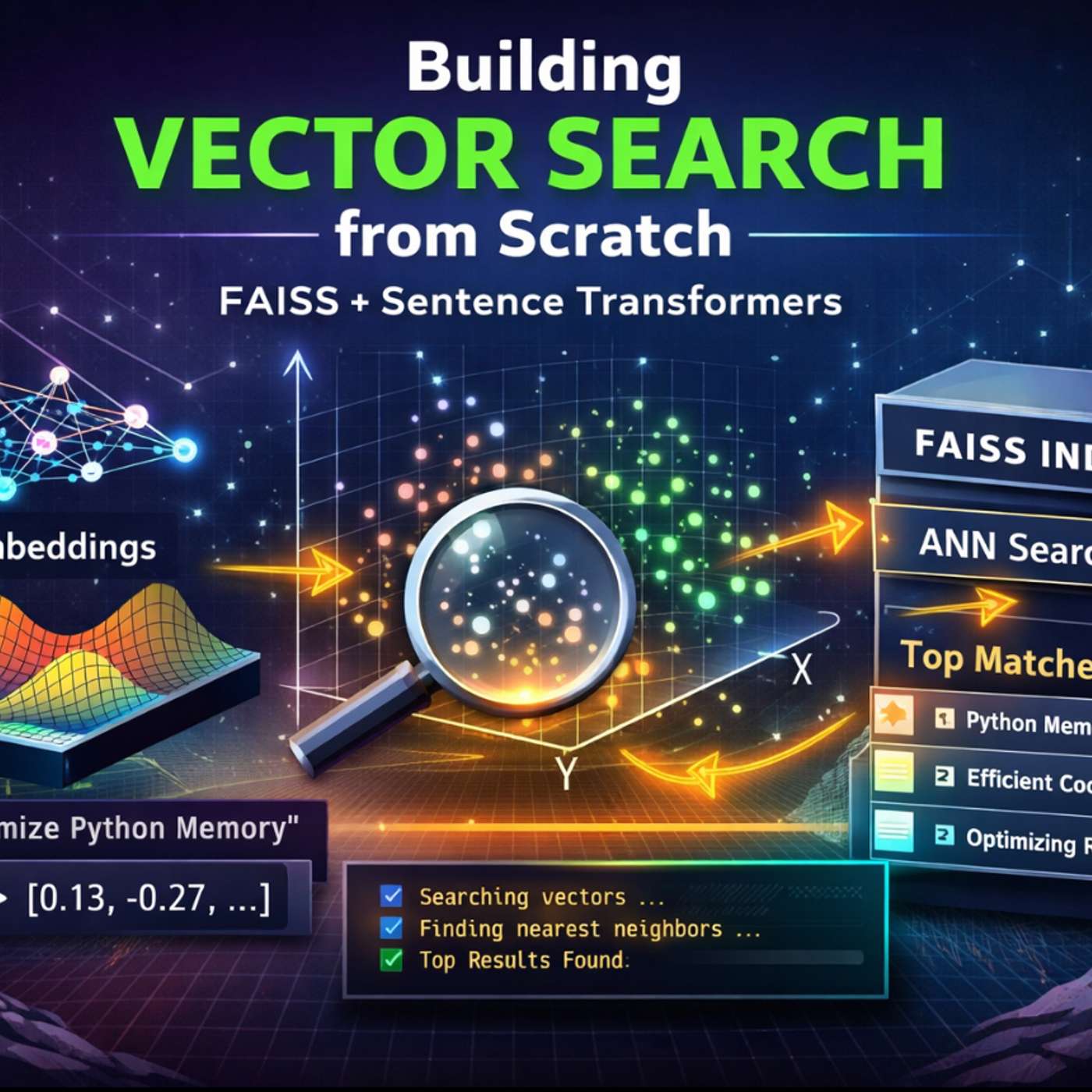
Managed vector databases are convenient, but building a search engine from scratch using a library like FAISS provides a deeper understanding of index types, latency tuning, and memory trade-offs, which is crucial for optimizing AI systems.
Unlike humans who type 2-3 words, LLMs generate long, sentence-like queries (e.g., eight words or more) to gather comprehensive context. This shift in user behavior from human to AI requires search engines to be optimized for these detailed, descriptive inputs.

Retrieval Augmented Generation (RAG) uses vector search to find relevant documents based on a user's query. This factual context is then fed to a Large Language Model (LLM), forcing it to generate responses based on provided data, which significantly reduces the risk of "hallucinations."
Teams often agonize over which vector database to use for their Retrieval-Augmented Generation (RAG) system. However, the most significant performance gains come from superior data preparation, such as optimizing chunking strategies, adding contextual metadata, and rewriting documents into a Q&A format.
Vector search excels at semantic meaning but fails on precise keywords like product SKUs. Effective enterprise search requires a hybrid system combining the strengths of lexical search (e.g., BM25) for keywords and vector search for concepts to serve all user needs accurately.

Relying solely on semantic clustering (RAG) is inaccurate for complex domains like code. Blitzy combines a deep, relational knowledge graph with semantic understanding to accurately retrieve context, using the semantic match as a map to the source of truth rather than the truth itself.

M0 organizes agent knowledge into two distinct layers: a high-level "Experience" summary outlining strategy and cautions, and a detailed "Skill" layer with structured operational steps. This allows an agent to load the compact strategy first and only retrieve operational details when necessary, keeping the active prompt lean and efficient.
The nature of Retrieval-Augmented Generation (RAG) is evolving. Instead of a single search to populate an initial context window, AI agents are now performing numerous concurrent queries in a single turn. This allows them to explore diverse information paths simultaneously, driving new database requirements.
While complex RAG pipelines with vector stores are popular, leading code agents like Anthropic's Claude Code demonstrate that simple "agentic retrieval" using basic file tools can be superior. Providing an agent a manifest file (like `lm.txt`) and a tool to fetch files can outperform pre-indexed semantic search.
