Get your free personalized podcast brief
We scan new podcasts and send you the top 5 insights daily.
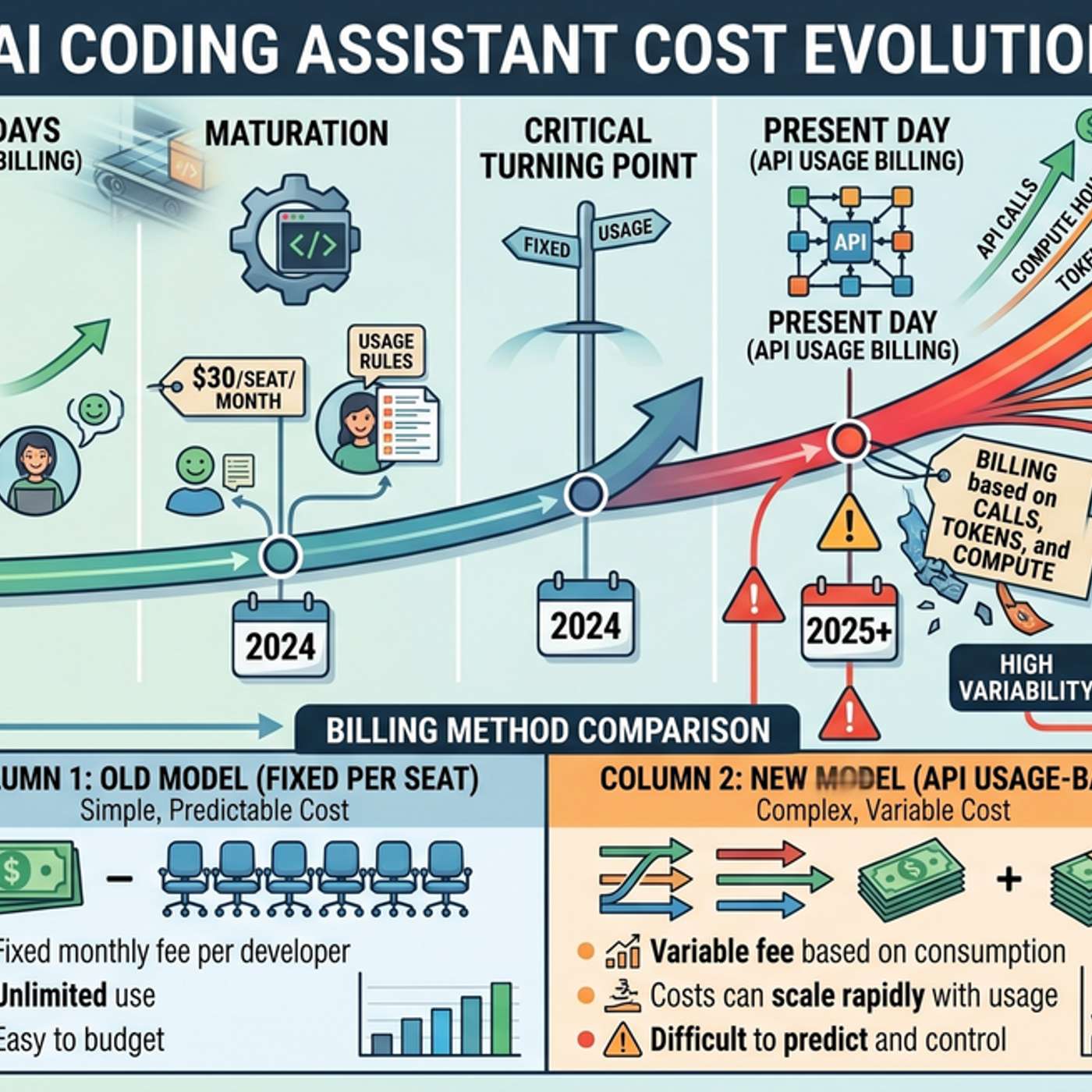
Organizations with structured SDLCs can adapt to consumption-based AI pricing because they can attribute costs to specific work items and make deliberate trade-offs, like routing simple tasks to cheaper models. Teams with ad-hoc workflows will struggle, as unattributable costs spiral and quality becomes inconsistent.
Related Insights
Faced with rising costs from proprietary labs, sophisticated enterprise clients are building internal evaluation and routing systems. This allows them to use cheaper, open-source models for less complex tasks, optimizing for both cost and performance.

Don't use your most powerful and expensive AI model for every task. A crucial skill is model triage: using cheaper models for simple, routine tasks like monitoring and scheduling, while saving premium models for complex reasoning, judgment, and creative work.

Contrary to the belief that enterprises have unlimited budgets, they are focused on the ROI of their AI spend. As agentic workflows cause token bills to skyrocket, orchestration tools that intelligently route queries to the most cost-effective model for a given task are becoming essential infrastructure.

The move away from seat-based licenses to consumption models for AI tools creates a new operational burden. Companies must now build governance models and teams to track usage at an individual employee level—like 'Bob in accounting'—to control unpredictable costs.

To optimize AI costs in development, use powerful, expensive models for creative and strategic tasks like architecture and research. Once a solid plan is established, delegate the step-by-step code execution to less powerful, more affordable models that excel at following instructions.

AI is moving beyond enhancing worker productivity to completing entire projects, like drug discovery or engineering designs. This shift means software will be priced like a services business, based on the value of the outcome delivered, not the number of users with access.
As AI costs rise, using one powerful frontier model for every task is no longer financially viable. The solution is to create a dedicated "Model Sommelier" role responsible for curating a portfolio of models, continuously testing and selecting the most cost-effective option for each specific business use case.
Just as uncontrolled cloud spending in the 2010s spawned the FinOps field, the shift to consumption-based AI pricing will necessitate a similar discipline. This involves attributing costs to specific workloads, setting granular budgets, and providing real-time visibility to prevent budget overruns and measure ROI accurately.
In the age of AI, software is shifting from a tool that assists humans to an agent that completes tasks. The pricing model should reflect this. Instead of a subscription for access (a license), charge for the value created when the AI successfully achieves a business outcome.

The shift to usage-based pricing for AI tools isn't just a revenue growth strategy. Enterprise vendors are adopting it to offset their own escalating cloud infrastructure costs, which scale directly with customer usage, thereby protecting their profit margins from their own suppliers.