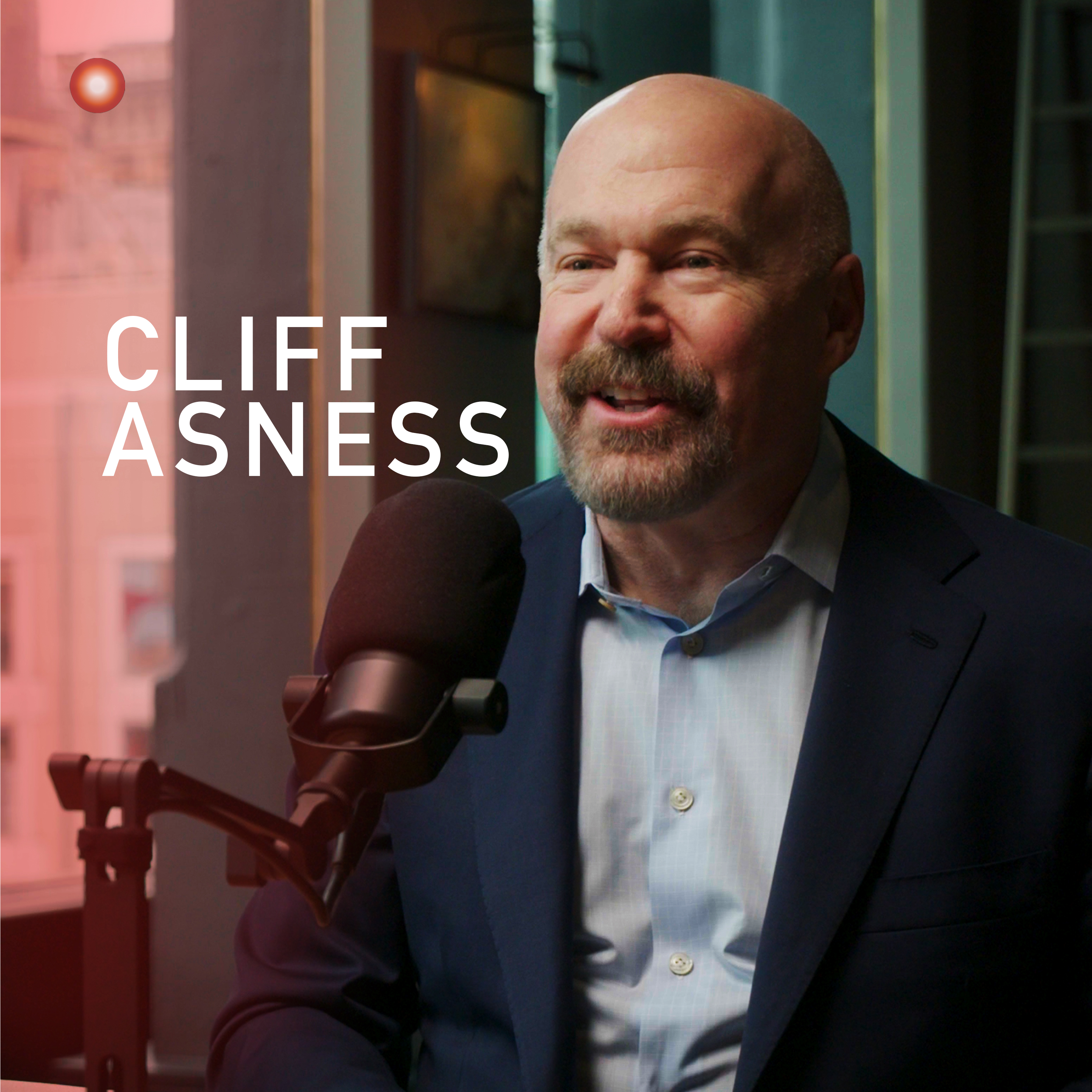
Despite rational strategies, top quant Cliff Asness confesses to feeling the emotional sting of losses far more intensely than the pleasure of gains, a classic example of prospect theory in action. This human element persists even at the highest levels of quantitative finance.
AQR's public communication and conviction intensify during downturns caused by market mania, like valuation spreads blowing out. However, if losses stem from a factor model failing, the response is to re-evaluate, not double down. The 'why' behind the loss dictates the strategy.
Cliff Asness differentiates two market manias: 2020 saw wider value spreads (pure valuation extremity). However, the dot-com bubble was uniquely dangerous because investors paid massive premiums for low-quality, "crap" companies—a toxic, multi-dimensional combination of risk factors.
Cliff Asness argues that modern trading apps have "gamified" investing to the point where users treat it like sports betting. They adopt flawed strategies like the Martingale system, which guarantees ruin without an infinite bankroll, confusing speculation with a viable investment process.
To avoid making emotionally-driven changes after a losing streak—which Cliff Asness calls his "only negative five sharp ratio strategy"—AQR delays implementing major model adjustments for six months. This forced cooling-off period ensures decisions are based on rigorous research, not recent performance.
Cliff Asness argues that quant strategies like value investing persist through all technological eras because their true edge is arbitraging consistent human behaviors like over-extrapolation. As long as people get swept up in narratives and misprice assets, the quantitative edge will remain.
Cliff Asness argues that for machine learning to be truly additive, it must have a degree of opacity. If a human could fully intuit every step of the ML process, it would imply the discoveries could have been made with simpler methods. Surrendering the need for full explanation is necessary to harness its power.
A key challenge of adopting ML in investing is its lack of explainability. When a traditional value strategy underperforms, you can point to a valuation bubble. An ML model can't offer a similar narrative, making it extremely difficult to manage client relationships during drawdowns because the 'why' is missing.
Instead of a vague label, Cliff Asness uses a rigorous test for a bubble: can you make the math work? He takes a stock like Cisco in 2000, assumes unprecedented growth for a decade, and if the valuation *still* doesn't make sense, he considers it a bubble.
Cliff Asness coined the term "volatility laundering" to describe how private equity masks its true risk. The strategy is fundamentally levered equity, which is highly volatile. By not marking to market daily, firms smooth returns and report low volatility—an accounting fiction, not an economic reality.
Historically, investors demanded an "illiquidity premium" to compensate for the bug of being unable to sell. Now, firms market illiquidity as a feature that enforces discipline. In markets, you pay for features and get paid for bugs, implying this shift will lead to lower future returns for private assets.
The only way ESG investing can effect change is by starving "bad" companies of capital, raising their cost of capital. For the market to clear, non-ESG investors must own those stocks and will only do so if compensated with a higher expected return. Therefore, the ESG portfolio must, by definition, have a lower expected return.
Instead of allocating a large sum to a low-volatility alternative, investors should allocate a smaller amount to a higher-volatility version of the same strategy. This provides the same dollar exposure to the alpha source but is more capital-efficient, freeing up capital for other uses and reducing manager risk.