Get your free personalized podcast brief
We scan new podcasts and send you the top 5 insights daily.
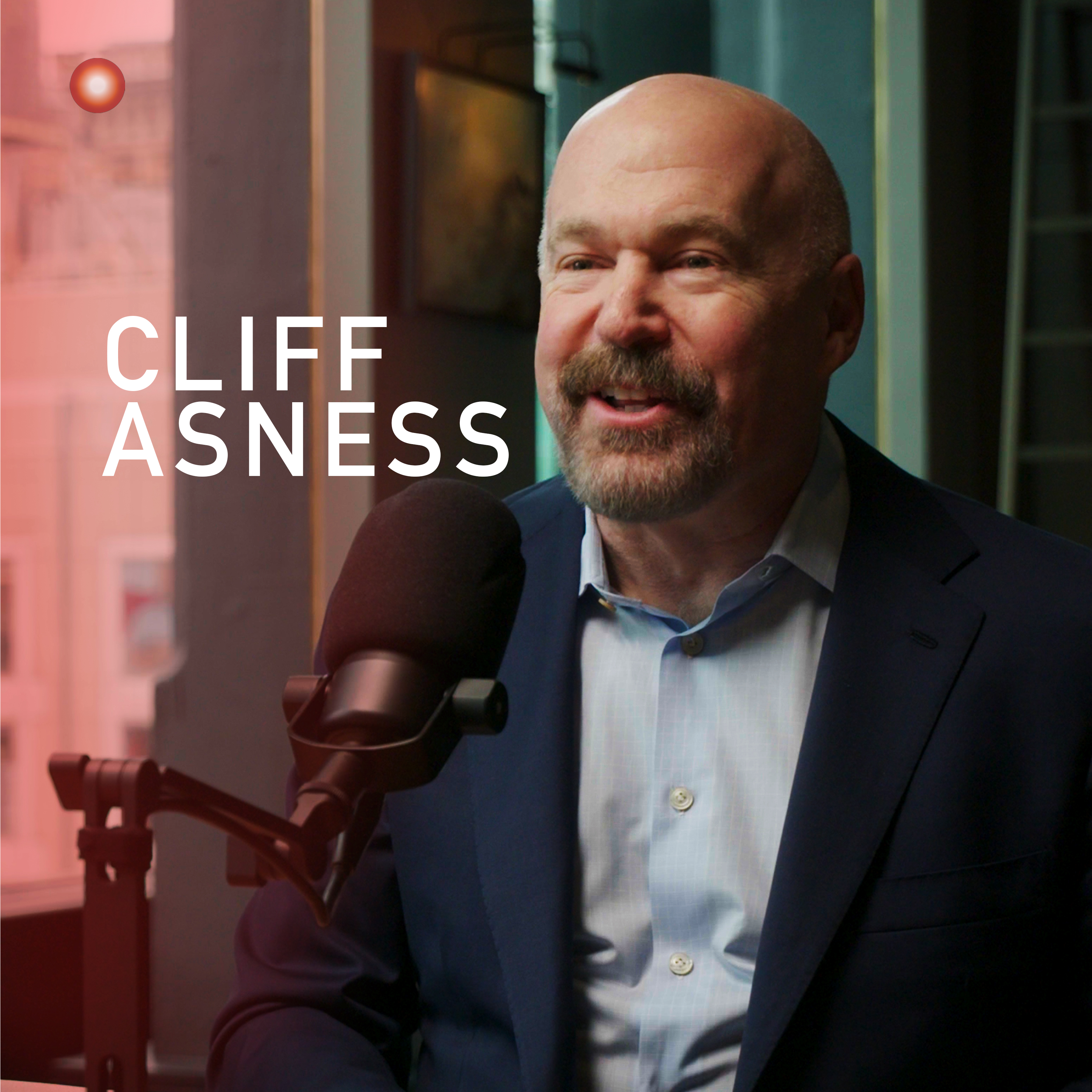
Cliff Asness argues that quant strategies like value investing persist through all technological eras because their true edge is arbitraging consistent human behaviors like over-extrapolation. As long as people get swept up in narratives and misprice assets, the quantitative edge will remain.
Related Insights
With information now ubiquitous, the primary source of market inefficiency is no longer informational but behavioral. The most durable edge is "time arbitrage"—exploiting the market's obsession with short-term results by focusing on a business's normalized potential over a two-to-four-year horizon.

Traditional value metrics are arbitraged away by quants. The new edge lies in unconventional scenarios like stocks with cult followings and assets fueled by zero-day options, similar to how sports strategies evolve to extremes. Fundamental analysis is now just table stakes.

The maxim "buy low, sell high" is psychologically hard because it forces you to act against the crowd's emotional consensus. It's like flying by instruments when everyone else is calm and looking out the window. This act of trusting abstract data over social proof feels deeply unnatural for humans.

Despite decades of evidence, there is no agreement on why factors like "value" (cheap stocks outperforming) work. The debate is split between rational risk-based explanations (Fama's view that they are inherently riskier) and behavioral ones (Shiller's view that investors make systematic errors). This uncertainty persists at the core of quant investing.

Financial history rhymes because the underlying driver—human nature—is constant. Core desires for wealth, recognition, and love, along with the fear of pain and envy of others' success, have remained unchanged for millennia. These emotions will continue to fuel bubbles and crashes, regardless of new technologies or financial instruments.

As quantitative models and AI dominate traditional strategies, the only remaining source of alpha is in "weird" situations. These are unique, non-replicable events, like the Elon Musk-Twitter saga, that lack historical parallels for machines to model. Investors must shift from finding undervalued assets to identifying structurally strange opportunities where human judgment has an edge.
Cliff Asnes explains that integrating machine learning into investment processes involves a crucial trade-off. While AI models can identify complex, non-linear patterns that outperform traditional methods, their inner workings are often uninterpretable, forcing a departure from intuitively understood strategies.
Despite rational strategies, top quant Cliff Asness confesses to feeling the emotional sting of losses far more intensely than the pleasure of gains, a classic example of prospect theory in action. This human element persists even at the highest levels of quantitative finance.
Amateurs playing basketball compete on a horizontal plane, while NBA pros add a vertical dimension (dunking). Similarly, individual investors cannot beat quantitative funds at their game of speed, data, and leverage. The only path to winning is to change the game's dimensions entirely by focusing on "weird," qualitative factors that algorithms are not built to understand.
Finance is one of the only fields where behavior is more important than knowledge. An amateur with no formal training but immense patience can financially outperform a highly educated expert who succumbs to fear and greed. It's not about what you know; it's about how you act.
