Get your free personalized podcast brief
We scan new podcasts and send you the top 5 insights daily.
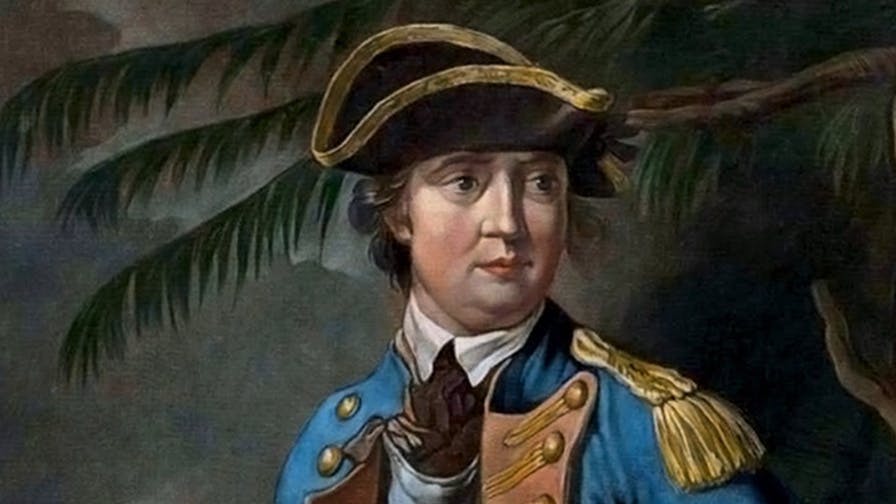
Despite battlefield successes, Arnold repeatedly failed to understand the broader strategic context, particularly Washington's political constraints. He couldn't see past personal grievances, a classic trait of what the modern military calls a 'terminal colonel'—an effective leader who can't make the leap to strategic thinking.
Related Insights
Grant was a brilliant Civil War general because his skills perfectly matched the desperate need for military commanders. However, he was a mediocre president because he meshed poorly with the political environment of the White House. This highlights that leadership skills are not universally transferable; context is everything.

Historian Bruce Catton portrays General George McClellan, the "tech bro of his day," as a brilliant engineer promoted rapidly but too risk-averse to be an effective commander. His story serves as a counterargument to the modern idea that simply elevating technically skilled individuals will produce better military leaders without experiential learning.

The "absolutely clinical" US raid to capture Venezuela's president is lauded as a military success. However, historical precedents from Afghanistan in 2001 and Iraq in 2003 show that initial military prowess in toppling a regime is no guarantee of long-term strategic success, which depends on far more complex political factors.
In any complex organization, leaders face constant battles. A key strategy from the Secretary of Energy is to consciously let go of minor fights to conserve political capital and focus for the crucial ones. Getting fired up about every little thing leads to burnout and distracts from the ultimate mission.

Mixing long-term strategy with immediate tactical problems in a single meeting is ineffective because they require different mindsets. The urgency of tactical "firefighting" will always drown out important, long-term strategic discussion, leading to failure on both fronts.

While experience builds valuable pattern recognition, relying on old mental models in a rapidly changing environment can be a significant flaw. Wise leaders must balance their experience with the humility and curiosity to listen to younger team members who may have a more current and accurate understanding of the world.

If a leader concludes that historic allies are acting against their nation's interests (e.g., prolonging a war), they may see those alliances as effectively void. This perception of betrayal becomes the internal justification for dramatic, unilateral actions like dismantling NATO or seizing strategic assets.

Many leaders focus on having the correct analysis. However, true leadership requires understanding that being right is useless if you can't persuade and influence others. The most successful leaders shift their focus from proving their correctness to finding the most effective way to communicate and achieve their goals.

The brain's tendency to create stories simplifies complex information but creates a powerful confirmation bias. As illustrated by a military example where a friendly tribe was nearly bombed, leaders who get trapped in their narrative will only see evidence that confirms it, ignoring critical data to the contrary.

The American Revolution was itself an act of treason against Britain. Benedict Arnold's defection created a singular, despised traitor, allowing the American people to unite against an internal enemy and solidifying their identity beyond simply being rebels against the crown.