Get your free personalized podcast brief
We scan new podcasts and send you the top 5 insights daily.
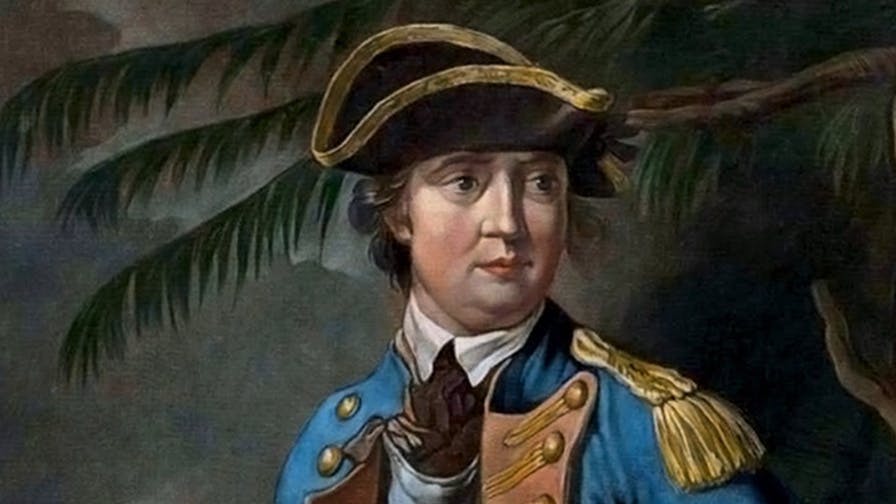
The American Revolution was itself an act of treason against Britain. Benedict Arnold's defection created a singular, despised traitor, allowing the American people to unite against an internal enemy and solidifying their identity beyond simply being rebels against the crown.
Related Insights
A country's identity is built on a "founding myth" that provides social cohesion, like the idealized story of Thanksgiving. This narrative is often a deliberate simplification to mask a brutal reality. The conflict between the useful myth and historical truth is where a nation's soul is contested.

According to Ken Burns, democracy was not the revolution's intention but its consequence. Initially an "elitist program," the leaders realized they needed to enlist the masses to win. This forced them to extend the language of liberty to everyone, which, once spoken, could not be taken back and ultimately applied to all.

Ken Burns argues that beyond taxes and representation, the American Revolution was propelled by escalating media rhetoric. The more colonial newspapers labeled the crown tyrannical, the more tyrannical it acted, creating an inflammatory feedback loop that pushed both sides toward conflict.
When a political movement is out of power, it's easy to unify against a common opponent. Once they gain power and become the establishment, internal disagreements surface, leading to factions and infighting as they debate the group's future direction.

The lack of a unified national narrative creates profound societal division. America is fractured by two irreconcilable stories: one of colonialist oppression and another of unprecedented prosperity, making a shared identity and collective action impossible.

America is not just a nation of immigrants but of emigrants—people who made the bold choice to leave behind collapsing societies. The Irish fled famine, Germans fled revolution, and Chinese, Vietnamese, and Iranians fled communism and turmoil. This history of leaving failing states is a core part of the American identity, not a betrayal of one's homeland.

A driving force for the American revolutionaries was a profound sense of posterity—the idea that their sacrifices were for future generations, not immediate personal gain. This long-term, selfless perspective explains their willingness to risk everything.

During the American Revolution, Britain and the colonies used slavery to attack each other's character. Each side accused the other of hypocrisy without any genuine commitment to abolition. This political mud-slinging was crucial because it transformed slavery from a normal fact of life into a blameworthy, immoral act in the public consciousness.

If a leader concludes that historic allies are acting against their nation's interests (e.g., prolonging a war), they may see those alliances as effectively void. This perception of betrayal becomes the internal justification for dramatic, unilateral actions like dismantling NATO or seizing strategic assets.

Despite battlefield successes, Arnold repeatedly failed to understand the broader strategic context, particularly Washington's political constraints. He couldn't see past personal grievances, a classic trait of what the modern military calls a 'terminal colonel'—an effective leader who can't make the leap to strategic thinking.