Get your free personalized podcast brief
We scan new podcasts and send you the top 5 insights daily.
Miller refutes the idea that alcohol aided his creativity. In hindsight, he states it did him "nothing" good. Sobriety helped him realize that what he perceived as creative fuel was simply misdirected anger, and that clear-headed focus is a far more productive and powerful state for creating art.

Related Insights
Miller credits his contemporary, Alan Moore (*Watchmen*), for making him a better creator. Knowing Moore was producing groundbreaking work at the same time forced Miller to push his own boundaries, especially as a writer, demonstrating the powerful, positive impact of having a high-caliber rival.
After a six-month sobriety period, Kevin Rose adopted the '2-2-2 rule': a maximum of two drinks, never on consecutive days, and on a maximum of two days per week. This structured approach helps re-evaluate one's relationship with alcohol without complete abstinence, focusing on moderation and special occasions.
Comics legend Neil Adams told a young Frank Miller his art was "awful" and he should "pump gas." Miller's immediate reply, "Can I fix it and show you again tomorrow?", passed an unspoken test of resilience. The harsh feedback was a filter for true dedication, not a final judgment.
The emerging field of "neuroaesthetics" shows that the physical act of making art has proven benefits for mental health and longevity. Crucially, these benefits are entirely independent of the creator's skill or the quality of the final product, emphasizing process over outcome.

Alcohol temporarily reduces anxiety by boosting the neurotransmitter GABA. However, the brain overcompensates by converting GABA into glutamate, an excitatory neurotransmitter. This rebound effect leaves you more anxious than before, creating a self-perpetuating cycle of self-medication.

Addiction isn't defined by the pursuit of pleasure. It's the point at which a behavior, which may have started for rational reasons, hijacks the brain’s reward pathway and becomes compulsive. The defining characteristic is the inability to stop even when the behavior no longer provides pleasure and begins causing negative consequences.
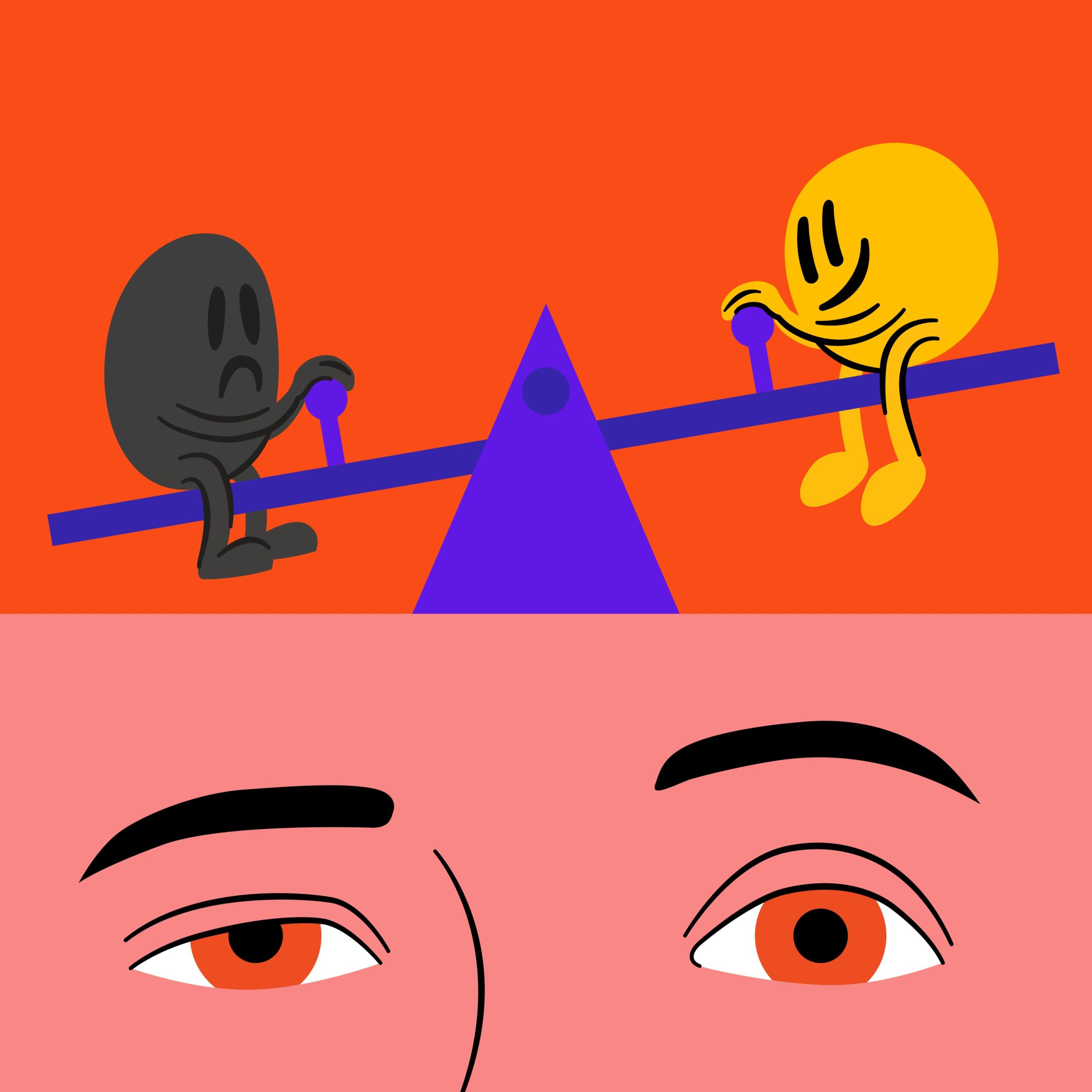
To combat creative blocks, recognize that the expectation of constant fresh ideas is self-imposed. The speaker argues that creative energy is fueled by external life experiences like hobbies and relationships. When work becomes the sole focus, the well of creative energy naturally runs dry.

As creators become successful, their comfortable lives can create a 'relatability crisis,' severing their connection to the struggles that fuel their art. To combat this, they must consciously 'pick open some scabs' from their past. Revisiting old heartbreaks, failures, and traumas becomes a necessary tool for finding authentic, resonant material when current life lacks friction.

A persistent sense of urgency and desperation is a hallmark of addictive thinking, often creating panic. The antidote isn't to do more faster, but to connect with the eternal and infinite aspects of your being, which calms the system and shows there is no real hurry.

Rather than viewing addiction as a simple vice, it can be understood as a desperate attempt to find transcendence or a temporary refuge from a painful reality. This perspective, shared by a Native elder, recasts addiction as a spiritual quest gone awry, rooted in a need for a different state of being.