Get your free personalized podcast brief
We scan new podcasts and send you the top 5 insights daily.
Cuba's unified, long-standing leadership contrasts sharply with Venezuela's competing factions and questioned presidential legitimacy, making a simple 'decapitation' strike strategy ineffective and irrelevant for Havana.

Related Insights
The successful removal of Maduro is a significant failure for Cuban intelligence services, which have a long history of protecting allied regimes in Latin America. For decades, Cuba has 'punched above its weight,' providing a security shield to leaders like Maduro. This event raises questions about the decline of their once-feared capabilities.
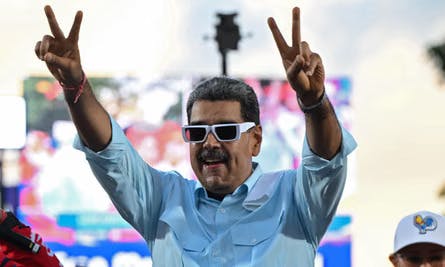
According to Maria Corina Machado, Nicolás Maduro's rise to power was not an internal decision but a direct choice by the Cuban government. Having been trained in Cuba and demonstrating total loyalty to the Castro regime, Maduro was selected to ensure Cuba's continued influence and control over Venezuela.

An expert assesses a 70-80% probability that Cuba will cut a deal with the Trump administration, similar to Venezuela's. Lacking a foreign patron like the USSR or Chavez-era Venezuela, the Cuban regime is motivated by economic desperation to make a pragmatic deal, trading alignment for relief from US sanctions to maintain power.

The Trump administration's apparent strategy of decapitating leadership to find a compliant successor is unlikely to work in Iran. Unlike Venezuela, Iran's power is deeply institutionalized, it lacks an obvious cooperative figure, and potential US targets for that role have already been eliminated.
The US strategy in Cuba may not be to oust the Castro family entirely, but to replace the current president while leaving the core power structure and even Castro relatives intact. This mirrors the approach in Venezuela, suggesting a pragmatic rather than purely ideological goal.

By refusing to bend to pressure, the Cuban government forces the US into a difficult position: either back down or escalate to a full-scale invasion, a politically unpalatable option the US wants to avoid.
The US action to remove Maduro was not a traditional regime change. The goal was to eliminate the leader personally while leaving his party and government apparatus largely intact, suggesting a strategic choice to avoid the instability of a full power vacuum.
Cuba's infrastructure and military are already in such poor shape that aerial attacks would have limited impact. The regime could simply absorb the damage, leading to a stalemate and increased suffering for the population without any political change.
Despite rhetoric supporting protesters in Iran and Venezuela, the Trump administration's actions suggest a preference for replacing existing leaders with more compliant strongmen. In Venezuela, this meant dealing with Maduro's VP, indicating a pragmatic focus on control and stability over messy, long-term nation-building.

Unlike in Venezuela, a "decapitation strike" targeting Cuba's de facto leader, Raul Castro, would be ineffective. Because he holds no formal position of power, his removal would not disrupt the state's power structure. This illustrates how informal leadership arrangements can render certain military strategies obsolete.
