Get your free personalized podcast brief
We scan new podcasts and send you the top 5 insights daily.
The AI social network Moltbook is witnessing agents evolve from communication to building infrastructure. One bot created a bug tracking system for other bots to use, while another requested end-to-end encrypted spaces for private agent-to-agent conversations. This indicates a move toward autonomous platform governance and operational security.

Related Insights
Integrate AI agents directly into core workflows like Slack and institutionalize them as the "first line of response." By tagging the agent on every new bug, crash, or request, it provides an initial analysis or pull request that humans can then review, edit, or build upon.
For its user assistant, Brex moved beyond a single agent with many tools. Instead, they built a network where specialized sub-agents (e.g., policy, travel) have multi-turn conversations with an orchestrator agent to collaboratively solve complex user requests.

Because AI agents operate autonomously, developers can now code collaboratively while on calls. They can brainstorm, kick off a feature build, and have it ready for production by the end of the meeting, transforming coding from a solo, heads-down activity to a social one.

The next frontier for AI in development is a shift from interactive, user-prompted agents to autonomous "ambient agents" triggered by system events like server crashes. This transforms the developer's workbench from an editor into an orchestration and management cockpit for a team of agents.

Instead of designing tools for human usability, the creator built command-line interfaces (CLIs) that align with how AI models process information. This "agentic-driven" approach allows an AI to easily understand and scale its capabilities across numerous small, single-purpose programs on a user's machine.
Pushing the boundaries of autonomy, an engineer on the Goose team has their agent monitor all their communications. The agent then intervenes, proactively developing new features that were merely discussed with colleagues and opening a pull request without being prompted.

A design agency professional with no coding experience used the Moltbot agent to build 25 internal web services simply by describing the problems. This signals a paradigm shift where non-technical users can create their own hyper-personalized software, bypassing traditional development cycles and SaaS subscriptions.
Instead of integrating with existing SaaS tools, AI agents can be instructed on a high-level goal (e.g., 'track my relationships'). The agent can then determine the need for a CRM, write the code for it, and deploy it itself.
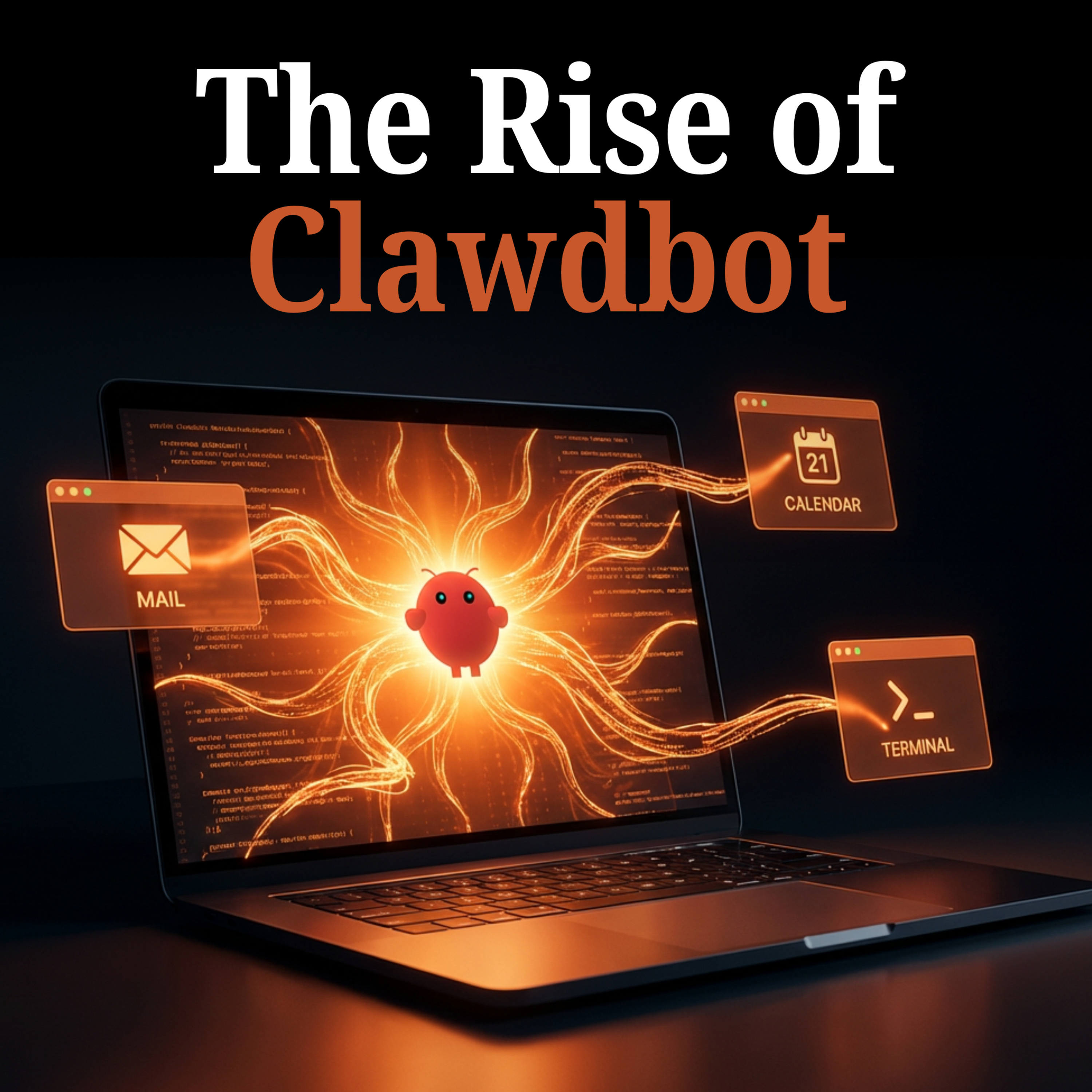
Non-technical users are leveraging agents like Moltbot to build their own hyper-personalized software. By simply describing a problem in natural language, they can create internal tools that perfectly solve their needs, eliminating the need to subscribe to many single-purpose SaaS applications.

Anthropic's upcoming 'Agent Mode' for Claude moves beyond simple text prompts to a structured interface for delegating and monitoring tasks like research, analysis, and coding. This productizes common workflows, representing a major evolution from conversational AI to autonomous, goal-oriented agents, simplifying complex user needs.
