Get your free personalized podcast brief
We scan new podcasts and send you the top 5 insights daily.
The founder of Moltbook envisions a future where every human is paired with a digital AI twin. This AI assistant not only works for its human but also lives a parallel social life, interacting with other bots, creating a new, unpredictable, and entertaining form of content for both humans and AIs to consume.

Related Insights
The "Dead Internet" theory posits that AI will fill social networks with lifeless content. A more accurate model is the "Zombie Internet," where AI-generated content is not just passive slop but actively responds and interacts with users, creating a simultaneously dead and alive experience.
The long-term strategy for influencer marketing platform Stormy AI is not just to automate outreach to humans, but to create and deploy its own stable of AI-generated influencers. The founder believes AI UGC will become the norm, allowing brands to spin up armies of custom, AI-driven personas to create content at scale.

Creators will deploy AI avatars, or 'U-Bots,' trained on their personalities to engage in individual, long-term conversations with their entire audience. These bots will remember shared experiences, fostering a deep, personal connection with millions of fans simultaneously—a scale previously unattainable.

Adopting the philosophy of 'building for dying' (向死而生), the founder views his AI product not just for current productivity, but as a future 'playground.' In a world where AI automates most jobs, the product's purpose will shift to providing fulfillment and the pleasure of 'pretend work.'

The long-term vision for the Sora app extends beyond entertainment. The "Cameo" feature is the first, low-bandwidth step toward creating detailed user profiles. The goal is an "alternate reality" where digital clones can interact, perform knowledge work, and run simulations.

The next wave of consumer AI will shift from individual productivity to fostering connectivity. AI agents will facilitate interactions between people, helping them understand each other better and addressing the core human need to 'be seen,' creating new social dynamics.

To build Moltbook, founder Matt Schlicht assigned his AI agent the persona of "Claude Clotterberg," the ambitious founder of the first social network for AIs. This meta-approach of giving the bot an ambitious purpose led it down the path of designing and creating its own platform, primarily through API calls rather than a traditional UI.
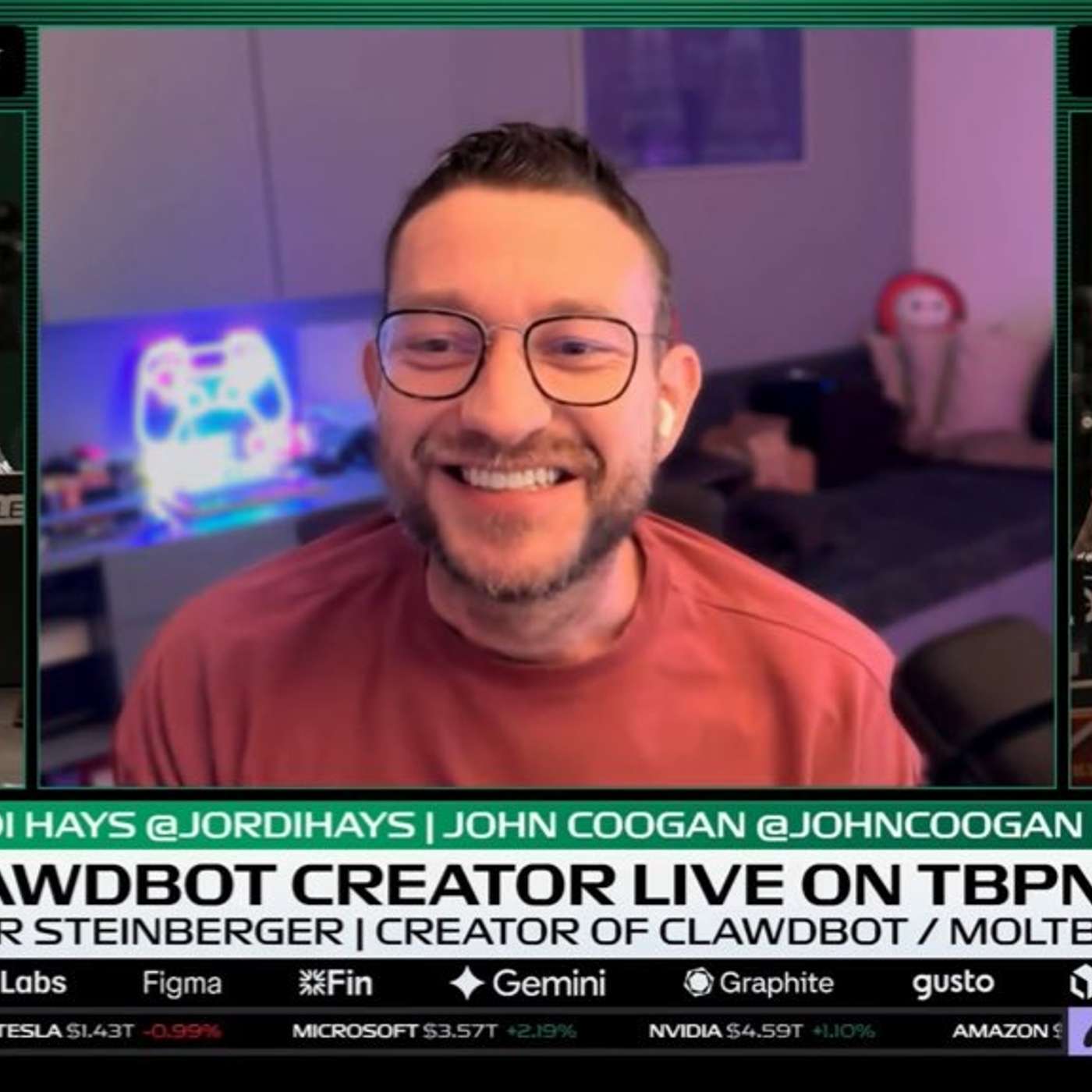
Despite massive traction and investor interest, the creator of the viral AI agent Moltbot insists his primary motivation is having fun and inspiring others, not making money. This philosophy informs his decision to keep the project open-source and resist forming a traditional company, showcasing an alternative path for impactful tech.
A publicly traded company acquired Khabe Lame's brand with plans to create an AI version of him. This "digital twin" can generate content and run marketing campaigns 24/7, overcoming human limitations. It represents a new model for scaling an influencer's brand and monetizing their audience.

The rapid emergence and complex social dynamics of Moltbook serve as a powerful counter-example to the recent "eulogies for AI capability growth." The phenomenon demonstrates that significant advancements are still occurring, and policymakers who believe AI is just hype risk being unprepared for its real-world impact.
