Get your free personalized podcast brief
We scan new podcasts and send you the top 5 insights daily.
The bispecific antibody zanidatumab is more effective than trastuzumab because it binds two separate HER2 receptors ("in trans"). This locks them together on the cell surface, a state cells dislike, which potently activates the complement system to induce cell death—a different primary mechanism than trastuzumab.

Related Insights
HER2-directed TKIs (like zongertinib) and ADCs (trastuzumab-deruxtecan/TDXD) have different mechanisms, and clinical data shows they are effective when used sequentially. Zongertinib works post-TDXD, and vice-versa. However, there is no evidence to support using one HER2 TKI after another has failed.

A therapeutic approach called "T-cell engagers" or "BiTEs" uses engineered antibodies with two different heads. One side binds to a cancer cell, while the other binds to a nearby T-cell. This effectively brings the killer cell and the target together, leveraging the body's existing immune cells without genetic modification.

Unlike T-cell engaging therapies, the bispecific antibody zanidatumab does not cause cytokine release syndrome (CRS). This unique safety feature is because it binds to two distinct sites on the HER2 receptor itself, rather than engaging T-cells, providing a key toxicity advantage.

Unlike previous trastuzumab-IO combinations that harmed PD-L1 negative patients, the zanidatumab-IO regimen benefits HER2+ patients regardless of PD-L1 status. This is likely because zanidatumab is a more immunogenic molecule, potentiating the checkpoint inhibitor's effect even in a less inflamed tumor microenvironment.
Unlike existing standards that often require PD-L1 positivity for immunotherapy benefit, the Zanidatamab/Tisilzumab combination showed efficacy irrespective of PD-L1 status. This significantly expands first-line immunotherapy-based options to the minority of HER2+ patients who are PD-L1 negative and currently have fewer effective treatments.

Contrary to concerns about cross-resistance between HER2 antibody-drug conjugates (ADCs), retrospective data shows TDM-1 remains effective after progression on TDXD. This suggests the different cytotoxic payloads are key, allowing for effective sequencing and challenging the assumption that progression on one ADC class member precludes using another.

Bispecific antibodies, which target two antigens like PD-1 and VEGF simultaneously, are viewed as the next major upgrade to standard immunotherapy. Their 'cooperative binding' mechanism is expected to improve efficacy and safety, and early trial data suggest they could replace decade-old checkpoint inhibitors like pembrolizumab as the new standard of care.
The bispecific antibody zanidatumab causes HER2 receptors to cluster into "caps." This unique structure activates complement-dependent cytotoxicity (CDC), a potent immune response not achievable with older HER2 agents like trastuzumab, explaining its enhanced clinical activity.
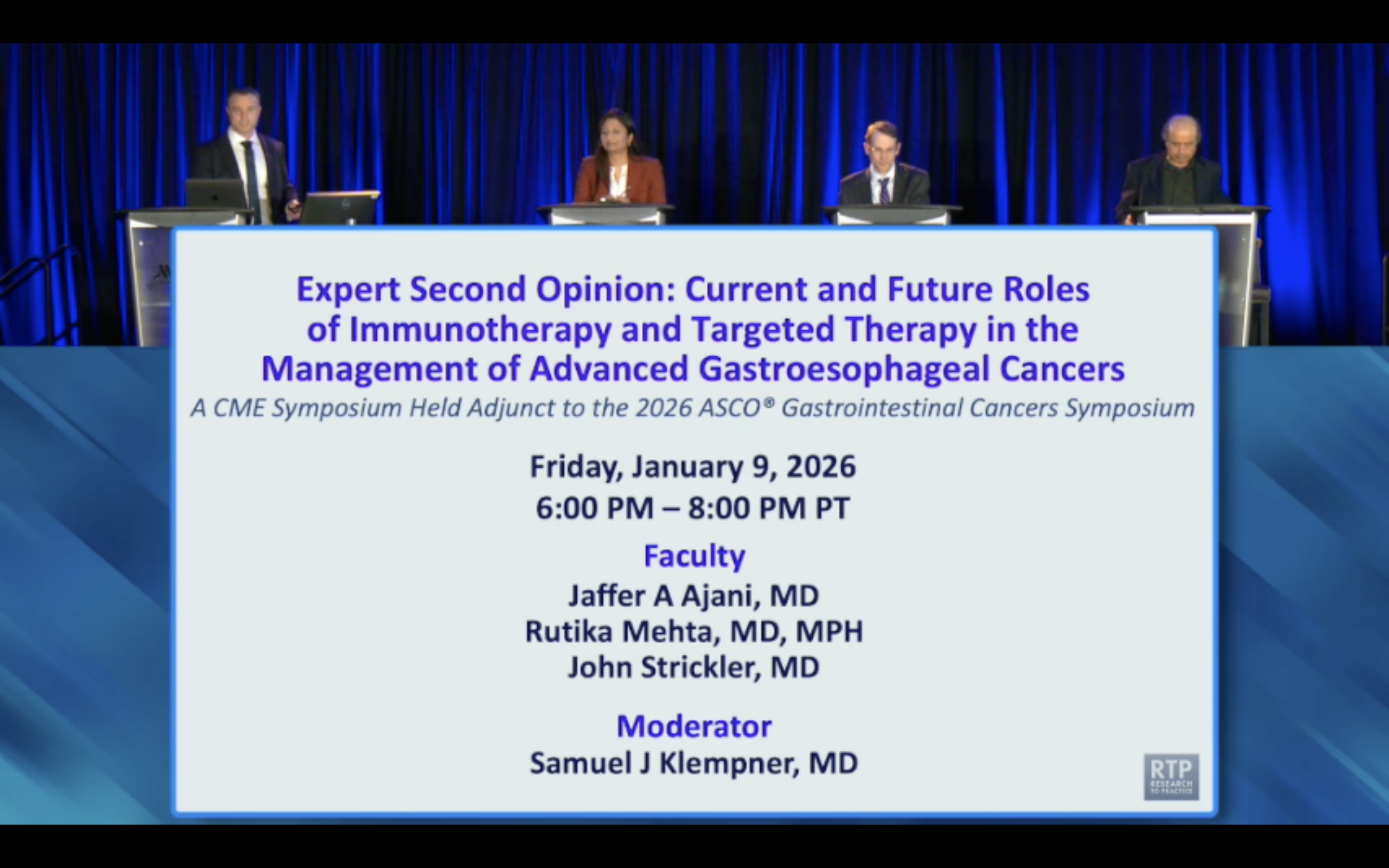
Unlike trastuzumab, zanidatumab's effectiveness in the HORIZON-GEA-01 trial did not seem to depend on PD-L1 status. This surprising finding suggests a novel, possibly immune-mediated, mechanism of action that could expand its use to a broader patient population, including those who are PD-L1 negative.

The HORIZON-GEA1 trial demonstrated that zanidatumab, a bispecific antibody, provides a significant survival benefit in HER2-positive gastroesophageal cancers, even in patients with PD-L1 negative tumors. This finding challenges the conventional wisdom that checkpoint inhibitors are the primary driver of benefit in combination therapies.
