Get your free personalized podcast brief
We scan new podcasts and send you the top 5 insights daily.
HER2-directed TKIs (like zongertinib) and ADCs (trastuzumab-deruxtecan/TDXD) have different mechanisms, and clinical data shows they are effective when used sequentially. Zongertinib works post-TDXD, and vice-versa. However, there is no evidence to support using one HER2 TKI after another has failed.

Related Insights
The HER2CLIMB-02 trial found that adding tucatinib to TDM-1 offered only a modest 2-month PFS benefit. This came at the cost of substantially increased toxicity, including transaminitis and diarrhea, suggesting the two agents are better used sequentially for most patients.

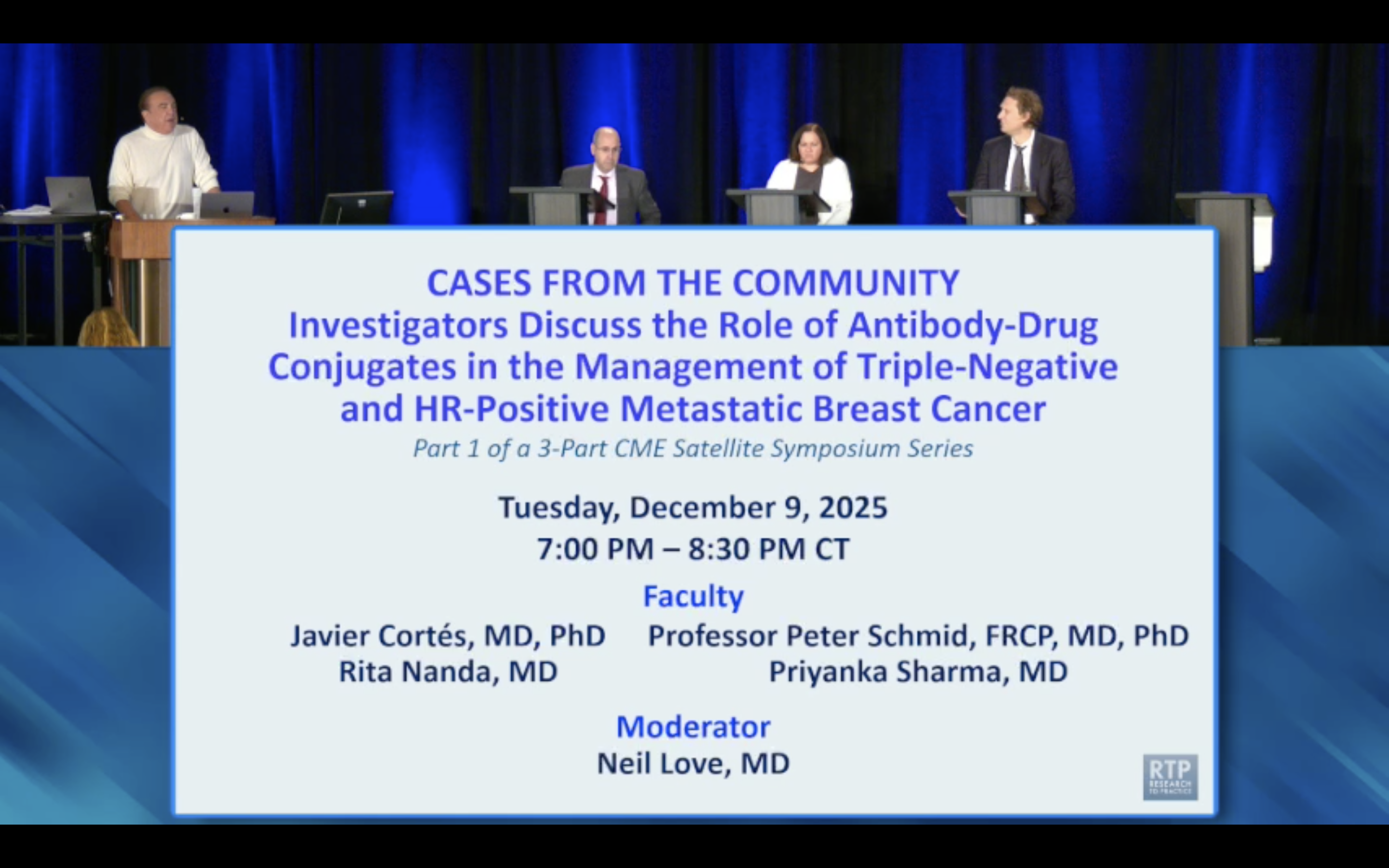
Real-world data suggests that using one antibody-drug conjugate (ADC) immediately after another is often ineffective. A potential strategy to overcome this resistance is to administer a different class of chemotherapy before starting the second ADC.
Despite both being options, experts favor the TKI zongertinib for second-line treatment of HER2-mutant NSCLC. This preference is driven by zongertinib's higher response rates (~71%) and longer progression-free survival in this setting, coupled with a better side effect profile compared to the ADC trastuzumab-deruxtecan (TDXD).
Positive data from both DESTINY-Breast09 (TDXD-based) and PATINA (CDK4/6i maintenance) create a new dilemma. With similar PFS outcomes, the first-line choice for metastatic HER2+/HR+ patients now hinges on toxicity profiles and patient preference rather than a single efficacy winner.

For HER2-mutant NSCLC, Zongertinib (a TKI) is now the first-line choice. While TKIs show activity after ADCs like TDXD, the effectiveness of using an ADC after TKI failure remains an unproven but critical clinical question for oncologists.

Retrospective data shows that using one Antibody-Drug Conjugate (ADC) after another, particularly those with the same class of payload like TOP1 inhibitors, results in a low response rate of 10-20%. This creates a significant unmet need and a major clinical challenge for patients who progress on a first-line ADC.

For RAS wild-type metastatic colorectal cancer, oncologists may prefer starting with a trastuzumab/tucatinib regimen over TDXD. This sequencing strategy preserves TDXD as a later option, as there is currently no data supporting tucatinib's efficacy after a patient has progressed on TDXD.

The new treatment paradigm for HER2-positive lung cancer will likely involve sequencing a TKI like zongertinib first, followed by an antibody-drug conjugate (ADC). Early data suggests that the efficacy of TKIs is significantly reduced when used after an ADC, making the TKI-first approach critical for maximizing patient outcomes.

The success of both MOUNTAINEER (tucatinib/trastuzumab) and DESTINY-CRC02 (T-DXd) has introduced two effective, mechanistically different HER2-targeted therapies. This creates a new clinical challenge for oncologists: how to optimally sequence these agents, as there is no head-to-head data to guide the choice.

Contrary to concerns about cross-resistance between HER2 antibody-drug conjugates (ADCs), retrospective data shows TDM-1 remains effective after progression on TDXD. This suggests the different cytotoxic payloads are key, allowing for effective sequencing and challenging the assumption that progression on one ADC class member precludes using another.
