Get your free personalized podcast brief
We scan new podcasts and send you the top 5 insights daily.
Unlike trastuzumab, zanidatumab's effectiveness in the HORIZON-GEA-01 trial did not seem to depend on PD-L1 status. This surprising finding suggests a novel, possibly immune-mediated, mechanism of action that could expand its use to a broader patient population, including those who are PD-L1 negative.

Related Insights
For HER2+ biliary tract cancer patients with hyperbilirubinemia where stenting isn't possible, zanidatumab is a preferable option over TDXD. Zanidatumab lacks significant hepatotoxicity, whereas TDXD's irinotecan-like payload poses a risk in patients with moderate hepatic impairment.

Unlike T-cell engaging therapies, the bispecific antibody zanidatumab does not cause cytokine release syndrome (CRS). This unique safety feature is because it binds to two distinct sites on the HER2 receptor itself, rather than engaging T-cells, providing a key toxicity advantage.
In the HORIZON-BTC-01 trial, early response to zanidatumab is a powerful prognostic indicator. A landmark analysis showed that patients who responded by week nine had a median overall survival of 25 months, highlighting the importance of early tumor assessment in predicting long-term outcomes.
T-cells have natural inhibitory signals, or "brakes" (like PD-1), to prevent over-activation. Some cancers exploit this. Checkpoint inhibitor drugs block these brakes, unleashing a patient's existing T-cells to attack cancer cells more aggressively. This approach has been miraculous for cancers like melanoma.

The Matterhorn study found that adding the immunotherapy drug Durvalumab to FLOT chemotherapy significantly improved survival in localized gastric cancer. Surprisingly, this benefit extended to patients with low or negative PD-L1 expression, challenging the biomarker's predictive value for immunotherapy efficacy in this perioperative setting.

Despite stratifying patients by PD-L1 status, the AGO-OV-229 trial found it was not a predictive marker. Hazard ratios for survival were similar for both PD-L1 positive and negative tumors, challenging its utility for patient selection.

Disparate clinical trial results in endometrial cancer suggest a mechanistic difference between immunotherapy targets. PD-1 inhibitors (dostarlimab, pembrolizumab) have shown pronounced responses, whereas the PD-L1 inhibitor atezolizumab did not, indicating that targeting the PD-1 receptor may be a more robust strategy in GYN cancers.

The bispecific antibody zanidatumab causes HER2 receptors to cluster into "caps." This unique structure activates complement-dependent cytotoxicity (CDC), a potent immune response not achievable with older HER2 agents like trastuzumab, explaining its enhanced clinical activity.
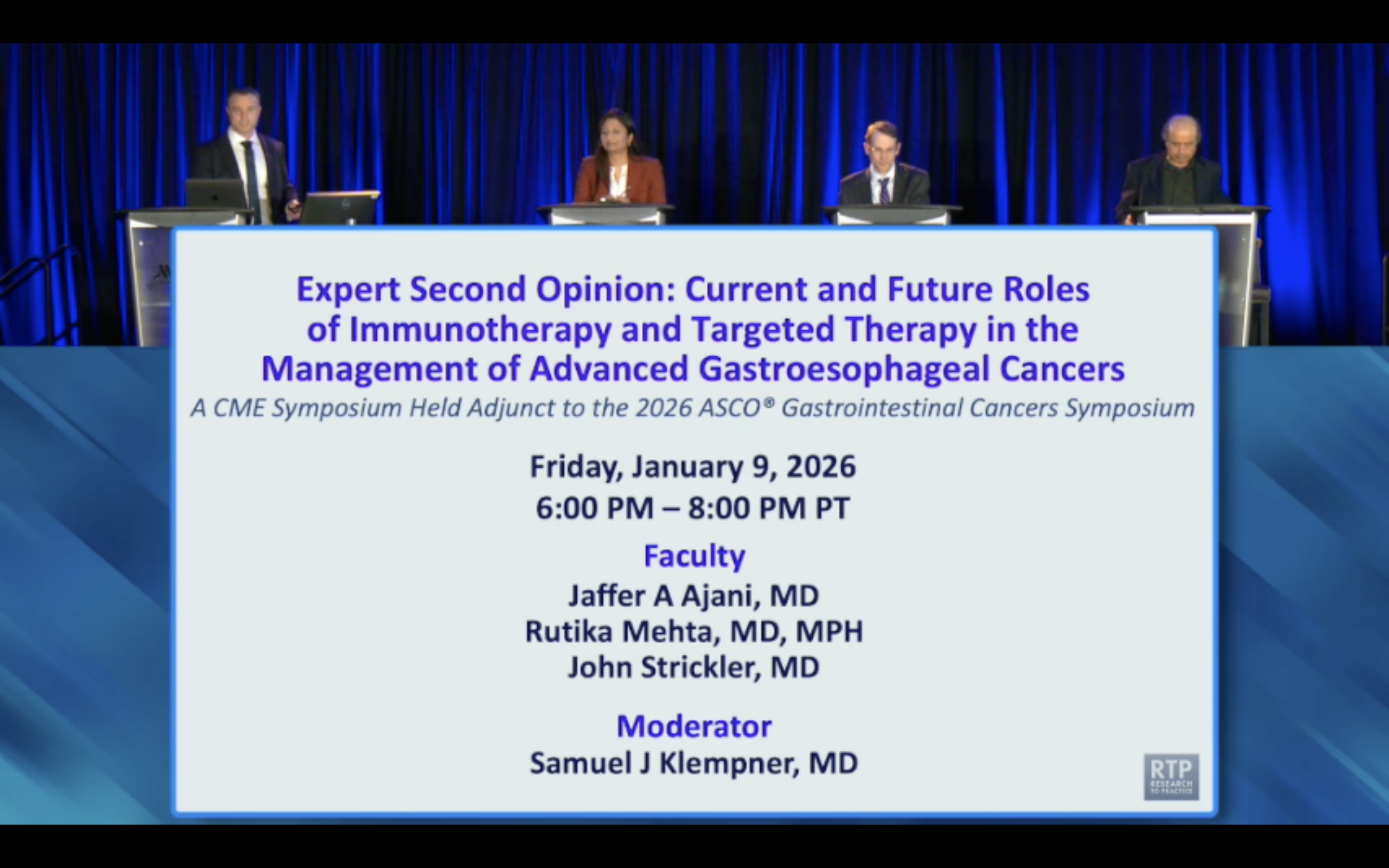
In the increasingly common scenario of a patient with multiple positive biomarkers, a clear hierarchy exists for treatment decisions. Based on the robustness and maturity of clinical trial data, HER2-directed therapy is the top priority, followed by PD-L1 immunotherapy, with Claudin-18.2 targeting considered third.
The bispecific antibody Pumitamig demonstrated identical overall response rates in both PD-L1 positive and negative triple-negative breast cancer patients. This is significant as it provides a potential immunotherapy option for the two-thirds of patients who are PD-L1 negative and currently ineligible for such treatments.