Get your free personalized podcast brief
We scan new podcasts and send you the top 5 insights daily.
Unlike existing standards that often require PD-L1 positivity for immunotherapy benefit, the Zanidatamab/Tisilzumab combination showed efficacy irrespective of PD-L1 status. This significantly expands first-line immunotherapy-based options to the minority of HER2+ patients who are PD-L1 negative and currently have fewer effective treatments.

Related Insights
Data from the KEYNOTE-671 trial demonstrates a meaningful survival benefit from perioperative pembrolizumab even in patients with PD-L1 negative (<1%) tumors. This finding supported broad regulatory approval without PD-L1 restrictions, suggesting the biomarker is not an absolute requirement for benefit in this setting.

Unlike T-cell engaging therapies, the bispecific antibody zanidatumab does not cause cytokine release syndrome (CRS). This unique safety feature is because it binds to two distinct sites on the HER2 receptor itself, rather than engaging T-cells, providing a key toxicity advantage.

The Begonia trial showed an ~80% response rate by combining an ADC (Dato-DXD) with immunotherapy (Durvalumab) in first-line metastatic TNBC patients, 87% of whom were PD-L1 negative. This suggests ADCs, through immunogenic cell death, may create an immune-responsive environment, expanding IO benefit beyond the traditional biomarker.

Unlike previous trastuzumab-IO combinations that harmed PD-L1 negative patients, the zanidatumab-IO regimen benefits HER2+ patients regardless of PD-L1 status. This is likely because zanidatumab is a more immunogenic molecule, potentiating the checkpoint inhibitor's effect even in a less inflamed tumor microenvironment.

The combination of Zanidatamab, chemotherapy, and the PD-1 inhibitor Tisilzumab achieved a median overall survival of 26.4 months. This crosses the two-year threshold for the first time in this patient population, establishing a new and significantly higher benchmark for first-line HER2+ gastric cancer treatment.
Experts recommend using the most effective first-line therapy, like zanidatumab combinations, for HER2-positive gastric cancer, despite the risk of the tumor losing HER2 expression upon progression. The substantial upfront survival benefit outweighs the concern of losing a second-line target like T-DXd.

The bispecific antibody zanidatumab causes HER2 receptors to cluster into "caps." This unique structure activates complement-dependent cytotoxicity (CDC), a potent immune response not achievable with older HER2 agents like trastuzumab, explaining its enhanced clinical activity.
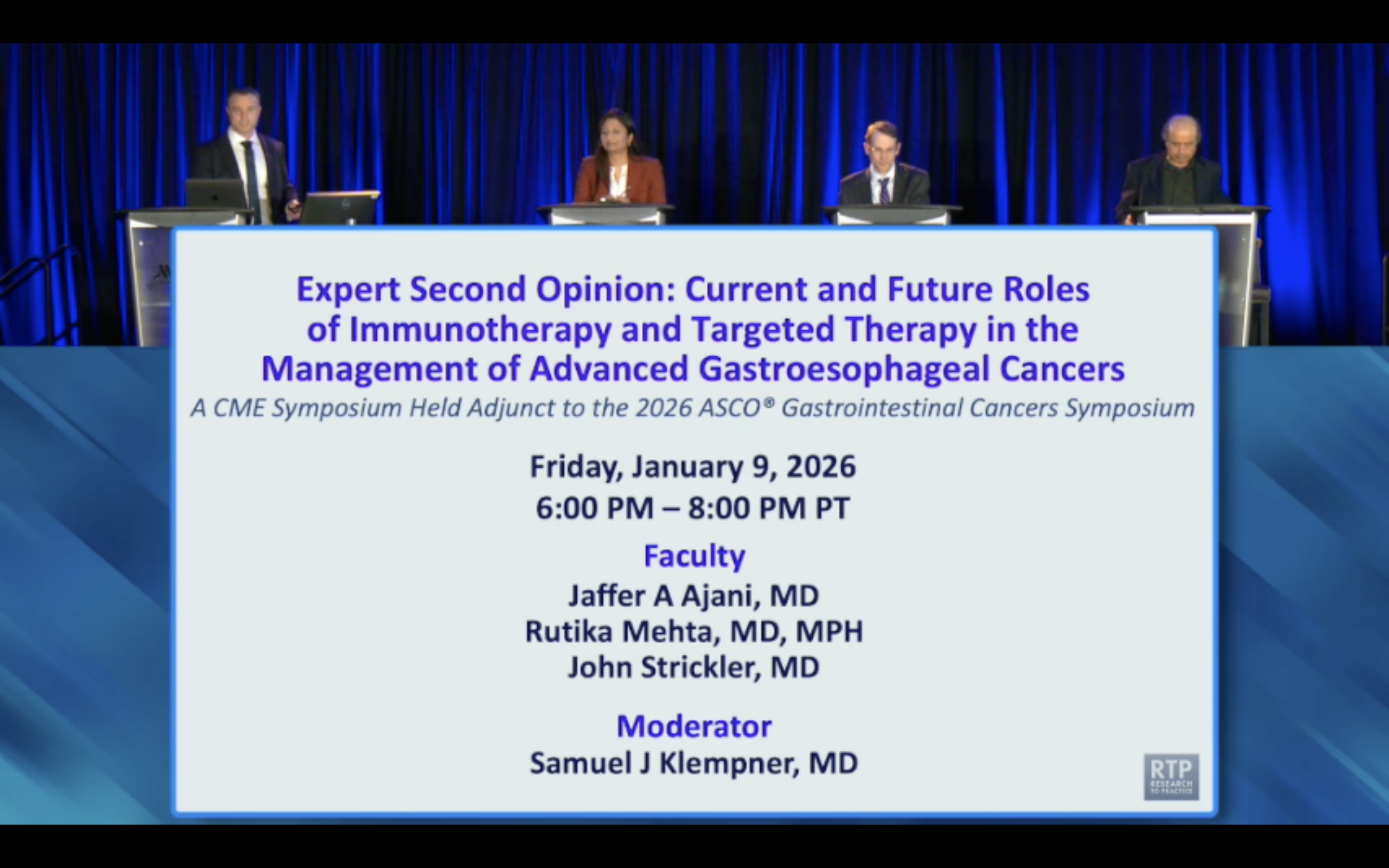
Unlike trastuzumab, zanidatumab's effectiveness in the HORIZON-GEA-01 trial did not seem to depend on PD-L1 status. This surprising finding suggests a novel, possibly immune-mediated, mechanism of action that could expand its use to a broader patient population, including those who are PD-L1 negative.

The bispecific antibody Pumitamig demonstrated identical overall response rates in both PD-L1 positive and negative triple-negative breast cancer patients. This is significant as it provides a potential immunotherapy option for the two-thirds of patients who are PD-L1 negative and currently ineligible for such treatments.
The HORIZON-GEA1 trial demonstrated that zanidatumab, a bispecific antibody, provides a significant survival benefit in HER2-positive gastroesophageal cancers, even in patients with PD-L1 negative tumors. This finding challenges the conventional wisdom that checkpoint inhibitors are the primary driver of benefit in combination therapies.