Get your free personalized podcast brief
We scan new podcasts and send you the top 5 insights daily.
Guy Ward-Jackson suggests a strategy where the U.S. maintains the industrial capability to rapidly scale production in critical sectors during a crisis, without maintaining full production in peacetime. This mirrors the concept of nuclear latency, where a country can build a bomb quickly without possessing one.

Related Insights
Naveen Krishnan proposes a dual mandate for economic security, similar to the Federal Reserve's. It balances a defensive goal (minimizing GDP exposure to adversary-controlled choke points) with an offensive one (ensuring the industrial base can surge production in a crisis).
A core challenge of industrial resilience is paying for idle but ready capacity—"warm factories" and trained staff. This is politically difficult because it's a costly insurance policy that looks like paying people and companies to do nothing during peacetime, making it a hard sell for policymakers.
Current US policy is reactive, fixing compromised supply chains like semiconductors. A proactive 'offensive' strategy would identify nascent, critical industries (e.g., humanoid robotics) and build the entire supply chain domestically from the start, securing a long-term economic and national security advantage.

The US cannot win a manufacturing-based war of attrition against China. Instead of stockpiling existing weapons, the focus must shift to creating a defense industrial base that can rapidly adapt and circumvent new threats. This requires smart, targeted investments in flexible capabilities rather than sheer volume.
US policy and funding are often drawn to high-profile, 'sexy' areas like AI. However, the most pressing vulnerabilities lie in 'unsexy' domains like munitions production volume and basic manufacturing capacity. This focus on the frontier neglects the foundational industrial base required for sustained conflict.
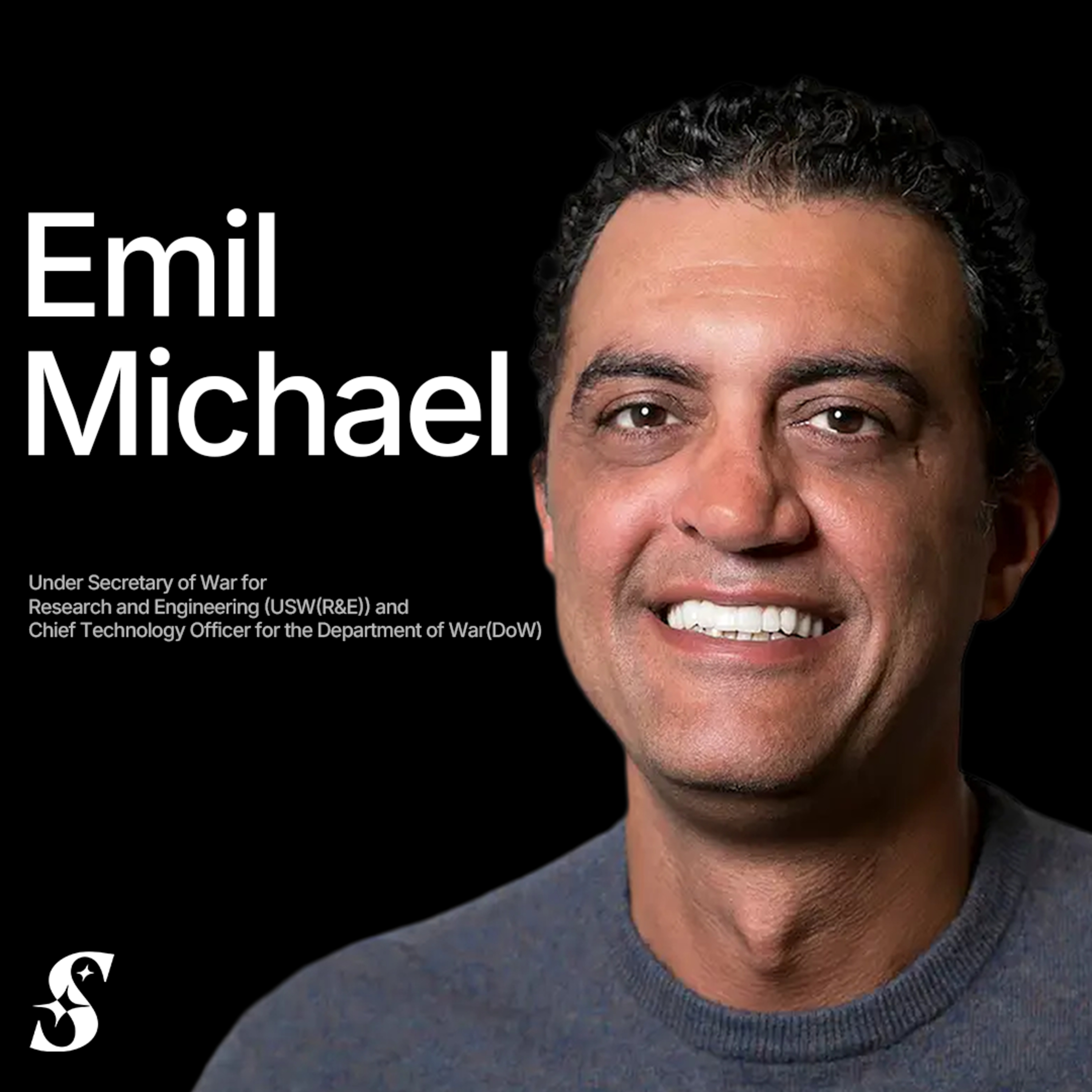
The Under Secretary of War defines the current "1938 moment" not as an imminent war, but as a critical juncture for rebuilding the domestic industrial base. The focus is on reversing decades of outsourcing critical components like minerals and pharmaceuticals, which created strategic vulnerabilities now deemed unacceptable for national security.
True economic security isn't just about production capacity; it's about having the "capability"—the qualified know-how and processes. This drastically shortens the 2-3 year time-to-recovery after a supply chain disruption, as qualifying a new fab for a specific product is the most time-consuming step.

The common belief that a large weapons stockpile deters adversaries is flawed. The war in Ukraine demonstrated that the true measure of deterrence is a nation's industrial capacity—the factory's ability to rapidly regenerate and replace assets consumed in conflict.

A recent Middle East conflict exposed a critical vulnerability: the U.S. and its allies used three years' worth of Patriot missile production in just 39 days. This highlights an unsustainable gap between peacetime industrial capacity and the consumption rates of modern warfare.
Anduril's co-founder argues America's atrophied manufacturing base is a critical national security vulnerability. The ultimate strategic advantage isn't a single advanced weapon, but the ability to mass-produce "tens of thousands of things" efficiently. Re-industrializing is therefore a core pillar of modern defense strategy.