Get your free personalized podcast brief
We scan new podcasts and send you the top 5 insights daily.
Experiences like The Sphere or IMAX are compelling as short-term, sensory-rich events, but they are not blueprints for a world to live in. The human mind and body desire a return to reality after sensory overload. This suggests that the most valuable technology will enhance our existing world, not replace it.

Related Insights
A key advantage humans will retain over AI is the ability to translate rich, multi-sensory physical experiences—like touch, smell, and memory—into abstract thought and creative insight. This 'last mile of human experience' is not yet transferable to technology.

As technology like AI makes the digital world more saturated and inauthentic, people will increasingly crave genuine, in-person interactions and experiences like live events, local gatherings, and hobbies.

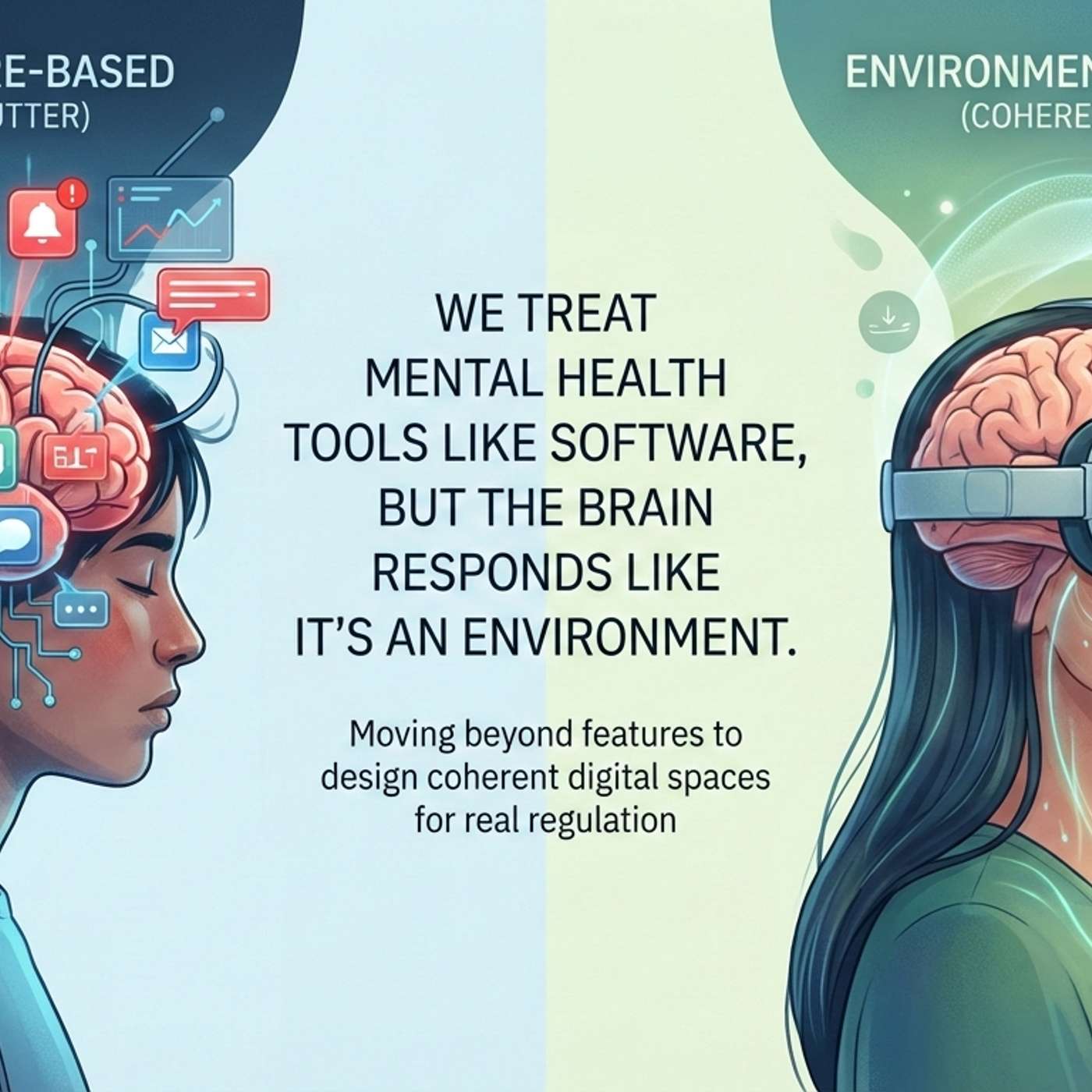
Tech culture incorrectly equates sensory immersion with therapeutic impact. High intensity can overwhelm the nervous system, causing fatigue or dissociation, even with positive content. The goal of immersive tech in mental health should be to orient the user and create predictability, not to 'impress' them, as the nervous system benefits from orientation, not just stimulation.
The $70B metaverse was doomed by a fundamental design flaw: headsets block peripheral vision. This triggers a subconscious, instinctual feeling of vulnerability, as humans are evolutionarily wired to detect threats from their surroundings. This overlooked anthropological detail made the experience inherently uncomfortable and contributed to its failure.
Donald Hoffman sees our 3D world as a confining, "training wheels" version of existence. Given the choice, he would exit this simulation to explore higher-dimensional realities with far richer sensory and emotional possibilities, viewing it as an upgrade rather than a loss.

Investor Jason Calacanis describes the early Oculus adoption pattern as "Try, oh my, goodbye." Users have an initial mind-blowing experience, but the device then gets stored in a closet, failing to become a daily habit. This highlights the critical challenge for new hardware: converting initial novelty into sustained engagement.

Beyond hardware issues, VR's primary adoption barrier is its isolating, 'antisocial' nature. While gaming trends toward shared, social experiences, VR requires users to strap on hardware and disconnect from their physical surroundings, creating a fundamental conflict with modern user behavior.

AR Rahman argues that the standard rectangular movie screen is an outdated model. To compete with high-quality home entertainment, theaters must offer experiences that cannot be replicated, such as the massive, multi-sensory, immersive environments pioneered by venues like the Las Vegas Sphere.

Spiegel articulates a strong philosophical stance against Virtual Reality, arguing it isolates people from the real world. Snap's strategy is to invest exclusively in Augmented Reality technologies like Spectacles that aim to enhance in-person human connection rather than replace it with a virtual one.

Beyond providing expert advice to all, AI combined with VR/Neuralink could make unique life experiences—like adventure and exploration—scalable and accessible to everyone. This could collapse one of the biggest differentiators between the haves and have-nots: access to experiences.