Get your free personalized podcast brief
We scan new podcasts and send you the top 5 insights daily.
The $70B metaverse was doomed by a fundamental design flaw: headsets block peripheral vision. This triggers a subconscious, instinctual feeling of vulnerability, as humans are evolutionarily wired to detect threats from their surroundings. This overlooked anthropological detail made the experience inherently uncomfortable and contributed to its failure.

Related Insights
Meta is laying off staff in its metaverse division, shifting focus from VR to AR. The move is a response to clear market signals: the AR-driven Ray-Ban smart glasses sold 2 million pairs, while the VR-centric Horizon Worlds has fewer than 200,000 monthly users.

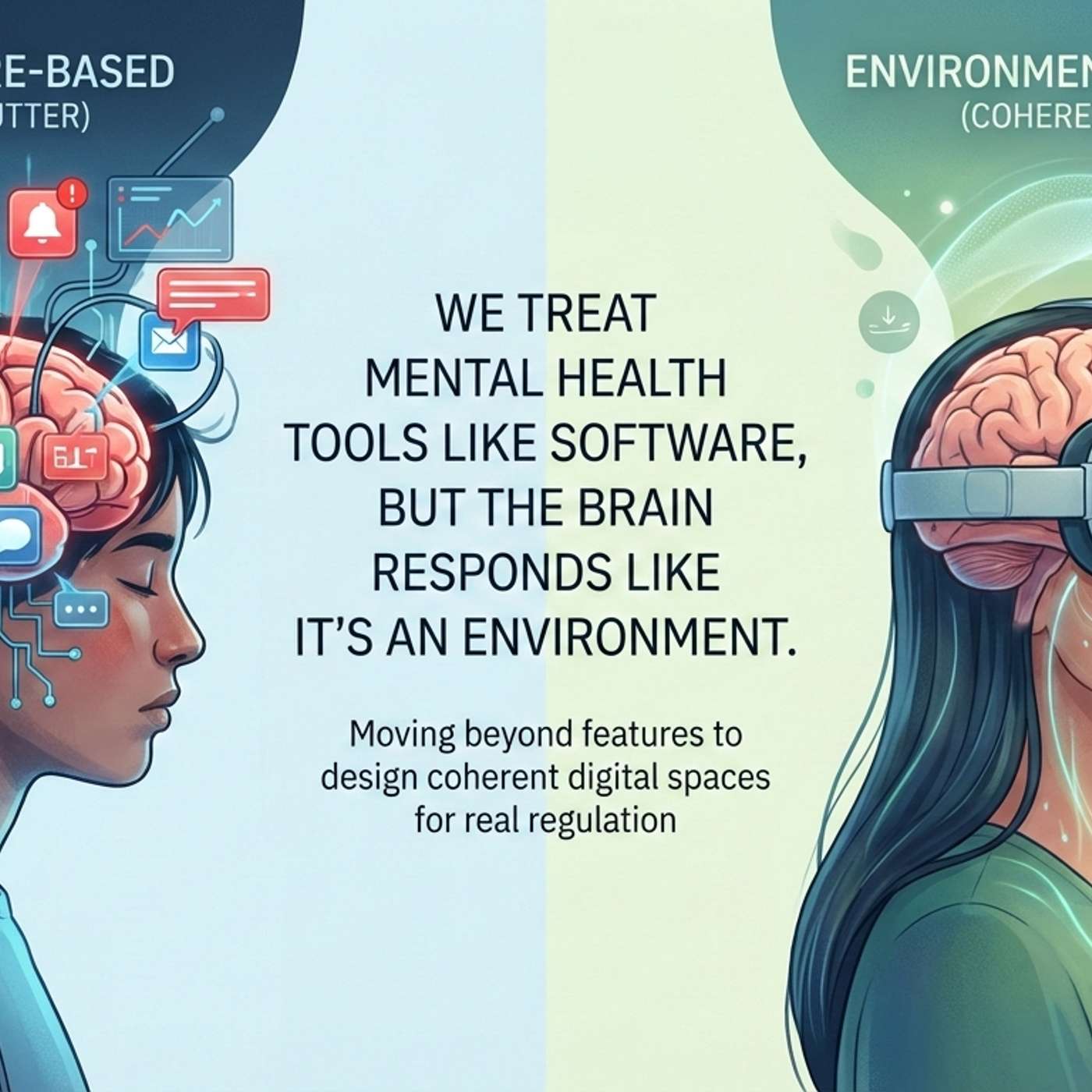
Tech culture incorrectly equates sensory immersion with therapeutic impact. High intensity can overwhelm the nervous system, causing fatigue or dissociation, even with positive content. The goal of immersive tech in mental health should be to orient the user and create predictability, not to 'impress' them, as the nervous system benefits from orientation, not just stimulation.
Meta's design philosophy for its new display glasses focuses heavily on social subtlety. Key features include preventing light leakage so others can't see the display and using an offset view so the user isn't fully disengaged. This aims to overcome the social rejection faced by earlier smart glasses like Google Glass.

Palmer Luckey argues the main barrier to VR adoption is poor user experience (comfort, content), not price. He posits that even if headsets were given away for free, over 90% of people would stop using them within a month. The focus should be on creating a premium experience, not a cheaper device.

Despite investing $80B, Meta is shuttering its metaverse project. This avoids the sunk cost fallacy—the irrational commitment to a failing venture based on past investment. The smart move is to cut losses and reallocate future resources to more promising areas like AI.

Beyond hardware issues, VR's primary adoption barrier is its isolating, 'antisocial' nature. While gaming trends toward shared, social experiences, VR requires users to strap on hardware and disconnect from their physical surroundings, creating a fundamental conflict with modern user behavior.

Advanced AR glasses create a new social problem of "deep fake eye contact," where users can feign presence in a conversation while mentally multitasking. This technology threatens to erode genuine human connection by making it impossible to know if you have someone's true attention.

Mark Zuckerberg's plan to slash the metaverse division's budget signifies a major strategic pivot. By reallocating resources from virtual worlds like Horizon to AI-powered hardware, Meta is quietly abandoning its costly VR bet for the more tangible opportunity in augmented reality and smart glasses.

Experiences like The Sphere or IMAX are compelling as short-term, sensory-rich events, but they are not blueprints for a world to live in. The human mind and body desire a return to reality after sensory overload. This suggests that the most valuable technology will enhance our existing world, not replace it.
The worship of founders like Mark Zuckerberg leads to a lack of internal pushback on massive, ill-conceived bets. Swisher points to the billions spent on the metaverse as a mistake made on an "awesome scale" because no one around the founder was empowered to challenge the idea.