Get your free personalized podcast brief
We scan new podcasts and send you the top 5 insights daily.
The Federal Reserve under Kevin Warsh is expected to pivot from its independent, inflation-targeting mandate. It will likely become an integral part of US economic statecraft, aligning its policies with national security and strategic industrial goals, a significant change from past regimes.

Related Insights
The appointment of Kevin Warsh as Fed Chair shifts the focus from purely economic decisions to a fundamental governance question: will the central bank remain independent or take political orders from the president? This represents a potential paradigm shift in the separation of powers.

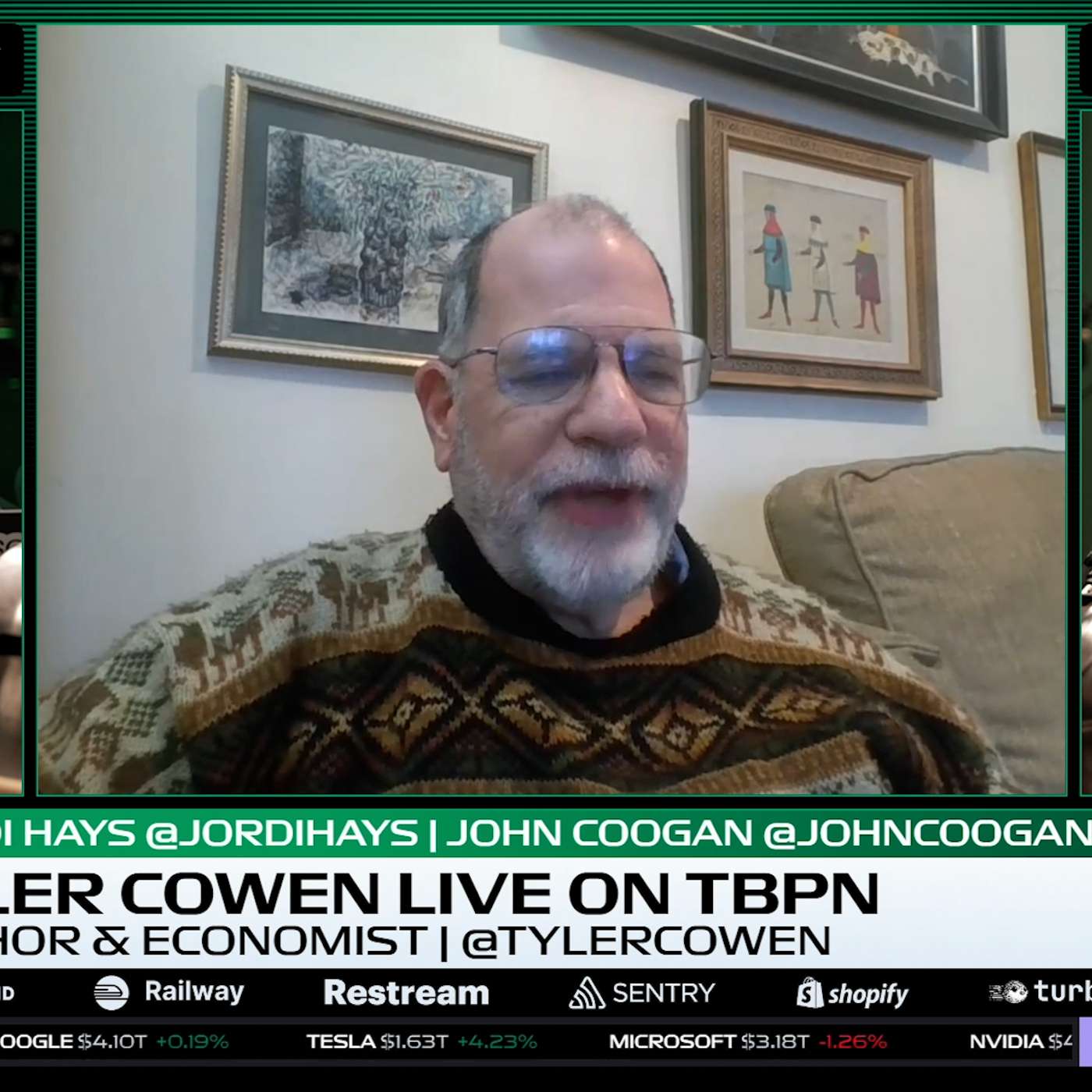
Tyler Cowen argues that Kevin Warsh is a political operator whose past economic stances are less predictive of his future actions than his desire to navigate the political landscape, particularly his relationship with Trump. Warsh's personal wealth from the Lauder family gives him the freedom to act independently if necessary, making his political calculus the key variable.
Kevin Warsh argues the Fed has experienced "scope creep" by taking on quantitative easing, broad bank regulation, and social initiatives. He advocates for a return to a narrow mandate focused on price stability, using interest rates as the primary tool and exiting non-conventional mechanisms.

Central bank independence is a relatively new concept from the 1990s. Historically, central banks operated as junior partners to the government, executing industrial policy. The move to subordinate the Fed to the Treasury is a return to a long-standing historical model.

The US is moving beyond traditional economic policies like inflation targeting. It's now using energy, swap lines, stablecoins, and supply chains as tools of national strategy to achieve geopolitical goals, marking a fundamental policy paradigm shift.
The idea of an independent Fed is a relatively modern concept, dating effectively to 1951. Historically, from its creation in 1913, the Fed has consistently acted as an arm of the state, financing wars and executing government policy, making the current shift towards explicit statecraft a return to its roots.
The nomination of Kevin Warsh as Fed Chair is not a traditional hawk vs. dove decision. Instead, it signals the Federal Reserve's transformation into a subordinate arm of the Treasury, tasked with executing a nationalist 'economic statecraft' agenda rather than maintaining its theoretical independence and focusing on traditional inflation targets.
Kevin Warsh's confirmation hearings suggest a potential regime change at the Fed. He has indicated possible shifts in how inflation is measured (using trimmed mean), the size of the balance sheet, and a reduction in market communication like forward guidance.
Warsh believes the Fed relies too heavily on forward guidance, particularly the 'dot plot,' which he feels boxes in members. He will likely downgrade or eliminate it and encourage Fed presidents to speak less publicly, aiming for more agile and less predetermined monetary policy decisions.

In crises like 2008 and 2020, the Fed's perceived independence allowed it to broker vital policy solutions between a divided government. Appointing a figure seen as highly partisan, like Kevin Warsh, risks destroying this institutional trust, potentially paralyzing the Fed's ability to act as a reliable crisis manager when it is needed most.
