Get your free personalized podcast brief
We scan new podcasts and send you the top 5 insights daily.
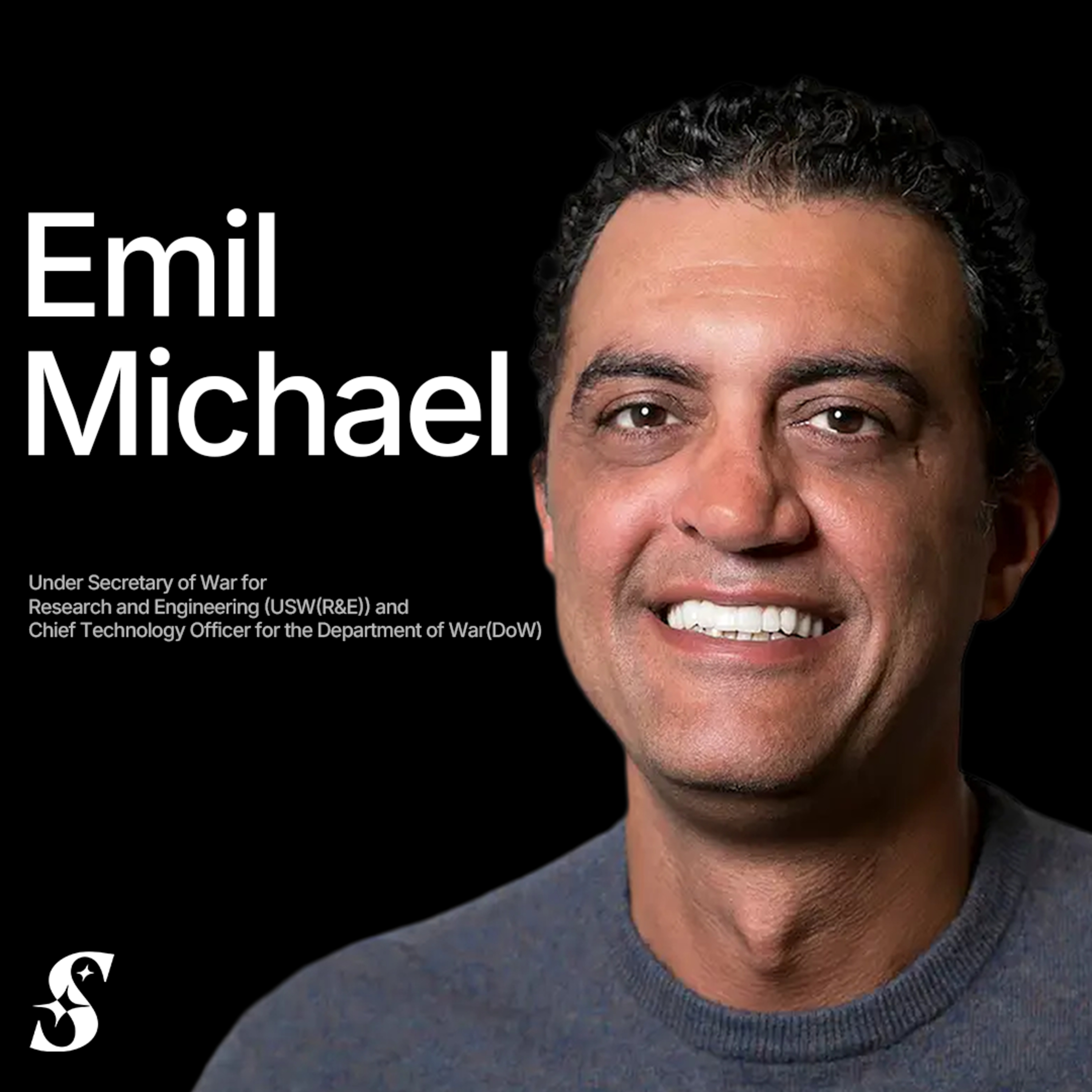
Emil Michael describes his role not as a procurement officer but as a "chief venture capitalist" for the Department of War. The strategy is to identify and fund promising new defense tech companies, creating a virtuous cycle where success attracts more private capital and talent to the sector.

Related Insights
The Department of Defense is moving from rigid, program-specific contracts to a portfolio model. New Portfolio Acquisition Executives can now reallocate funds from underperforming projects to more promising startups mid-stream, rewarding agility and results over incumbency.

To prevent promising startups from failing from funding gaps—the "Valley of Death"—the DoD actively "crowds capital" around them. This stack includes rapid R&D contracts, manufacturing grants, and low-cost loans from a $200B lending authority.

US Under Secretary of War Emil Michael reveals that the procurement system was so broken that SpaceX, Anduril, and Palantir all had to sue the Department of War to secure their first contracts, a barrier he is now working to eliminate.
The Under Secretary of War's primary job is not just to fund technology, but to actively cultivate an ecosystem of new defense contractors. The stated goal is to create five more major companies capable of challenging established primes like Lockheed Martin, fostering competition and bringing new capabilities into the defense sector.
A major shift in government procurement for space defense now favors startups. The need for rapid innovation in a newly contested space environment has moved the government from merely tolerating startups to actively seeking them out over traditional prime contractors.

In-Q-Tel, a nonprofit VC associated with the CIA, provides the early-stage equity funding that breakthrough technologies need to survive. This model successfully addresses a market failure where traditional VCs won't invest and government loans are unsuitable for tech startups.

Private capital is more efficient for defense R&D than government grants, which involve burdensome oversight. Startups thrive when the government commits to buying finished products rather than funding prototypes, allowing VCs to manage the risk and de-burdening small companies.

The defense tech sector is experiencing a perfect storm. This 'golden triangle' consists of: 1) Desperate customers in the Pentagon and Congress seeking innovation, 2) A wave of experienced founders graduating from successful firms like SpaceX and Anduril, and 3) Abundant downstream capital ready to fund growth.

A significant, under-the-radar shift has occurred in venture capital: the U.S. government is now a key partner and co-investor in early-stage deep tech. Firms like Voyager Ventures report that nearly half their portfolio companies have government deals, with entities like In-Q-Tel becoming frequent co-investors, marking a new era of public-private collaboration.

Under Secretary of War Emil Michael states the biggest barrier for defense startups isn't technology, but navigating procurement bureaucracy. By reforming requirements and shifting to commercial-style, fixed-cost contracts, the Pentagon aims to favor product innovation over process navigation.
