Get your free personalized podcast brief
We scan new podcasts and send you the top 5 insights daily.
Leveraging frameworks like Human Design transforms team collaboration. By understanding archetypes (e.g., a fast-executing Manifesting Generator vs. a guiding Projector), team members can anticipate and accommodate different work styles, turning potential points of friction into a complementary partnership.
Related Insights
Simply hiring superstar "Galacticos" is an ineffective team-building strategy. A successful AI team requires a deliberate mix of three archetypes: visionaries who set direction, rigorous executors who ship product, and social "glue" who maintain team cohesion and morale.
Organizational success depends less on high-profile 'superstars' and more on 'Sherpas'—generous, energetic team players who handle the essential, often invisible, support work. When hiring, actively screen for generosity and positive energy, as these are the people who enable collective achievement.

"Glue employees" are team members with high EQ who proactively help others and prioritize the team's success. They are multipliers but often go unnoticed because they aren't traditional "star" performers. Leaders should actively identify them by asking team members who helps them the most and then reward them accordingly.

To move beyond static playbooks, treat your team's ways of working (e.g., meetings, frameworks) as a product. Define the problem they solve, for whom, and what success looks like. This approach allows for public reflection and iterative improvement based on whether the process is achieving its goal.

Instead of siloing roles, encourage engineers to design and designers to code. This cross-functional approach breaks down artificial barriers and helps the entire team think more holistically about the end-to-end user experience, as a real user does not see these internal divisions.
In an AI-driven world, product teams should operate like a busy shipyard: seemingly chaotic but underpinned by high skill and careful communication. This cross-functional pod (PM, Eng, Design, Research, Data, Marketing) collaborates constantly, breaking down traditional processes like standups.

Instead of static org charts, AI can monitor team performance and sentiment to propose small, ongoing adjustments—like rotating a member for fresh eyes or changing meeting formats. This turns organizational design into a dynamic, data-driven process of continuous improvement, overcoming human inertia.

When a big-picture leader communicates with a detail-oriented team, friction is inevitable. Recognizing this as a clash of communication styles—not a personal failing or lack of competence—is the first step. Adaptation, rather than frustration, becomes the solution.

Separating AI agents into distinct roles (e.g., a technical expert and a customer-facing communicator) mirrors real-world team specializations. This allows for tailored configurations, like different 'temperature' settings for creativity versus accuracy, improving overall performance and preventing role confusion.
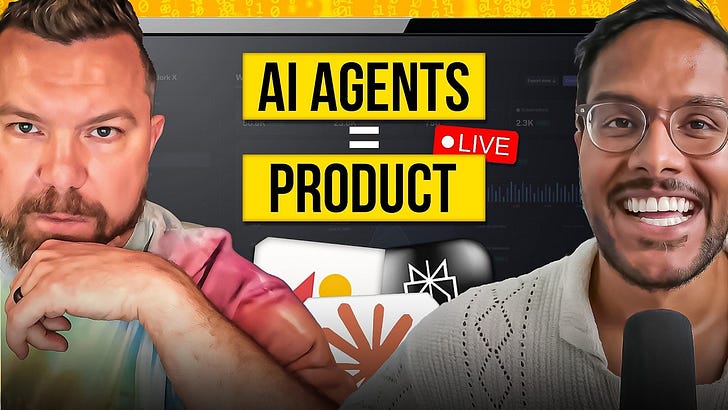
The traditional "assembly line" model of product development (PM -> Design -> Eng) fails with AI. Instead, teams must operate like a "jazz band," where roles are fluid, members "riff" off each other's work, and territorialism is a failure mode. PMs might code and designers might write specs.
