Get your free personalized podcast brief
We scan new podcasts and send you the top 5 insights daily.
Rather than focusing solely on China's potential economic decline, strategists should prepare for the personal decline of Xi Jinping. As autocratic leaders age in power, their behavior, obsessions, and decision-making can change unpredictably, introducing a profound source of global instability.

Related Insights
Understanding Xi requires seeing him as a Mao-style figure who prioritizes ideological purity and absolute control, unlike the pragmatic, market-driven flexibility of Deng Xiaoping. This informs his aggressive domestic purges and makes him a more volatile negotiating partner.

In authoritarian systems like China's, naming a successor creates an immediate alternative power center, leading to tension. Not naming one, however, risks a chaotic power struggle later. Xi Jinping appears to be choosing the latter risk, consolidating power now at the expense of future stability, a classic 'damned if you do, damned if you don't' scenario for autocratic rulers.

A nation is at its most aggressive when it perceives its relative advantage slipping. Both the US and China are in a state of perceived decline, leading them to press their advantages and take bigger risks before their window of opportunity closes, increasing global instability.

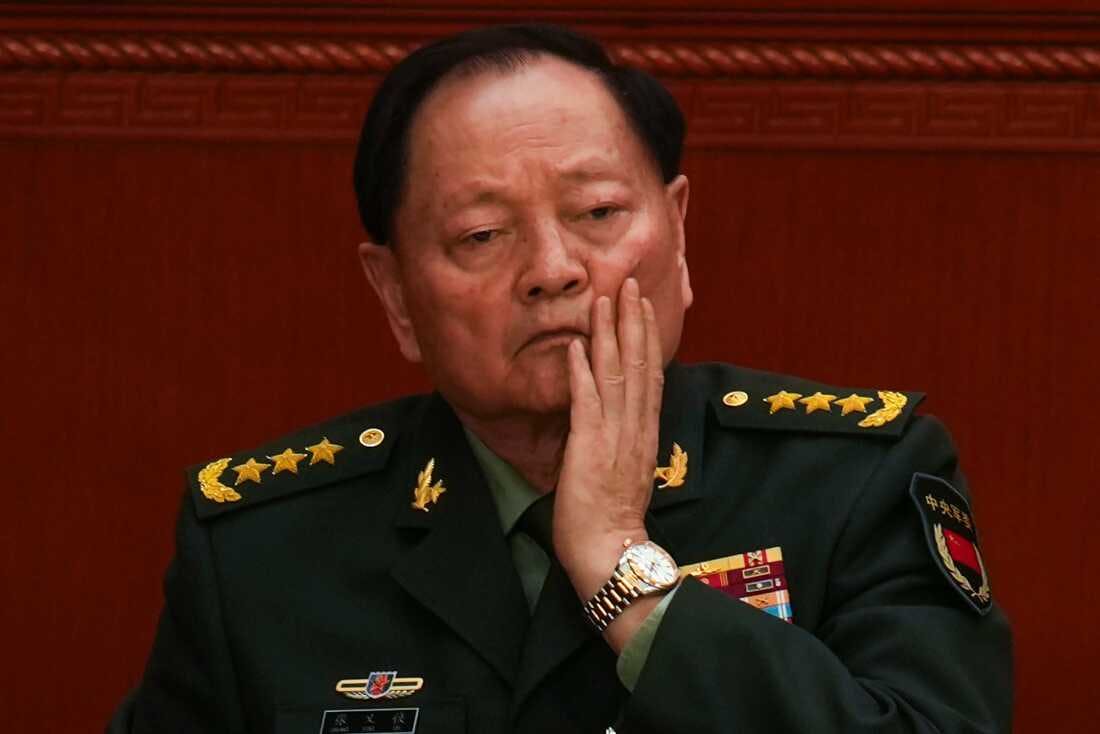
The unprecedented removal of top generals, including longtime confidants, suggests Xi feels his grip on the military is fragile. This is seen as a sign of weakness and concern over the loyalty and combat readiness of his top commanders.
The era following Xi Jinping's rule could be more dangerous than his tenure itself. A successor, potentially from a military junta, might launch a conflict—mirroring Deng Xiaoping's 1979 Vietnam War—to assert their legitimacy and consolidate power over the party and the PLA, creating a highly volatile situation.
The greatest threat to a nation's power isn't an external adversary but internal decay. When leaders prioritize personal monetization and political corruption over national interests, they effectively sell off the foundations of their country's strength, leading to a self-inflicted decline from within.

China is structurally incapable of displacing the U.S. due to a trio of critical weaknesses: Xi Jinping's consolidation of power has paralyzed decision-making, geography boxes in its military, and an irreversible demographic crisis signals imminent collapse.

While the West debates 'Peak China,' Beijing operates under its own 'Peak America' theory. It interprets aggressive US actions not as signs of strength, but as the desperate flailing of a declining power that recognizes time is no longer on its side.

The recent purges have wiped out an entire generational cohort of PLA leaders, not just individuals. This creates a significant succession crisis and leadership vacuum, forcing Xi to promote a new, untested generation of officers with whom he has no established trust.
Traditional international relations theories assuming rational state actors are less predictive in an era dominated by individual leaders like Putin, Trump, and Xi. Their decisions are often driven by personal psychology and political survival, making outcomes highly unpredictable and distinct from state-level interests.