Get your free personalized podcast brief
We scan new podcasts and send you the top 5 insights daily.
The primary driver for AstroForge's asteroid mining isn't just securing rare materials, but achieving superior economics. CEO Matt Gialich states their model could yield 90% gross margins, a stark contrast to the 14% margins of the world's best platinum mines in South Africa, fundamentally changing the industry's financial landscape.
Related Insights
The entire strategy of building data centers in space is only economically feasible because SpaceX's Starship is projected to increase launch capacity by 20 times and drastically lower costs. This specific technological leap turns a sci-fi concept into a viable business model.
Getting to space is now relatively cheap thanks to SpaceX. The next economic revolution will be triggered by solving the much harder problem of bringing materials back from space. This will enable in-space manufacturing and create a true two-way space economy.

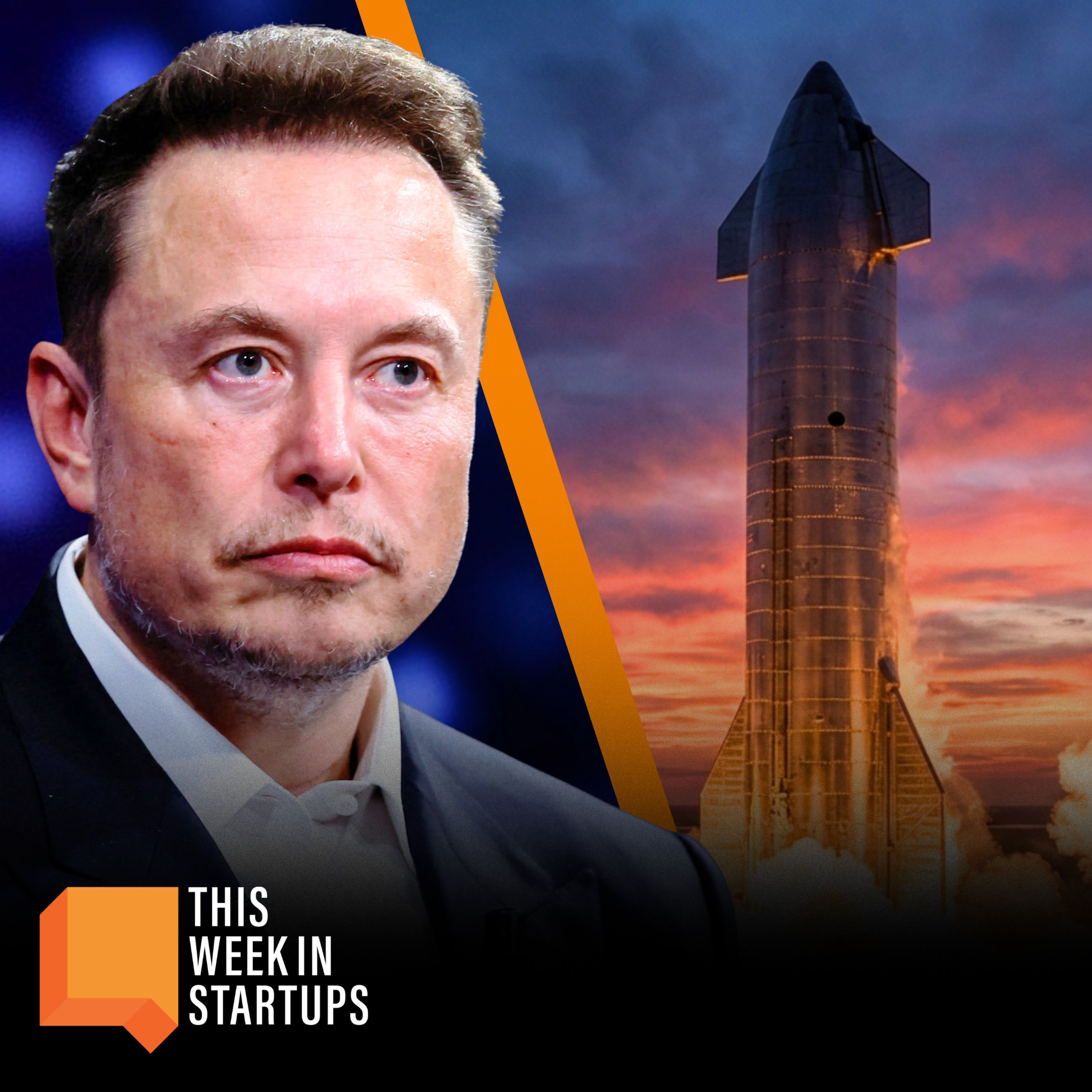
Unlike current rockets, Starship is designed for full and rapid reusability. This aircraft-like operational model is projected to drop the cost per kilogram to orbit from over $1,400 to potentially as low as $10, enabling an economic revolution for space-based infrastructure.

Lux Aeterna's reusable satellites fundamentally change space mission economics. Instead of designing for maximum longevity, companies can now create shorter, purpose-built missions (e.g., six months) for applications like in-space manufacturing, where the value lies in bringing physical materials back to Earth.

Startups are successfully deploying infrastructure like in-orbit GPUs. However, the space economy remains self-referential, serving other space companies. It needs a major commercial application with Earth-based customers, like asteroid mining, to achieve sustainable growth.
To achieve its disruptive $10 million mission cost, AstroForge makes a critical trade-off: data bandwidth. CEO Matt Gialich explains they operate at an extremely low data rate of just 400 bits per second at the asteroid. This makes high-fidelity video impossible but keeps essential communication affordable for a commercial deep space venture.
On Earth, each new data center is more expensive than the last due to land and energy constraints. In space, manufacturing satellites at scale and declining launch costs (via Starship) mean the marginal cost for each new data center goes down, creating fundamentally different scaling economics.

AstroForge's CEO Matt Gialich details the unit economics of their missions. Each mission costs around $10.4 million with a potential return of $105 million from platinum group metals. This high-risk, high-reward model only needs a 1-in-10 success rate to be viable, framing it like an angel investment portfolio.
Global economic models for resources like gold or lithium are based on the assumption of a finite supply within Earth's closed system. Introducing a massive new supply from a captured asteroid would shatter this foundational assumption, potentially collapsing markets and rendering all existing economic calculations obsolete overnight.

Due to constant solar power (5x effectiveness, no batteries needed for nighttime) and avoiding terrestrial regulations, Musk predicts space will become the most economically compelling place for AI compute in less than 36 months.