Get your free personalized podcast brief
We scan new podcasts and send you the top 5 insights daily.
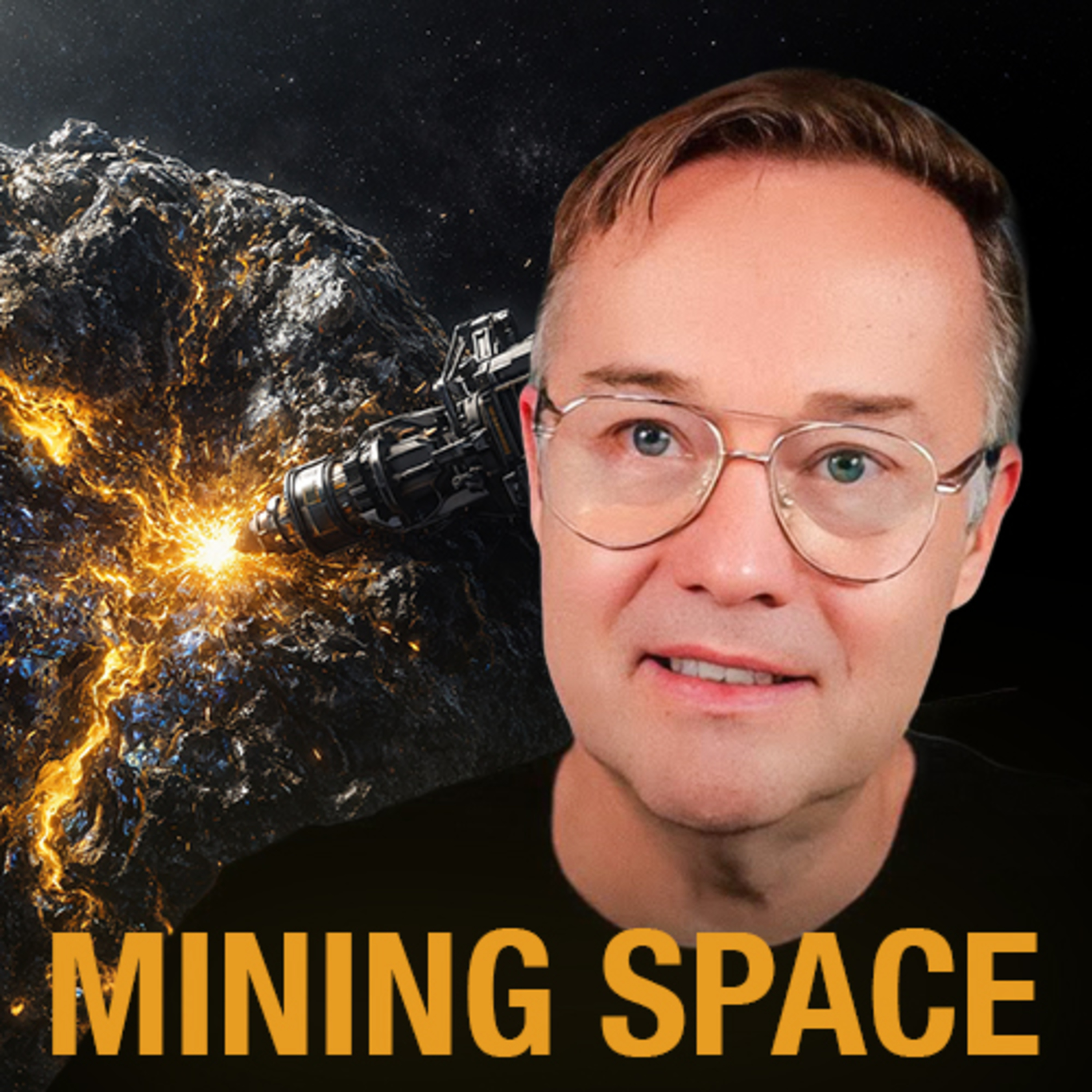
To achieve its disruptive $10 million mission cost, AstroForge makes a critical trade-off: data bandwidth. CEO Matt Gialich explains they operate at an extremely low data rate of just 400 bits per second at the asteroid. This makes high-fidelity video impossible but keeps essential communication affordable for a commercial deep space venture.
Related Insights
The physical distance of space-based data centers creates significant latency. This delay renders them impractical for real-time applications like crypto mining, where a block found in space could be orphaned by the time the data reaches Earth. Their best use is for asynchronous, large-scale computations like AI training.

Google's "Project Suncatcher" aims to place AI data centers in orbit for efficient solar power. However, the project's viability isn't just a technical challenge; it fundamentally requires space transport costs to decrease tenfold. This massive economic hurdle, more than technical feasibility, defines it as a long-term "moonshot" initiative.
A satellite becomes a depreciating asset the moment it launches. Its economic value is derived from the data it transmits back to Earth. Therefore, the amount of ground connectivity is directly proportional to the asset's ROI. Limited ground capacity means expensive satellites are underutilized, wasting taxpayer or investor money.

AstroForge's approach to landing on near-earth asteroids is more like a docking procedure than a traditional landing. By targeting specific metal-rich asteroids, which are magnetic, their spacecraft can simply use magnets to attach itself to the surface, a more delicate and efficient method than depicted in sci-fi.
Skepticism around orbital data centers mirrors early doubts about Starlink, which was initially deemed economically unfeasible. However, SpaceX drastically reduced satellite launch costs by 20x, turning a "pipe dream" into a valuable business. This precedent suggests a similar path to viability exists for space-based AI compute.

The expansion of humanity to the Moon and Mars, using robotics for base-building and mining, will necessitate vast, local computing resources. It is more efficient to process data in space than to transmit it to Earth, creating an inevitable new frontier for data infrastructure.

On Earth, each new data center is more expensive than the last due to land and energy constraints. In space, manufacturing satellites at scale and declining launch costs (via Starship) mean the marginal cost for each new data center goes down, creating fundamentally different scaling economics.
AstroForge's CEO Matt Gialich details the unit economics of their missions. Each mission costs around $10.4 million with a potential return of $105 million from platinum group metals. This high-risk, high-reward model only needs a 1-in-10 success rate to be viable, framing it like an angel investment portfolio.
Starfish Space successfully performed an autonomous satellite rendezvous using just one lightweight camera. By shifting complexity from expensive, specialized hardware to sophisticated software, they are making complex in-orbit operations scalable and cost-effective, effectively industrializing a bespoke process.

The primary driver for AstroForge's asteroid mining isn't just securing rare materials, but achieving superior economics. CEO Matt Gialich states their model could yield 90% gross margins, a stark contrast to the 14% margins of the world's best platinum mines in South Africa, fundamentally changing the industry's financial landscape.