Get your free personalized podcast brief
We scan new podcasts and send you the top 5 insights daily.
Muse builds trust by offering two layers of transparency. For power users, an activity feed details every tool call. For average consumers, a gentle, progressive permission system explains each action and asks for consent, avoiding technical overload while ensuring the user feels in control.

Related Insights
The defining characteristic of an enterprise AI agent isn't its intelligence, but its specific, auditable permissions to perform tasks. This reframes the challenge from managing AI 'thinking' to governing AI 'actions' through trackable access controls, similar to how traditional APIs are managed and monitored.

To build trust, users need Awareness (know when AI is active), Agency (have control over it), and Assurance (confidence in its outputs). This framework, from a former Google DeepMind PM, provides a clear model for designing trustworthy AI experiences by mimicking human trust signals.

To build user trust in high-stakes AI, transparency is a core product feature, not an option. This means surfacing the AI's reasoning, showing its confidence levels, and making trade-offs visible. This clarity transforms the AI from a black box into a collaborative tool, bringing the user into the decision loop.

To trust an agentic AI, users need to see its work, just as a manager would with a new intern. Design patterns like "stream of thought" (showing the AI reasoning) or "planning mode" (presenting an action plan before executing) make the AI's logic legible and give users a chance to intervene, building crucial trust.

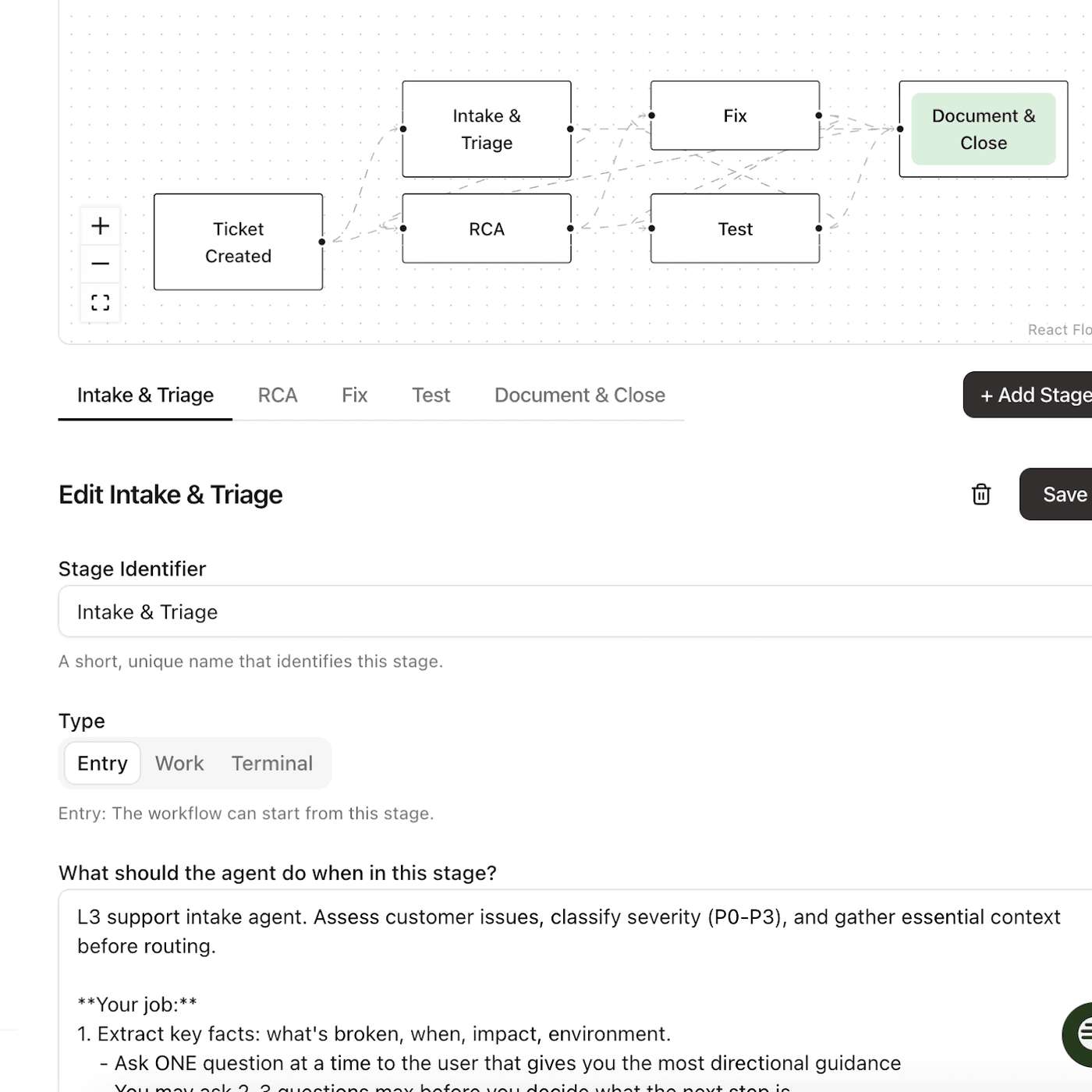
Instead of forcing full autonomy, the AI agent allows teams to start with human approvals at key stages. This 'human-in-the-loop' model builds trust and enables organizations to incrementally automate complex support workflows as they grow more confident in the system's reliability.
A key feature driving positive sentiment for Meta's Muse agent is its transparent user interface. Unlike competitors where tasks happen invisibly, Muse lets users watch a virtual browser perform actions in real-time. This "show your work" approach builds confidence and provides a more satisfying and trustworthy user experience.

To overcome user distrust of AI agents having access to personal data, the adoption path must be gradual. The AI should first provide suggestions for the user to approve (e.g., draft emails). Only after consistently proving its reliability and allowing users to learn its boundaries can trust be established for autonomous action.

Giving a new AI agent full access to all company systems is like giving a new employee wire transfer authority on day one. A smarter approach is to treat them like new hires, granting limited, read-only permissions and expanding access slowly as trust is built.

Before allowing an AI agent to write data or take actions (like sending emails), connect it with read-only permissions to your systems (e.g., calendar, inbox). Observe its behavior for several weeks to build trust and understand its failure modes. This phased approach minimizes the risk of unintended consequences.

Trust is an abstract outcome, not a feature you can directly engineer. To build trustworthy AI systems, focus on three concrete principles: providing visibility into the AI's actions, ensuring predictable behavior for given inputs, and giving users ultimate control to intervene.