The AI's power stems from creating a holistic knowledge graph. It integrates deep codebase analysis—including regressions and fixes—with contextual data from project management and support tools like Jira and Zendesk. This mimics how a top-tier human engineer synthesizes disparate information to solve problems.
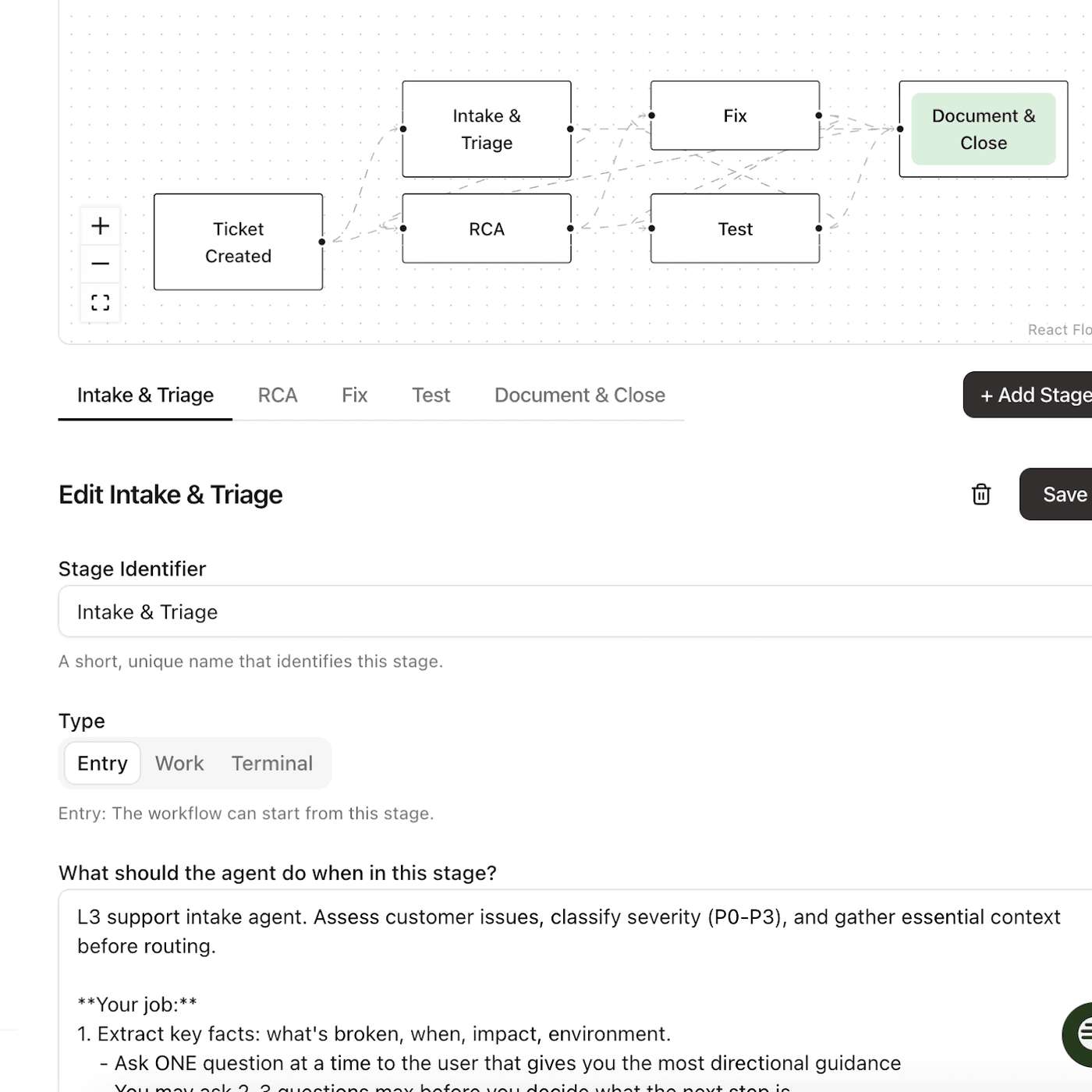
Instead of forcing full autonomy, the AI agent allows teams to start with human approvals at key stages. This 'human-in-the-loop' model builds trust and enables organizations to incrementally automate complex support workflows as they grow more confident in the system's reliability.
The AI agent's purpose is framed not as a replacement for engineers but as a tool to augment them. Its primary function is to handle the tedious, time-consuming tasks known as 'toil'—initial triage, data gathering, and running basic tests—freeing up senior engineers for high-judgment work that requires human expertise.
The AI agent is designed to act like a human team member within existing systems. It performs bi-directional updates in tools like Jira or Linear—adding comments, changing statuses, and assigning tickets. This seamless integration ensures human teams maintain visibility and that established processes aren't disrupted.