Get your free personalized podcast brief
We scan new podcasts and send you the top 5 insights daily.
A key distinction for AI companies is between cloud and edge-deployed models. Since autonomous weapons require on-device processing (edge) to function without a data link, providing only cloud-based APIs creates a technical barrier, allowing companies to support non-lethal functions while avoiding use in weapon systems.

Related Insights
Claims by AI companies that their tech won't be used for direct harm are unenforceable in military contracts. Militaries and nation-states do not follow commercial terms of service; the procurement process gives the government complete control over how technology is ultimately deployed.
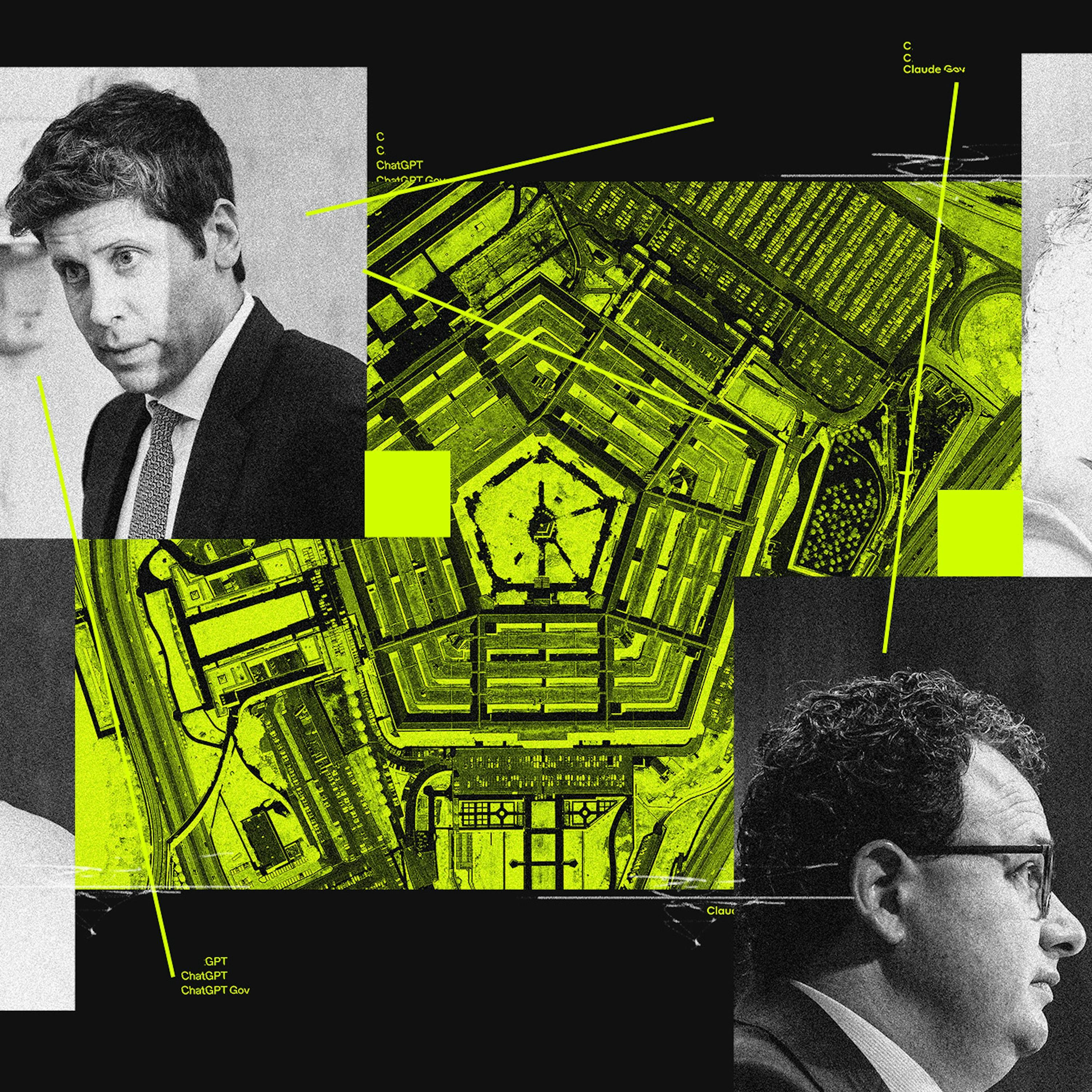
The debate over Anthropic's refusal to work with the military is often mischaracterized. Their actual position was based on two specific terms: no involvement in autonomous weapons (without a human in the loop) and no use for wholesale surveillance of Americans.

If one AI company, like Anthropic, ethically refuses to remove safety guardrails for a government contract, a competitor will likely accept. This dynamic makes it nearly inevitable that advanced AI will be used for military purposes, regardless of any single company's moral stance.

By refusing to allow its models for lethal operations, Anthropic is challenging the U.S. government's authority. This dispute will set a precedent for whether AI companies act as neutral infrastructure or as political entities that can restrict a nation's military use of their technology.

OpenAI agreed to the Pentagon's broad "all lawful uses" contract language—the same clause Anthropic rejected. However, OpenAI implemented technical controls, such as cloud-only deployment, embedded engineers, and model-level safety guardrails, to enforce the same ethical red lines against autonomous weapons and mass surveillance that Anthropic demanded legally.

Defense tech firm Smack Technologies clarifies the objective is not to remove humans entirely. Instead, AI should handle low-value tasks to free up personnel for critical, high-value decisions. This framework, 'intelligent autonomy,' orchestrates manned and unmanned systems while keeping humans in the loop.

Contrary to the 'killer robots' narrative, the military is cautious when integrating new AI. Because system failures can be lethal, testing and evaluation standards are far stricter than in the commercial sector. This conservatism is driven by warfighters who need tools to work flawlessly.

The Department of War is threatening to blacklist Anthropic for prohibiting military use of its AI, a severe penalty typically reserved for foreign adversaries like Huawei. This conflict represents a proxy war over who dictates the terms of AI use: the technology creators or the government.
Countering the common narrative, Anduril views AI in defense as the next step in Just War Theory. The goal is to enhance accuracy, reduce collateral damage, and take soldiers out of harm's way. This continues a historical military trend away from indiscriminate lethality towards surgical precision.

In operations, AI models like Anthropic's Claude are used for intelligence analysis, summarizing media chatter, and running simulations to aid commanders. They are not used for autonomous targeting; any outputs go through layers of human review before influencing battlefield decisions.