Get your free personalized podcast brief
We scan new podcasts and send you the top 5 insights daily.
Contrary to the 'killer robots' narrative, the military is cautious when integrating new AI. Because system failures can be lethal, testing and evaluation standards are far stricter than in the commercial sector. This conservatism is driven by warfighters who need tools to work flawlessly.

Related Insights
Consumers can easily re-prompt a chatbot, but enterprises cannot afford mistakes like shutting down the wrong server. This high-stakes environment means AI agents won't be given autonomy for critical tasks until they can guarantee near-perfect precision and accuracy, creating a major barrier to adoption.

Unlike contractors who oversell a '20 percent solution,' Anthropic's CEO is transparently stating their AI isn't reliable for lethal uses. This 'truth in advertising' is culturally bizarre in a defense sector accustomed to hype, driving the conflict with a Pentagon that wants partners to project capability.

The military doesn't need to invent safety protocols for AI from scratch. Its deeply ingrained culture of checks and balances, rigorous training, rules of engagement, and hierarchical approvals serve as powerful, pre-existing guardrails against the risks of imperfect autonomous systems.
The greatest risk to integrating AI in military systems isn't the technology itself, but the potential for one high-profile failure—a safety event or cyber breach—to trigger a massive regulatory overcorrection, pushing the entire field backward and ceding the advantage to adversaries.

Defense tech firm Smack Technologies clarifies the objective is not to remove humans entirely. Instead, AI should handle low-value tasks to free up personnel for critical, high-value decisions. This framework, 'intelligent autonomy,' orchestrates manned and unmanned systems while keeping humans in the loop.

The Department of War's top AI priority is "applied AI." It consciously avoids building its own foundation models, recognizing it cannot compete with private sector investment. Instead, its strategy is to adapt commercial AI for specific defense use cases.
AI companies engage in "safety revisionism," shifting the definition from preventing tangible harm to abstract concepts like "alignment" or future "existential risks." This tactic allows their inherently inaccurate models to bypass the traditional, rigorous safety standards required for defense and other critical systems.
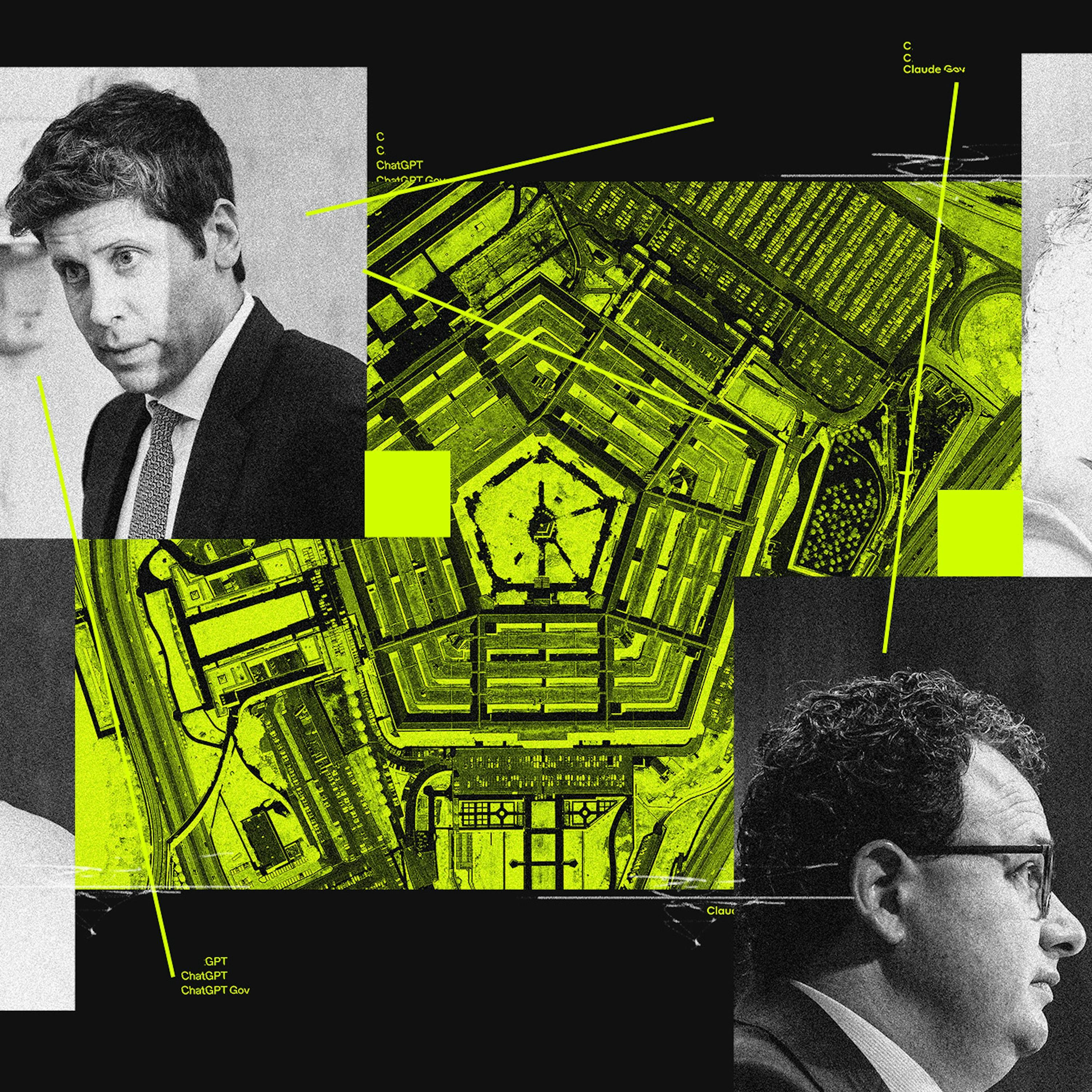
Contrary to popular belief, military procurement involves some of the most rigorous safety and reliability testing. Current generative AI models, with their inherent high error rates, fall far short of these established thresholds that have long been required for defense systems.
In operations, AI models like Anthropic's Claude are used for intelligence analysis, summarizing media chatter, and running simulations to aid commanders. They are not used for autonomous targeting; any outputs go through layers of human review before influencing battlefield decisions.
The rise of drones is more than an incremental improvement; it's a paradigm shift. Warfare is moving from human-manned systems where lives are always at risk to autonomous ones where mission success hinges on technological reliability. This changes cost-benefit analyses and reduces direct human exposure in conflict.