Get your free personalized podcast brief
We scan new podcasts and send you the top 5 insights daily.
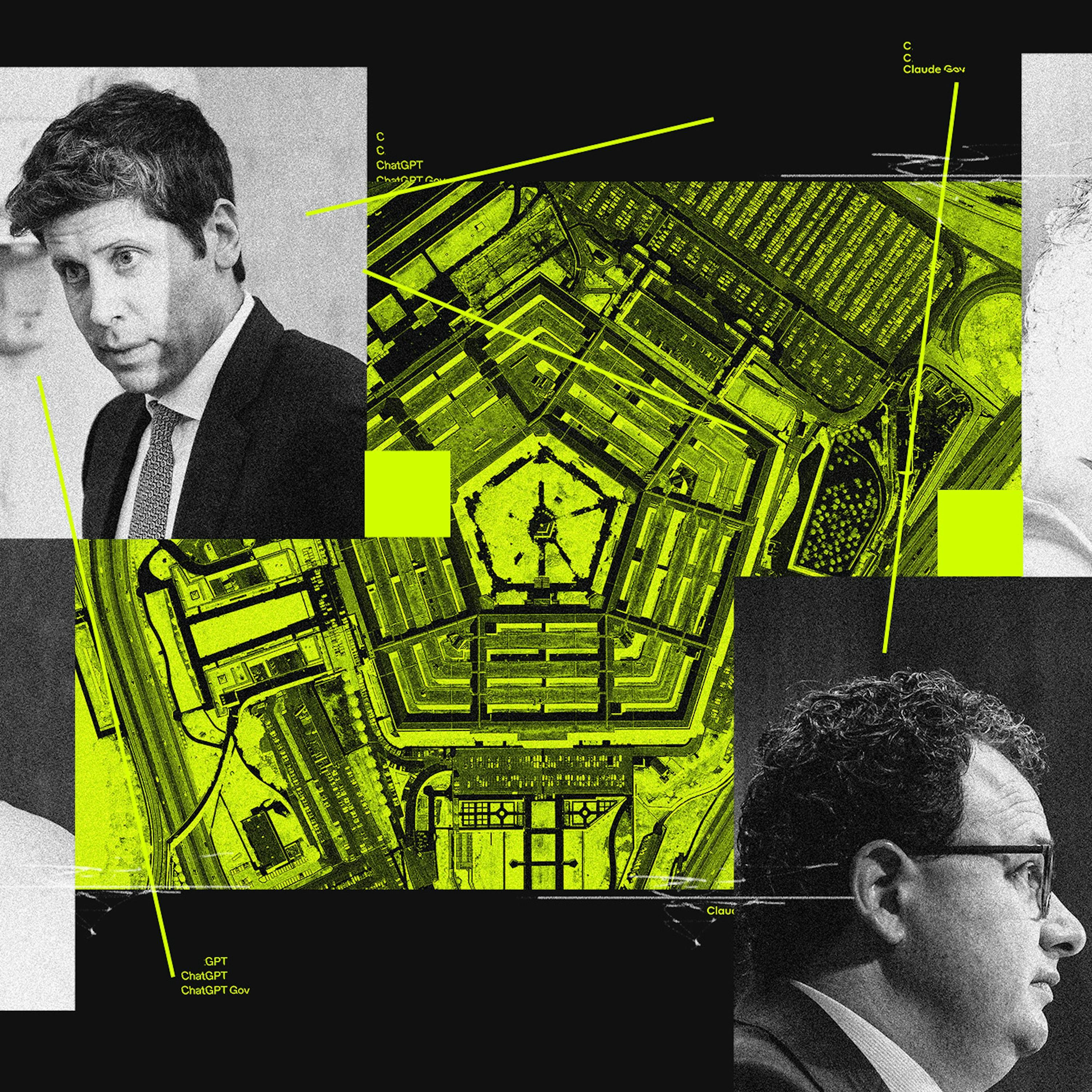
The Department of War is threatening to blacklist Anthropic for prohibiting military use of its AI, a severe penalty typically reserved for foreign adversaries like Huawei. This conflict represents a proxy war over who dictates the terms of AI use: the technology creators or the government.

Related Insights
Claims by AI companies that their tech won't be used for direct harm are unenforceable in military contracts. Militaries and nation-states do not follow commercial terms of service; the procurement process gives the government complete control over how technology is ultimately deployed.
Dario Amodei, CEO of Anthropic, frames the debate over selling advanced GPUs to China not as a trade issue, but as a severe national security risk. He compares it to selling nuclear weapons, arguing that it arms a geopolitical competitor with the foundational technology for advanced AI, which he calls "a country of geniuses in a data center."

Leading AI companies, facing high operational costs and a lack of profitability, are turning to lucrative government and military contracts. This provides a stable revenue stream and de-risks their portfolios with government subsidies, despite previous ethical stances against military use.
David Sachs, the Trump administration's AI czar, publicly accused Anthropic of using "fear mongering" to achieve "regulatory capture." This exact phrase, "fear based regulatory capture strategy," then appeared in a leaked draft executive order, revealing a direct link between the administration's public rhetoric and its formal policy-making.

By refusing to allow its models for lethal operations, Anthropic is challenging the U.S. government's authority. This dispute will set a precedent for whether AI companies act as neutral infrastructure or as political entities that can restrict a nation's military use of their technology.
Anthropic is publicly warning that frontier AI models are becoming "real and mysterious creatures" with signs of "situational awareness." This high-stakes position, which calls for caution and regulation, has drawn accusations of "regulatory capture" from the White House AI czar, putting Anthropic in a precarious political position.
Anthropic faces a critical dilemma. Its reputation for safety attracts lucrative enterprise clients, but this very stance risks being labeled "woke" by the Trump administration, which has banned such AI in government contracts. This forces the company to walk a fine line between its brand identity and political reality.

By publicly clashing with the Pentagon over military use and emphasizing safety, Anthropic is positioning itself as the "clean, well-lit corner" of the AI world. This builds trust with large enterprise clients who prioritize risk management and predictability, creating a competitive advantage over rivals like OpenAI.

Anthropic's commitment to AI safety, exemplified by its Societal Impacts team, isn't just about ethics. It's a calculated business move to attract high-value enterprise, government, and academic clients who prioritize responsibility and predictability over potentially reckless technology.
When a government official like David Sachs singles out a specific company (Anthropic) for not aligning with the administration's agenda, it is a dangerous departure from neutral policymaking. It signals a move towards an authoritarian model of rewarding allies and punishing dissenters in the private sector.
