Get your free personalized podcast brief
We scan new podcasts and send you the top 5 insights daily.
Beyond its well-known financial lobby, Israel's political power is attributed to providing valuable, and perhaps "ill-gotten," intelligence that US agencies can't touch. This creates a dependency that presidents are unwilling to sever, regardless of political pressure.

Related Insights
Focusing anger on one group's effective use of lobbying (e.g., the "Israel lobby") is a flawed approach. The real issue is the system that allows money in politics. Simply removing one player creates a power vacuum that another wealthy individual or group will immediately fill.
The peace deal materialized only after President Trump became personally and seriously invested. His direct pressure on Prime Minister Netanyahu was the critical factor in shifting Israel's position, suggesting that previous, less forceful American approaches missed opportunities to end the conflict sooner.

The CIA's role as a central hub means it processes and brands intelligence from other sources, including foreign agencies. This masks the true origin of the intel, giving the CIA public credit for successes that were largely dependent on information selectively shared by its partners.

The CIA has been significantly degraded, with estimates suggesting 65% of its intelligence now comes from foreign allies. For Iran specifically, the US is highly dependent on Israel's superior intelligence network, raising questions about whether Israeli interests are directing US military actions.

While a Trump administration might be tempted to cut a deal and withdraw from conflict with Iran, Israel's post-October 7th security doctrine has changed. Netanyahu's government will likely push hard for complete regime change, complicating any US efforts to de-escalate for political convenience.

The US attack on Iran was not part of a grand strategy, but the result of Israeli PM Benjamin Netanyahu's two-decade campaign to persuade a US president to act. Professor Allison describes Netanyahu as a 'magician' who successfully 'mesmerized' President Trump into initiating what is effectively 'Bibi's war.'
While currently aligned, the long-term interests of Israel and the US in a war with Iran could split. Israel seeks total elimination of Iran's missile threat, implying a prolonged conflict. The US, however, may have less tolerance for a drawn-out war due to concerns about its impact on global energy prices and the economy.
The proposed peace deal’s elements have been discussed for months. The breakthrough isn't the plan itself, but President Trump's willingness to strong-arm Israeli Prime Minister Netanyahu into agreement, a tactic previously avoided by both Trump and his predecessor Joe Biden.
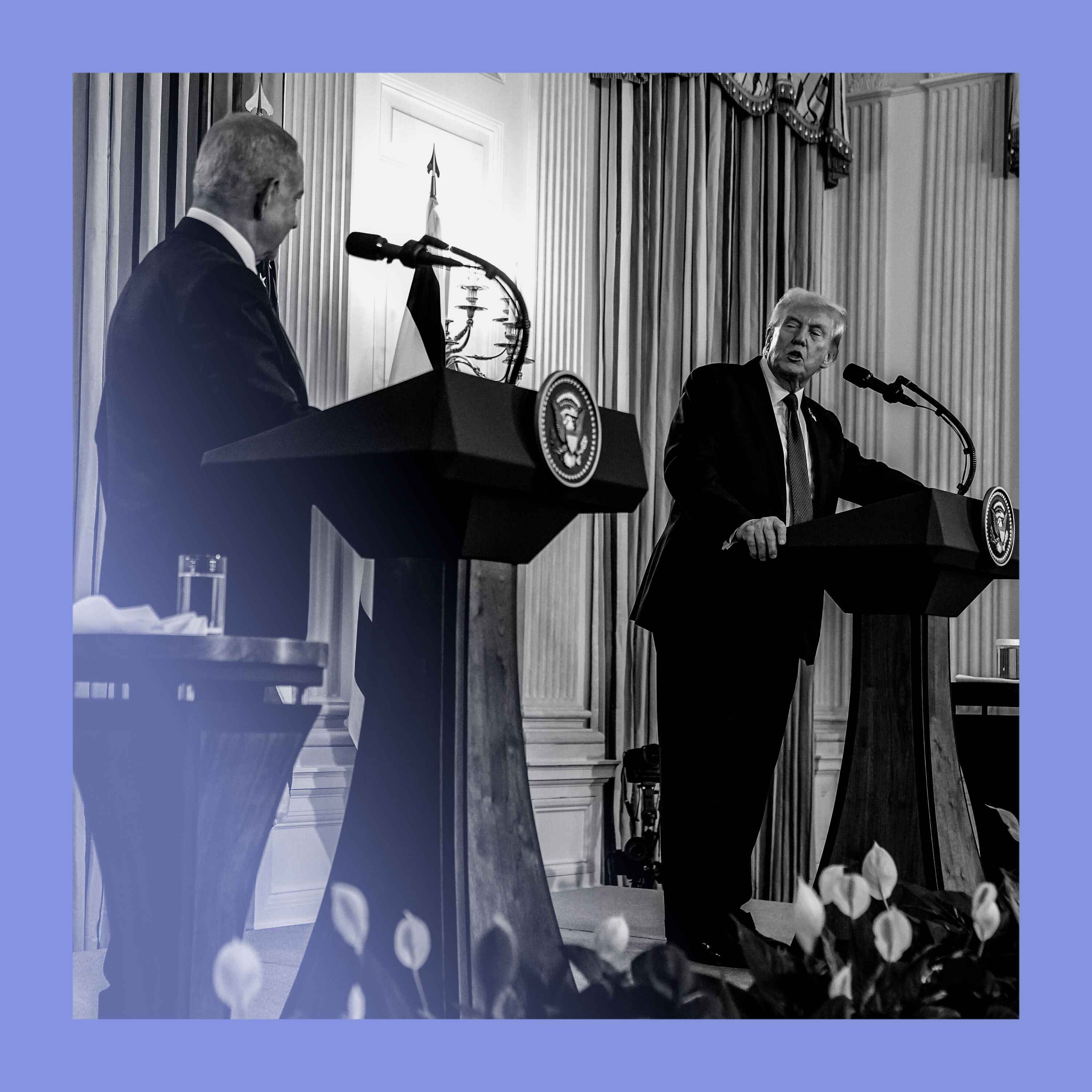
An ex-CIA spy breaks down "influence literacy." Foreign leaders like Netanyahu strategically speak English, focus on threats to America, and use emotionally charged words like "blackmail" to bypass their domestic audience and directly shape U.S. public opinion and policy.
Despite a united military front against Iran, the US and Israel have divergent long-term goals. The Trump administration aims for a "Venezuela outcome"—a controlled regime ensuring oil flow—while Netanyahu's government is focused on total regime change, creating potential for a future strategic clash.
