Get your free personalized podcast brief
We scan new podcasts and send you the top 5 insights daily.
A user reports their sleep issues were cured by simply stopping wearing their Whoop tracker. This illustrates how obsessing over health metrics can become a source of anxiety, creating a 'nocebo effect' where the act of measurement negatively impacts the outcome it's supposed to improve.

Related Insights
Psychiatrist Ellen Vora posits that much of our anxiety is an avoidable physical stress response to modern habits like blood sugar crashes, caffeine, or sleep deprivation. The brain then misinterprets these physical signals as a psychological threat, creating a cycle of worry.

Research shows a strong placebo effect tied to sleep scores from wearables. Seeing a high score can boost your cognitive and physical performance even after a mediocre night's sleep. Conversely, a poor score can diminish performance even if you slept well. The perception of sleep quality significantly impacts real-world ability.

A man in a clinical trial attempted suicide by taking his entire bottle of pills. He developed life-threatening symptoms of an overdose—plummeting blood pressure and heart rate—despite taking only sugar pills. This highlights the nocebo effect, where negative beliefs create real, physical harm.

While step trackers motivate action, sleep trackers often just confirm an insomniac's fears. This provides negative data without an easy fix, increasing anxiety and creating a vicious cycle. Their questionable accuracy on sleep stages can further fuel this worry.

The biohacking movement's focus on interventions like supplements is flawed without first tracking baseline data. To truly "hack" health, one must measure their normal state to see if interventions are effective. Otherwise, it's impossible to know which of the dozens of changes are actually working.

While wearables generate vast amounts of health data, the medical system lacks the evidence to interpret these signals accurately for healthy individuals. This creates a risk of false positives ('incidentalomas'), causing unnecessary anxiety and hindering adoption of proactive health tech.

Data-driven health optimization creates a tension where users may forgo enjoyable social experiences to avoid negatively impacting their health scores. This "Pleasure to Measure Trade-off" poses a long-term risk to the wearable market as consumers reach "optimization saturation."

Relying too heavily on metrics from devices like sleep trackers can be counterproductive. Waking up feeling great, only to see a "bad sleep score," can negatively influence your physical and mental state for the day, demonstrating a powerful nocebo effect where data trumps reality.

The habit of checking your phone immediately upon waking conditions your brain to anticipate a morning anxiety spike from incoming messages and agendas. This creates a state of 'anticipatory anxiety' before you even fall asleep, leading to shallower, less restorative rest.

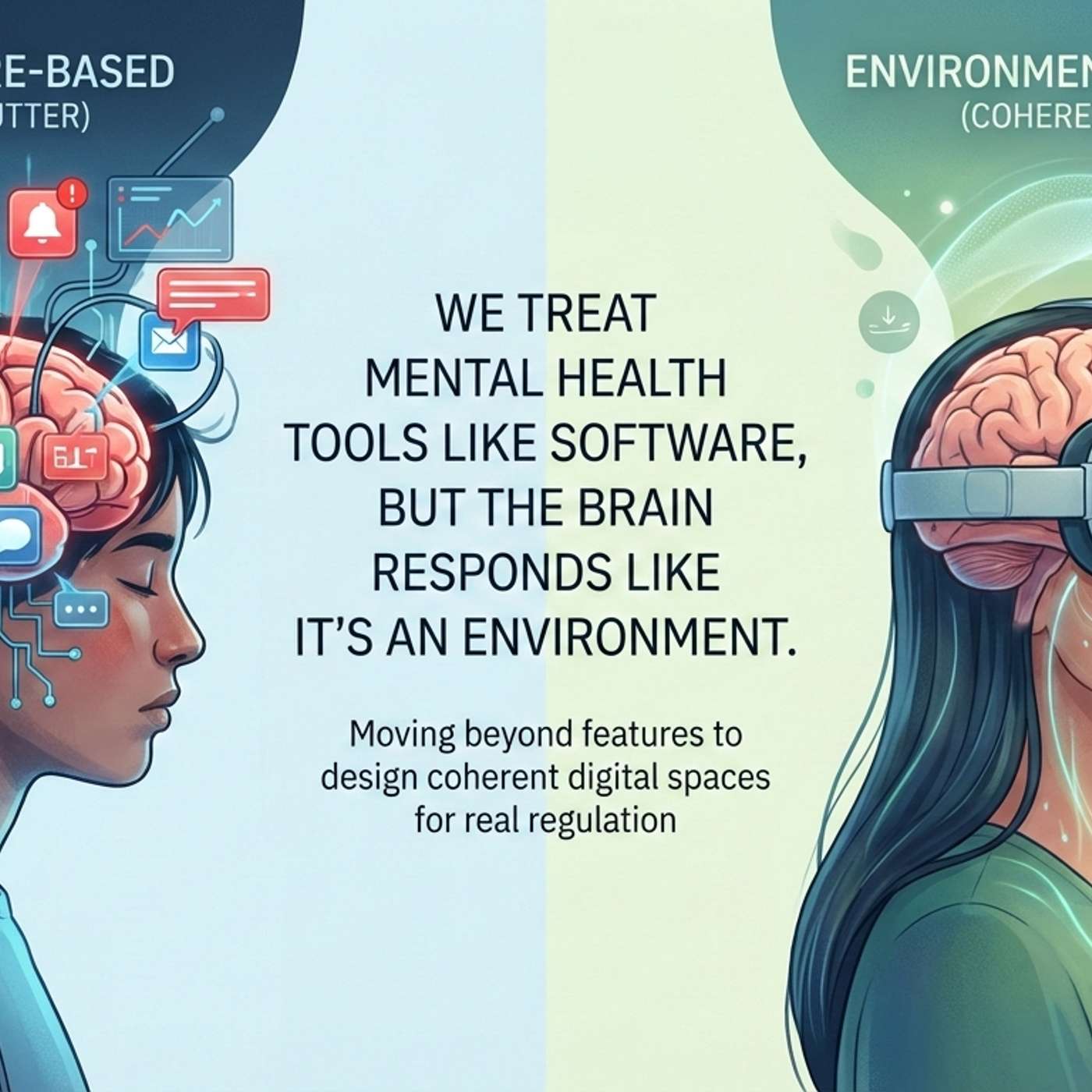
The brain perceives digital products as environments, not isolated features. A calming feature within a fragmented, attention-hungry app will fail because the surrounding context constantly pulls the nervous system into stress. The 'container' is more critical for lasting results than the specific intervention or content.