Get your free personalized podcast brief
We scan new podcasts and send you the top 5 insights daily.
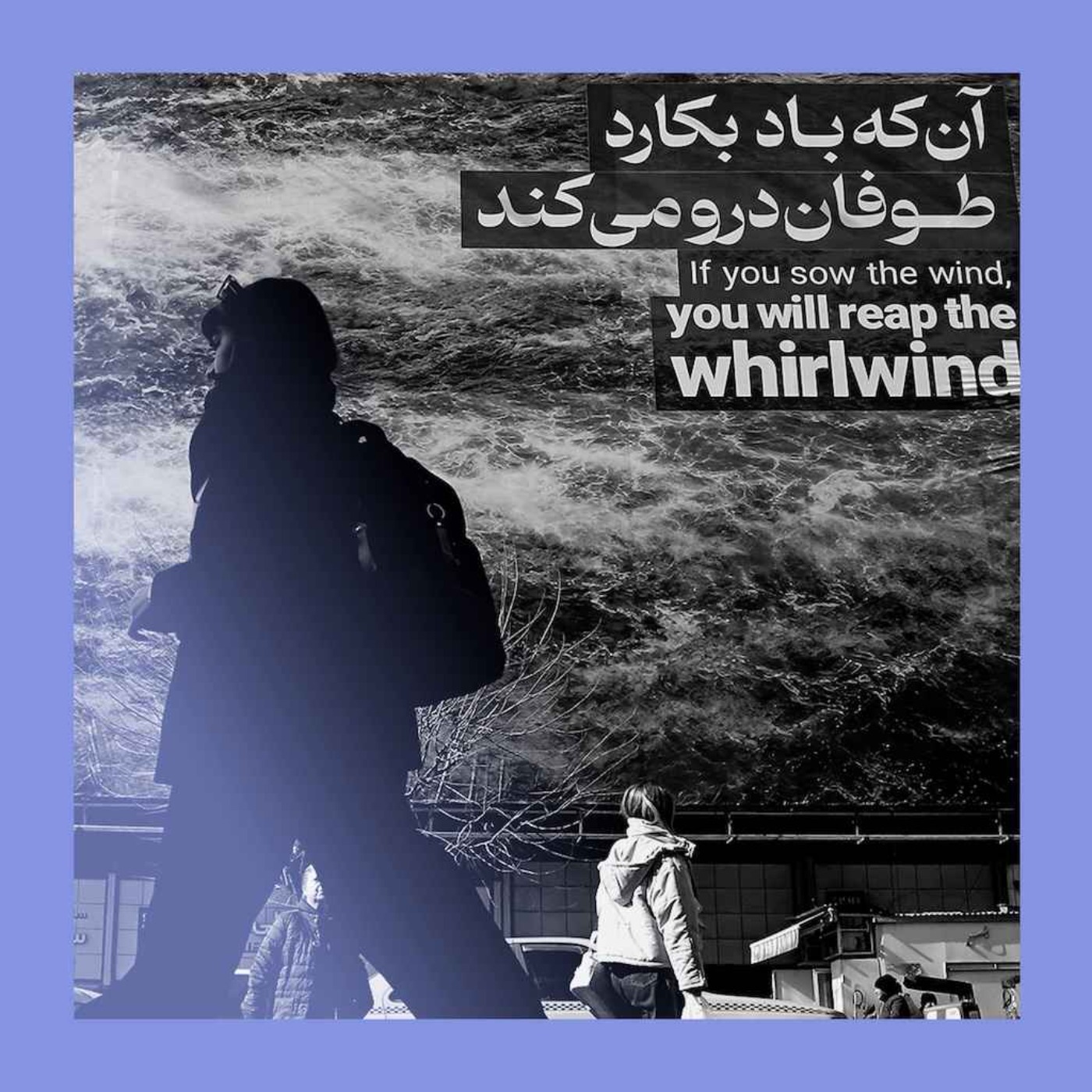
The Iranian state interpreted the January uprisings not as a grassroots revolution but as an externally instigated attempt to trigger a Syria-style civil war. This perception, shaped by its own involvement in Syria, led to a brutal crackdown, viewing the protestors as part of a foreign military campaign.

Related Insights
Iran perceives the conflict not as a regional dispute but as a direct threat to its existence. Its strategy is to make the war so costly for adversaries that it secures long-term guarantees against future attacks, framing its actions through a lens of survival.

Iran's government created propaganda claiming theorist Gene Sharp, who worked with Dr. King, is a CIA operative. They use this to paint domestic protests as foreign-backed coups—a tactic of delegitimization ironically echoed by some U.S. commentators against American protesters.
A destabilized Iranian regime is more dangerous, not less. Israeli intelligence fears Tehran might launch a strike on a foreign enemy like Israel to distract its populace, create a "rally 'round the flag" effect, and restore military pride after recent setbacks.

Contrary to weakening the Iranian regime, US military actions have had the opposite effect. An Iranian reporter notes that the strikes shifted public focus away from mass domestic protests and toward national unity against a foreign aggressor, creating an unintended "rally around the flag" effect.

The conflict did not empower Iran's opposition; it terrorized civilians and justified the installation of a military government. The regime used the war to intensify its crackdown on dissent, making the Iranian people and their democratic aspirations the primary casualties.
With its credibility destroyed by bloodshed, the Iranian regime's only remaining leverage over some citizens is the fear of a chaotic power vacuum. The prospect of a full-blown civil war may convince some to tolerate the current oppression over the alternative of total state collapse.
The ongoing war provides the Iranian regime with a pretext for heightened internal security. This allows it to suppress domestic protests and dissent, framing internal control as a necessary measure while managing an external existential threat.
The current Iranian protests are uniquely potent because the regime is at its weakest geopolitically. The loss of regional proxies like Hezbollah and Hamas, coupled with key ally Russia's preoccupation with Ukraine, has left the Iranian government more isolated and vulnerable than during any previous wave of unrest.

Unlike nascent revolutionary states that rally against foreign attacks, late-stage dictatorships are weakened by military defeats. Iran's recent humiliations by Israel and the US have exposed incompetence and eroded the public's perception of strength, fueling protests and accelerating the regime's demise.
The Iranian regime's strategy extends beyond killing protesters; it actively dishonors their memory. By piling up bodies, charging families for their return, and limiting funerals, the state is purposefully humiliating the public, which in turn exacerbates anger and hardens opposition.