Get your free personalized podcast brief
We scan new podcasts and send you the top 5 insights daily.
Iran perceives the conflict not as a regional dispute but as a direct threat to its existence. Its strategy is to make the war so costly for adversaries that it secures long-term guarantees against future attacks, framing its actions through a lens of survival.

Related Insights
Constant military pressure and assassinations remove any disincentive for Iran to pursue nuclear weapons. When a regime is already being attacked, acquiring a nuclear deterrent becomes its most logical and effective path to survival, mirroring North Korea's strategy.

Iran's strategy is not purely defensive. It is actively trying to escalate the conflict and draw in more countries by targeting other nations, such as firing a missile towards Turkey, a NATO member. This tactic aims to increase the political and military cost for the United States.

The bombing campaign, aimed at regime change, could be counterproductive. Prior to the conflict, Iran's regime was seen as unpopular and frail, potentially heading for collapse or moderation. The external attack risks creating a rally-round-the-flag effect, allowing the regime to consolidate power where mere survival becomes a victory.
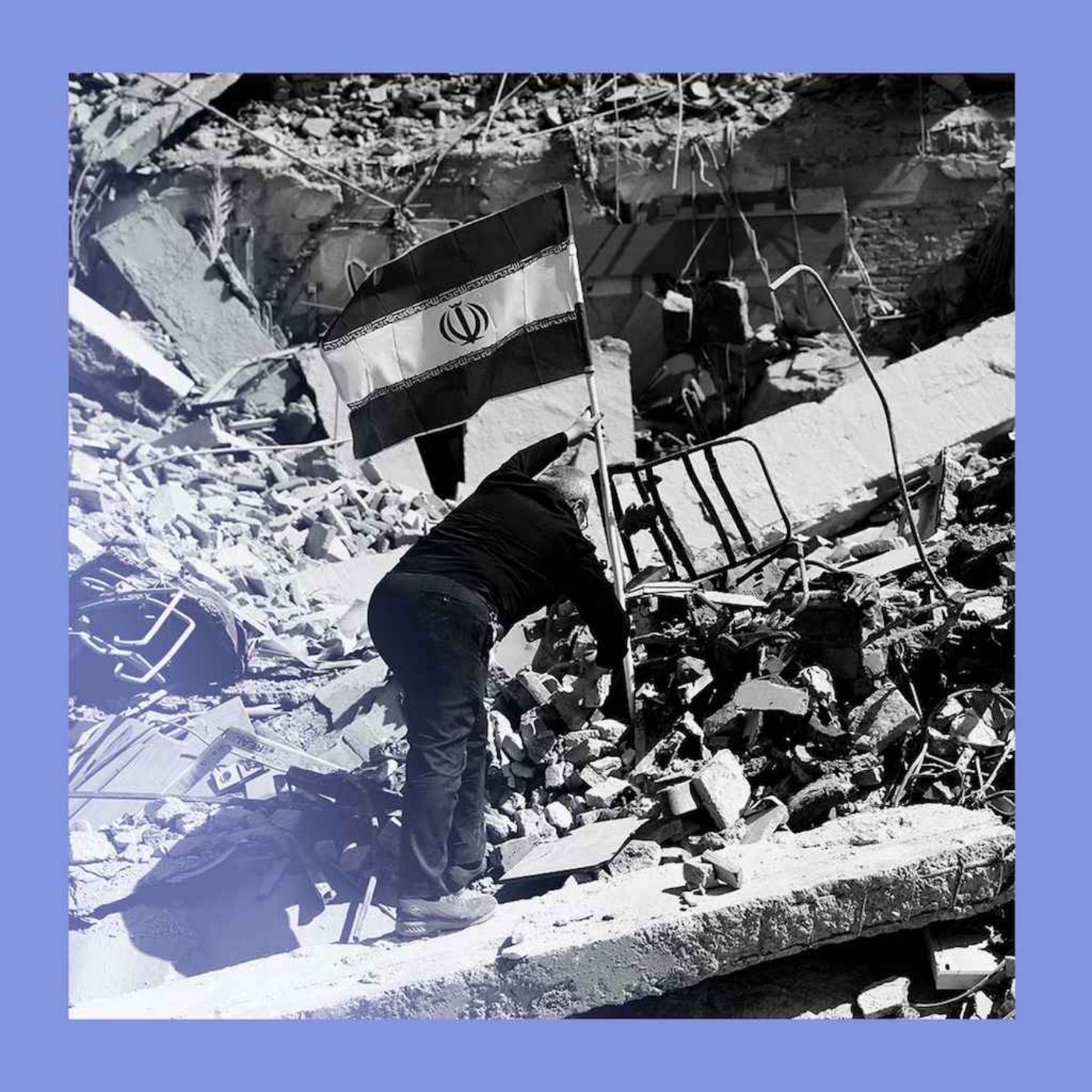
Iran's strategy involves striking non-combatant US allies like the UAE and Saudi Arabia. This imposes broad regional pain, demonstrating to the world that the economic and political costs of attacking Iran will be too high for anyone to bear, thus restoring long-term deterrence.

Despite facing conventionally superior US and Israeli forces that can degrade its missile and nuclear capabilities, Iran leverages low-cost asymmetric tactics like drone strikes. This strategy allows it to inflict continuous damage and prolong the conflict without needing to match its adversaries' military might.
Iran's victory condition isn't military dominance but strategic disruption. By using asymmetric warfare—mines, drones, and missiles—to create chaos in the Strait of Hormuz, it can halt the flow of oil. This cracks the petrodollar system and achieves its primary geopolitical objective without needing to defeat the US Navy in a conventional battle.

Iran's strategy isn't a quick military victory but a war of attrition. By accepting a long timeline and inflicting small but consistent damage, it aims to erode US domestic support for the war, especially in an election year, and outlast the current administration.

The ongoing war provides the Iranian regime with a pretext for heightened internal security. This allows it to suppress domestic protests and dissent, framing internal control as a necessary measure while managing an external existential threat.
Iran's attacks on Gulf states are a calculated strategy to distribute the conflict's costs. By disrupting commerce, tourism, and daily life across the region, Tehran hopes to generate enough pressure from Gulf leaders on the US to end the war with security guarantees for Iran.
Despite significant military losses, Iran is successfully leveraging its control over the Strait of Hormuz. This asymmetric strategy chokes global energy markets, creating economic pain that Western nations may be less willing to endure than Iran, potentially snatching a strategic victory from a tactical defeat.
