Get your free personalized podcast brief
We scan new podcasts and send you the top 5 insights daily.
When asked for a 'request for startups,' Blake Resnick pointed to a specific, critical need in the drone industry: high-quality, American-made camera payloads. These self-contained components with high-res thermal and zoom are in short supply, creating a significant opportunity for a new hardware company to serve manufacturers like Brink and even Anduril.

Related Insights
The U.S. faces a significant national security risk because its drone manufacturing relies heavily on Chinese components. From camera lenses to the PCBs that connect sensors, key parts are nearly impossible to source elsewhere without incurring massive cost increases, hindering domestic production capacity.
Large companies often focus R&D on high-ticket items, neglecting smaller accessory categories. This creates a market gap for focused startups to innovate and solve specific problems that bigger players overlook, allowing them to build a defensible niche.

While designed to build drones at the point of need, Firestorm's containerized 3D-printing factory is proving invaluable for manufacturing basic repair parts for other military hardware. It can print a replacement for a simple part like a coolant tank that otherwise has a 10-month supply chain lead time.

Identifying the defense industrial base as "rotted out," Mock Industries is taking a bottom-up approach. Instead of just building platforms, it vertically integrates to produce high-performance subsystems (radars, engines) and sells them to other primes, aiming to fix the entire ecosystem.

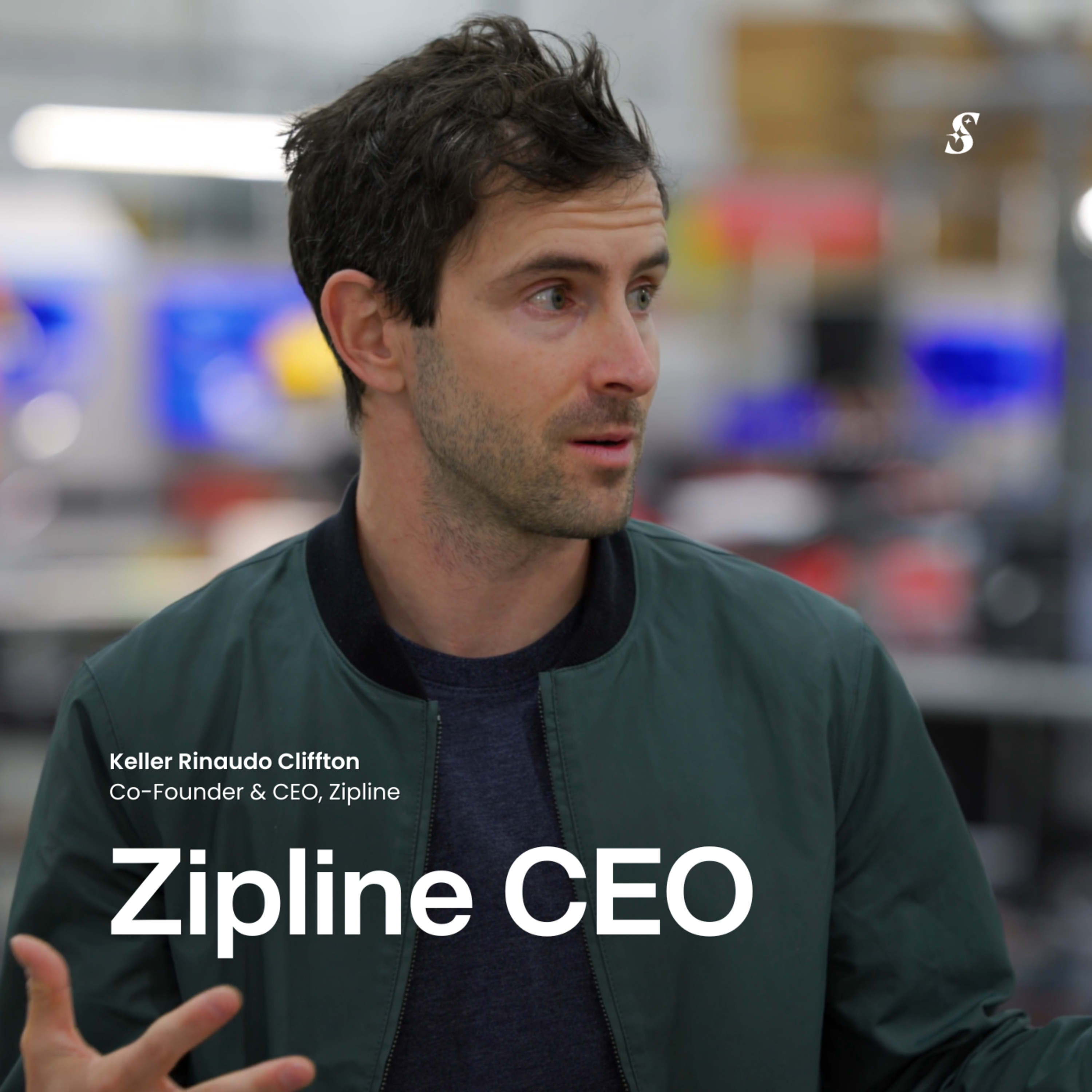
Hardware founders often fixate on the core device. Zipline learned the hard way that their aircraft was only 15% of the total system complexity. The truly difficult challenges lay in the surrounding logistics: inventory management, cold chain, maintenance, air traffic control, and ground infrastructure.

While the US can assemble advanced drones, a significant national security risk lies in the supply chain for their basic components, many of which come from China. The strategic imperative is to "shift left" and onshore the manufacturing of these foundational parts to secure the entire defense industrial base, not just the final product.

While VCs chase application-layer defense tech like drones, a larger, more critical opportunity lies in rebuilding the underlying domestic supply chain. The US reliance on China for rare earths, pharmaceuticals, and other components is a key vulnerability. Startups that solve this foundational problem represent the next investment frontier.

As the US re-shores manufacturing, VCs are strategically investing in domestic component makers (e.g., motors, magnets) that can supply multiple portfolio companies. This de-risks the entire ecosystem by creating a reliable, local supply chain for critical parts.

Zipline's CEO argues the US can't compete with China's scale on simple drones. The winning strategy is to innovate on complex, state-of-the-art aircraft where America leads, and then scale that manufacturing advantage.

Zipline had to build its own components because the market only offered two extremes: cheap, unreliable consumer drone parts or prohibitively expensive military-grade systems. This "automotive grade" gap for reliable, cost-effective components forced them to vertically integrate to achieve their performance and cost goals.