Get your free personalized podcast brief
We scan new podcasts and send you the top 5 insights daily.
Advanced AI models can now build simple games from prompts, lowering the previously high barrier to entry for interactive marketing. What once required a dedicated development team can now be prototyped by a solopreneur over a weekend, creating more engaging, hands-on brand experiences than traditional content.

Related Insights
Nanogram, a 'TikTok for games' app, uses AI agents and a custom engine to allow users to generate fully playable 3D games from simple text prompts. What once took a programmer a week can now be accomplished in about 90 seconds, dramatically lowering the barrier to game creation.
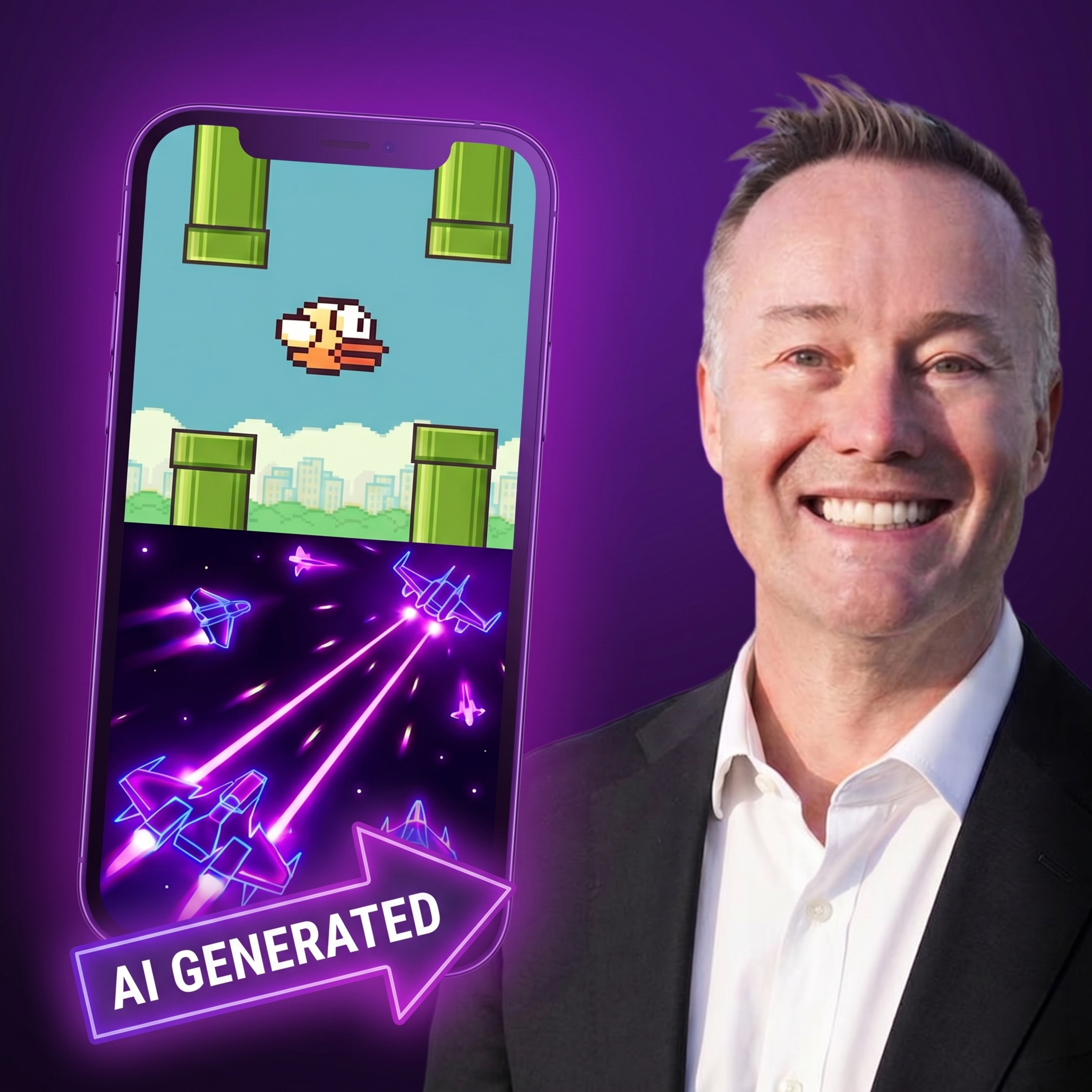
Previously, the high cost of software development meant products needed to achieve scale to be successful. AI lowers this barrier, making it practical to build custom applications for very small, niche audiences (e.g., a Super Bowl app for 15 family members) that were never financially viable before.

AI tools are dissolving the traditional lines between marketing, engineering, and design. Marketers can now build interactive tools, generate high-quality visuals, and perform technical tasks without developer support, making them more self-sufficient and faster-moving 'hybrid operators.'

Brands can use AI coding tools like Gemini to quickly build simple, themed games. These games act as engaging, shareable content for social media marketing campaigns, offering a fresh way to capture audience attention beyond traditional ads and posts.

AI coding models enable the rapid creation of simple, browser-based mini-games. What used to be a tweet or a Photoshop meme can now become an interactive experience, lowering the barrier for creating niche, humorous content that would have been uneconomical to produce.

As AI automates content generation, the key differentiator for marketers will be creating interactive experiences, like micro-sites, scorecards, or light versions of a product. With modern no-code tools, marketers no longer need to rely on engineers, allowing them to own the entire workflow from idea to execution.

BuzzFeed is using AI-powered toolkits that allow creative staff, like writers, to design and launch interactive products such as games. This dramatically increases the speed and volume of new product experimentation without relying on traditional engineering resources.

AI coding assistants have dramatically lowered the barrier to creating applications. This means marketers can now build interactive tools and experiences as easily as they once created static PDFs or ebooks, offering a far more engaging way to capture demand and generate leads.

While generative video is a focus, the most impactful application of generative AI in advertising right now is creating interactive ad units. These units, which allow users to demo a product or play a mini-game, drive the majority of engagement. Generative tools make it feasible for non-gaming e-commerce brands to adopt this highly effective, gamified format.
Marketers without coding skills can develop sophisticated internal tools. By describing a vision to an AI, they can generate code for a prototype, then use the AI to debug and migrate it to different platforms, effectively becoming a software developer.
