Get your free personalized podcast brief
We scan new podcasts and send you the top 5 insights daily.
The model's core innovation is generating synchronized video and audio in a single process. This unified approach automatically matches sound, voice, and pacing to visuals, directly targeting creators by removing the need for complex and separate audio post-production, thus streamlining the storytelling workflow.

Related Insights
ByteDance's SeedDance 2.0 model integrates audio generation directly with video, a novel approach that suggests China may be starting to leapfrog the US in specific AI capabilities. This challenges the common narrative that China is only a fast follower in the AI race.

Seedance V2's multi-input capability—combining images, videos, and audio—makes it function more like an advanced video editor than a simple text-to-video tool. This reframes its use case from pure creation to complex modification and composition, enabling tasks like character and background replacement within existing footage.

With the release of OpenAI's new video generation model, Sora 2, a surprising inversion has occurred. The generated video is so realistic that the accompanying AI-generated audio is now the more noticeable and identifiable artificial component, signaling a new frontier in multimedia synthesis.

While many competitors focus on prompt-based "agentic editing," Tela's founder believes this is a temporary step. The ultimate goal is for AI to analyze a raw recording and automatically produce a high-quality final video without any user prompts or editing commands, leaving only the 'fun part of telling your story'.

Traditional video models process an entire clip at once, causing delays. Descartes' Mirage model is autoregressive, predicting only the next frame based on the input stream and previously generated frames. This LLM-like approach is what enables its real-time, low-latency performance.

The next leap in video generation won't come from monolithic models but from AI agents. These LLM-driven agents will use a suite of tools—including diffusion models, video editors like FFmpeg, and image editors—to iteratively create and refine complex, long-form videos.
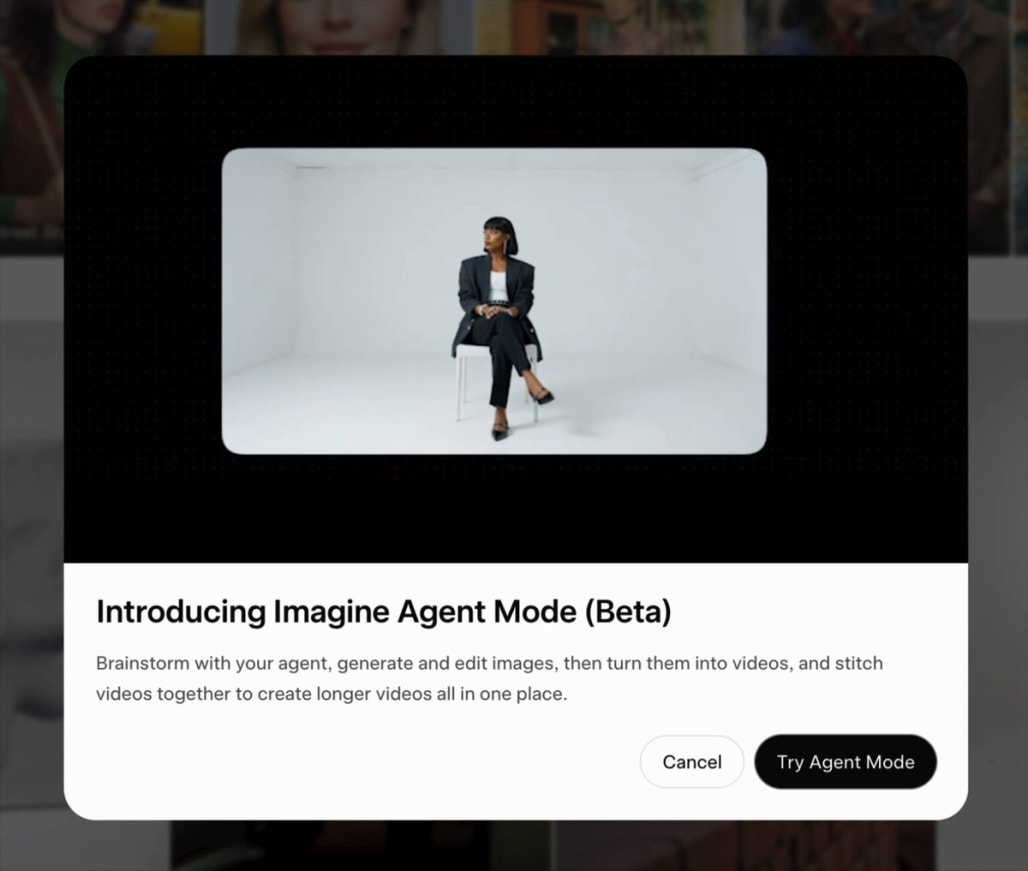
Exceptional AI content comes not from mastering one tool, but from orchestrating a workflow of specialized models for research, image generation, voice synthesis, and video creation. AI agent platforms automate this complex process, yielding results far beyond what a single tool can achieve.
The workflow of generating AI video scene-by-scene and stitching clips together is becoming obsolete. Newer models like Kling 3.0 can interpret multi-scene prompts, creating a single, continuous video with multiple shots. This drastically simplifies production and improves narrative coherence.

Generative AI video tools are notoriously inconsistent. Sumay Labs is building an API layer that orchestrates multiple video, image, and audio models. By acting as a router and wrapper, it can produce longer, more consistent video outputs from a single prompt, solving the unpredictability problem for marketers.

Black Forest Labs is developing multimodal models that understand and generate images, video, and audio while also predicting actions. This convergence means the same fundamental technology used as a creative tool for filmmaking can also be deployed as the 'brain' for a physical robot, unifying the digital and physical worlds under a single AI paradigm.
