Get your free personalized podcast brief
We scan new podcasts and send you the top 5 insights daily.
Generative AI video tools are notoriously inconsistent. Sumay Labs is building an API layer that orchestrates multiple video, image, and audio models. By acting as a router and wrapper, it can produce longer, more consistent video outputs from a single prompt, solving the unpredictability problem for marketers.

Related Insights
Advanced generative media workflows are not simple text-to-video prompts. Top customers chain an average of 14 different models for tasks like image generation, upscaling, and image-to-video transitions. This multi-model complexity is a key reason developers prefer open-source for its granular control over each step.

While AI can generate video variants, creating hundreds of hyper-targeted versions is currently impractical due to a high probability of errors. Magnific's CEO identifies a market need for a control layer—a 'cloud code for design'—to harness the AI, check outputs, and steer it to maintain consistency.

While frontier models like Sora excel at short clips, enterprise AI video platforms like Synthesia must build proprietary models. These are essential for creating long-form content and maintaining brand consistency (e.g., logos, backgrounds) across multiple scenes, which consumer-focused models can't yet handle reliably.

Google's NotebookLM now generates "cinematic video overviews," a leap beyond simple slideshows. By orchestrating its Gemini models to act as a "creative director" for narrative and style, Google is strategically demonstrating its leadership in multimodal AI with a practical, high-value application that differentiates it from competitors.

While today's focus is on text-based LLMs, the true, defensible AI battleground will be in complex modalities like video. Generating video requires multiple interacting models and unique architectures, creating far greater potential for differentiation and a wider competitive moat than text-based interfaces, which will become commoditized.
A significant challenge in automated content creation is aesthetic consistency. AI tools like Notebook LM's cinematic video generator can select a specific visual style—like an oil painting look—and apply it across an entire video, creating a cohesive brand identity rather than a random assortment of images.
The next leap in video generation won't come from monolithic models but from AI agents. These LLM-driven agents will use a suite of tools—including diffusion models, video editors like FFmpeg, and image editors—to iteratively create and refine complex, long-form videos.
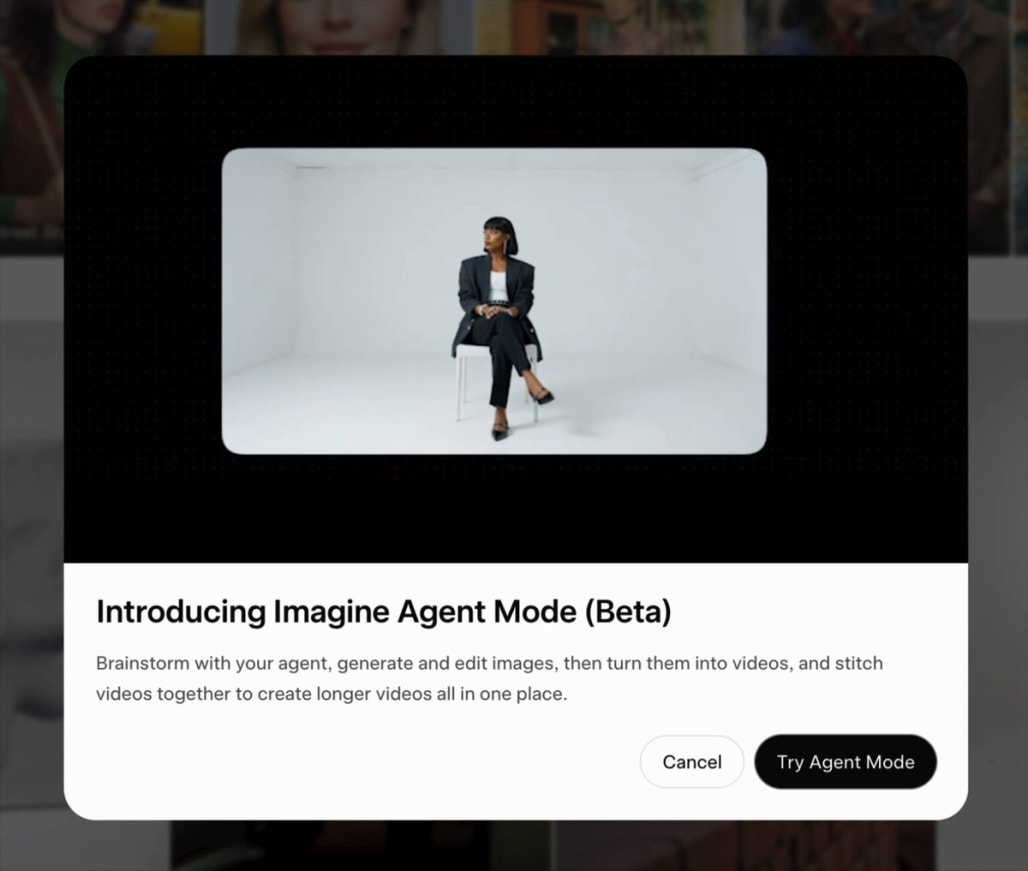
Exceptional AI content comes not from mastering one tool, but from orchestrating a workflow of specialized models for research, image generation, voice synthesis, and video creation. AI agent platforms automate this complex process, yielding results far beyond what a single tool can achieve.

Instead of relying solely on its proprietary model, Higgsfield integrates various leading AI models like Google's VO. This transforms the product from a single-point solution into a comprehensive workflow platform. Users can test different models in parallel, making Higgsfield the indispensable "AI video studio" rather than just another model to try.

The workflow of generating AI video scene-by-scene and stitching clips together is becoming obsolete. Newer models like Kling 3.0 can interpret multi-scene prompts, creating a single, continuous video with multiple shots. This drastically simplifies production and improves narrative coherence.
