Get your free personalized podcast brief
We scan new podcasts and send you the top 5 insights daily.
Black Forest Labs is developing multimodal models that understand and generate images, video, and audio while also predicting actions. This convergence means the same fundamental technology used as a creative tool for filmmaking can also be deployed as the 'brain' for a physical robot, unifying the digital and physical worlds under a single AI paradigm.

Related Insights
Human understanding is the ability to connect new information to a global, unified model of the universe. Until recently, AI models were isolated (e.g., a chess model). The major advance with large multimodal models is their ability to create a single, cohesive reality model, enabling true, generalizable understanding.

Google's NotebookLM now generates "cinematic video overviews," a leap beyond simple slideshows. By orchestrating its Gemini models to act as a "creative director" for narrative and style, Google is strategically demonstrating its leadership in multimodal AI with a practical, high-value application that differentiates it from competitors.

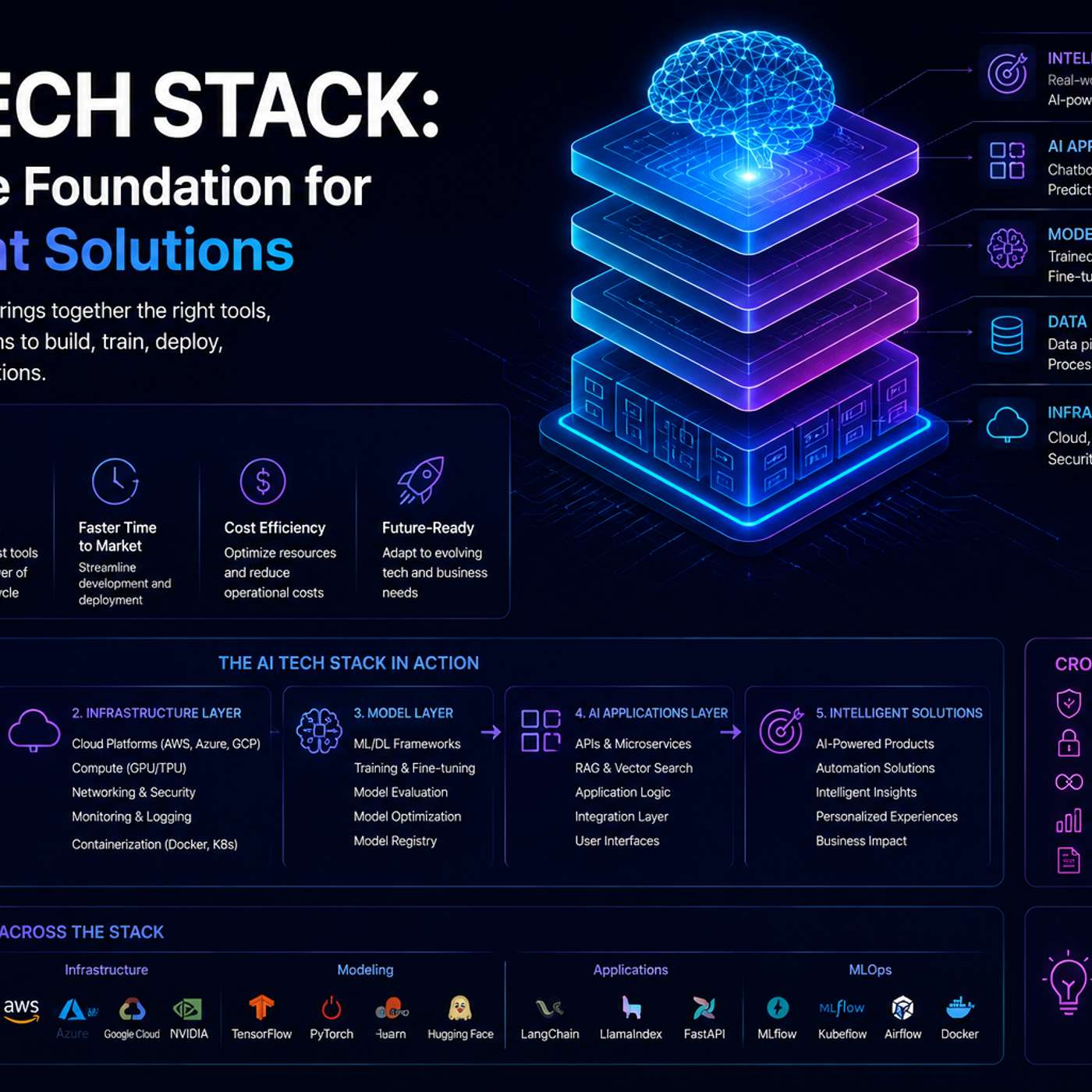
The next significant evolution in AI infrastructure is the shift to multimodal systems. Future tech stacks must move beyond single-modality paradigms (like text-only) to seamlessly handle and integrate text, images, audio, and video within a single, unified architecture.
The current focus on LLMs is a temporary phase. The true leap towards AGI will come from multi-sensory models that can process and integrate visual, auditory, and other data streams simultaneously, much like a human does. This moves AI from text generation to real-world understanding.

The future of creative AI is moving beyond simple text-to-X prompts. Labs are working to merge text, image, and video models into a single "mega-model" that can accept any combination of inputs (e.g., a video plus text) to generate a complex, edited output, unlocking new paradigms for design.

Large Language Models are limited because they lack an understanding of the physical world. The next evolution is 'World Models'—AI trained on real-world sensory data to understand physics, space, and context. This is the foundational technology required to unlock physical AI like advanced robotics.

The next frontier for visual intelligence is twofold: creating truly multimodal models that retain long-term context of user interactions without re-prompting, and developing real-time generation. Real-time capabilities are crucial for creating duplex interactions and enabling robots to perceive and act instantly.

The concept of a 'world model' is evolving from action-conditioned video predictors to single, multimodal models like Google's Omni. Omni demonstrates a deep, scalable understanding of the world, shown through nuanced video editing, representing a more practical approach than traditional, computationally expensive architectures.

For unpredictable situations where a robot has no prior training data (e.g., a "gas leak" sign), multimodal LLMs can provide the necessary world knowledge to reason and act appropriately. This solves the long-standing robotics problem of how to handle the long tail of real-world scenarios.
![Sergey Levine - Building LLMs for the Physical World - [Invest Like the Best, EP.465] thumbnail](https://megaphone.imgix.net/podcasts/fdcd4328-2c77-11f1-a72b-977309fd08f1/image/b1bb4368d6e13a4a804924681ffe3ab1.jpg?ixlib=rails-4.3.1&max-w=3000&max-h=3000&fit=crop&auto=format,compress)
Demis Hassabis sees video generation as more than a content tool; it's a step toward building AI with "world models." By learning to generate realistic scenes, these models develop an intuitive understanding of physics and causality, a foundational capability for AGI to perform long-term planning in the real world.
