Get your free personalized podcast brief
We scan new podcasts and send you the top 5 insights daily.
SpaceX measures the ratio of a part's market price to its raw materials' cost (the "idiot index"). A high ratio signals an opportunity for radical cost savings by building it in-house, dismantling supplier dependency and rethinking cost from first principles.

Related Insights
To accurately reduce cost of goods sold (COGS), analyze total cost, including assembly labor, not just individual component prices. A more expensive prefabricated part, like a $1,500 wiring harness, can slash total costs by eliminating $6,000 worth of manual labor time, but requires looking beyond departmental budgets.

SpaceX correctly bet customers valued low prices over customization. By creating a single standardized platform—the Falcon 9—they forced the entire satellite industry to design around their rocket's specs. This flipped the traditional power dynamic and unlocked automotive-scale manufacturing efficiencies.
Roelof Botha claims "cost is the secret of Silicon Valley." While product innovation gets the attention, relentless cost reduction is the bigger driver of success. It democratizes technology and provides a true competitive advantage, unlike simply lowering prices.

Tesla's most profound competitive advantage is not its products but its mastery of manufacturing processes. By designing and building its own production line machinery, the company achieves efficiencies and innovation cycles that competitors relying on third-party equipment cannot match. This philosophy creates a deeply defensible moat.

A key lesson from SpaceX is its aggressive design philosophy of questioning every requirement to delete parts and processes. Every component removed also removes a potential failure mode, simplifies the system, and speeds up assembly. This simple but powerful principle is core to building reliable and efficient hardware.

By taking apart an IBM PC as a teenager, Dell realized it was merely assembled from third-party parts. Calculating the component costs revealed IBM's massive markup, creating the market opening for a lower-cost, direct-to-consumer competitor. This highlights the power of first-principles analysis.

SpaceX's success isn't from one tactic but a reinforcing system. First principles identify waste in cost, vertical integration provides the control to eliminate it, and standardization creates the volume needed to make that control profitable. Removing any one part breaks the system.
Boom Supersonic accelerates development by manufacturing its own parts. This shrinks the iteration cycle for a component like a turbine blade from 6-9 months (via an external supplier) to just 24 hours. This rapid feedback loop liberates engineers from "analysis paralysis" and allows them to move faster.

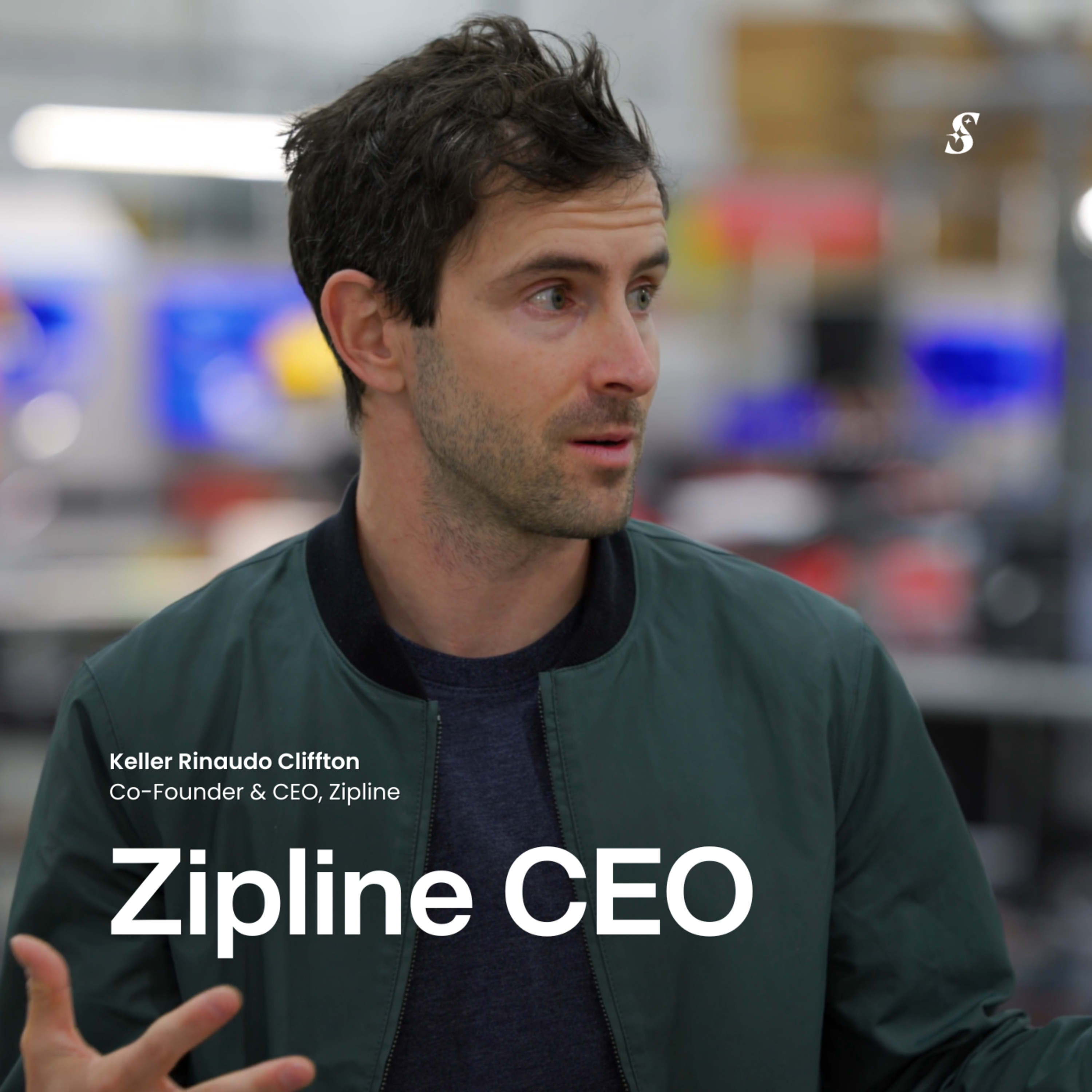
Zipline's 50% cost reduction for its next-gen aircraft wasn't just from supply chain optimization. The primary driver was a design philosophy focused on eliminating components entirely ("the best part is no part"), which also improves reliability.

Zipline had to build its own components because the market only offered two extremes: cheap, unreliable consumer drone parts or prohibitively expensive military-grade systems. This "automotive grade" gap for reliable, cost-effective components forced them to vertically integrate to achieve their performance and cost goals.