Get your free personalized podcast brief
We scan new podcasts and send you the top 5 insights daily.
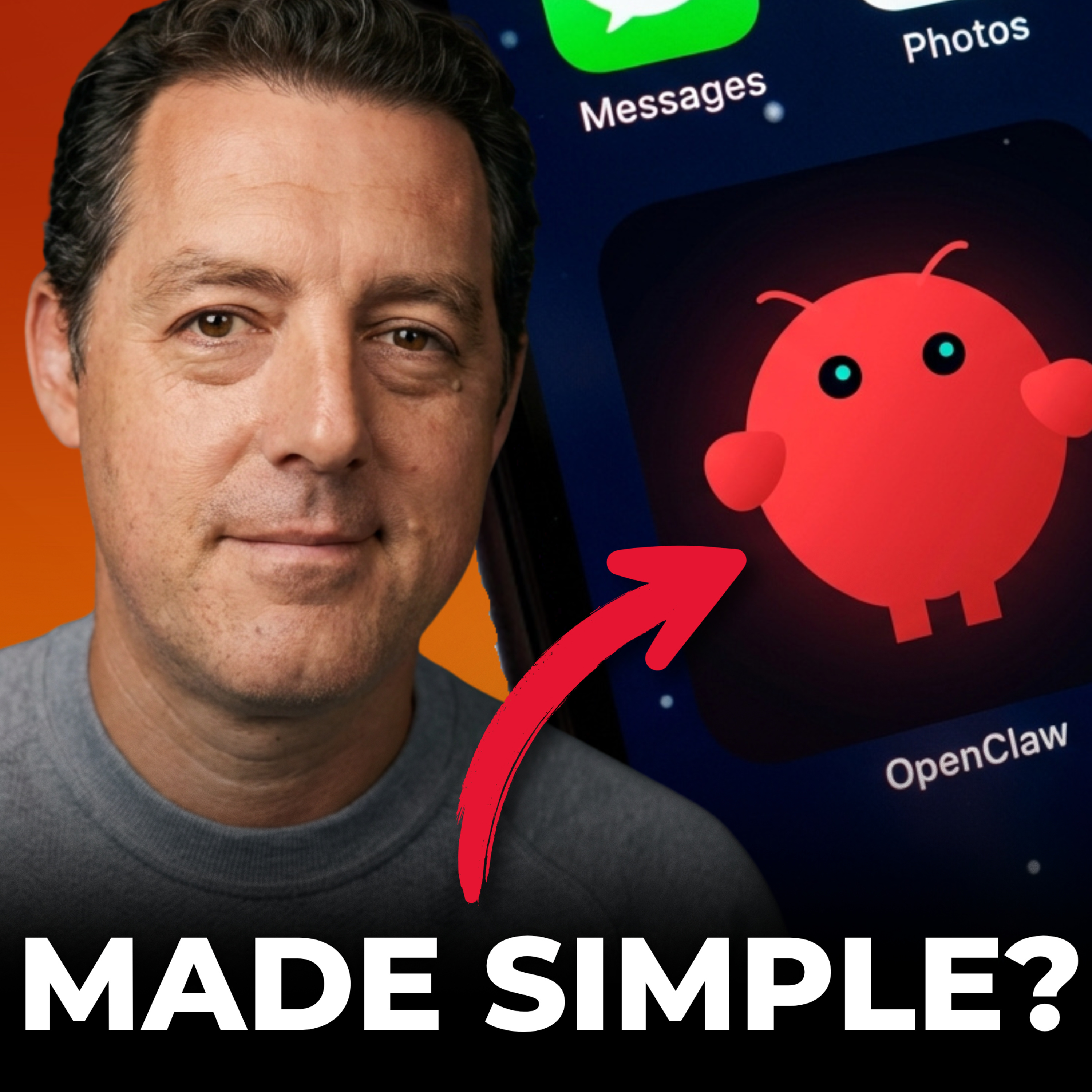
The most powerful applications for personal AI agents go beyond simple task automation. They involve managing and analyzing overwhelming personal data streams, such as tracking health inputs to diagnose issues or filtering the signal from the noise of constant notifications.
Related Insights
To discover high-value AI use cases, reframe the problem. Instead of thinking about features, ask, "If my user had a human assistant for this workflow, what tasks would they delegate?" This simple question uncovers powerful opportunities where agents can perform valuable jobs, shifting focus from technology to user value.
The real breakthrough in healthcare AI is not raw processing power but its ability to synthesize diverse, personal data streams like genomics, environment, and wearables. This 'contextual intelligence' allows for highly personalized insights, such as connecting a fever to recent travel to a malaria-prone region.

The highest immediate ROI from AI agents comes from creating a better user experience for managing personal tasks and information. The most-used agent was a simple, interactive to-do list, suggesting the power of agents as a superior personal UI is more valuable initially than complex system automation.

Context-aware personal agents will subsume the functions of many standalone apps, such as fitness or calorie trackers. An agent that already knows a user's location, schedule, and goals can perform these tasks more seamlessly, reducing many current apps to mere APIs for the agent to consume.

The next wave of consumer AI will shift from individual productivity to fostering connectivity. AI agents will facilitate interactions between people, helping them understand each other better and addressing the core human need to 'be seen,' creating new social dynamics.

The killer feature for AI assistants isn't just answering abstract queries, but deeply integrating with user data. The ability for Gemini to analyze your unread emails to identify patterns and suggest improvements provides immediate, tangible value, showcasing the advantage of AI embedded in existing productivity ecosystems.

The most powerful consumer AI applications solve tangible human problems. Startups like Real Roots (building friendships) and Sunflower (addiction recovery) use AI not as the end product, but as a powerful matching and support engine to drive meaningful, real-world outcomes and connections offline.

The value of a personal AI coach isn't just tracking workouts, but aggregating and interpreting disparate data types—from medical imaging and lab results to wearable data and nutrition plans—that human experts often struggle to connect.
While work productivity has been AI's focus, apps like Fia signal a shift. 'Butlerfication' is using AI to save time and money on personal tasks like shopping, making the efficiency once reserved for the ultra-wealthy accessible to everyone.

Generic AI tools provide generic results. To make an AI agent truly useful, actively customize it by feeding it your personal information, customer data, and writing style. This training transforms it from a simple tool into a powerful, personalized assistant that understands your specific context and needs.
