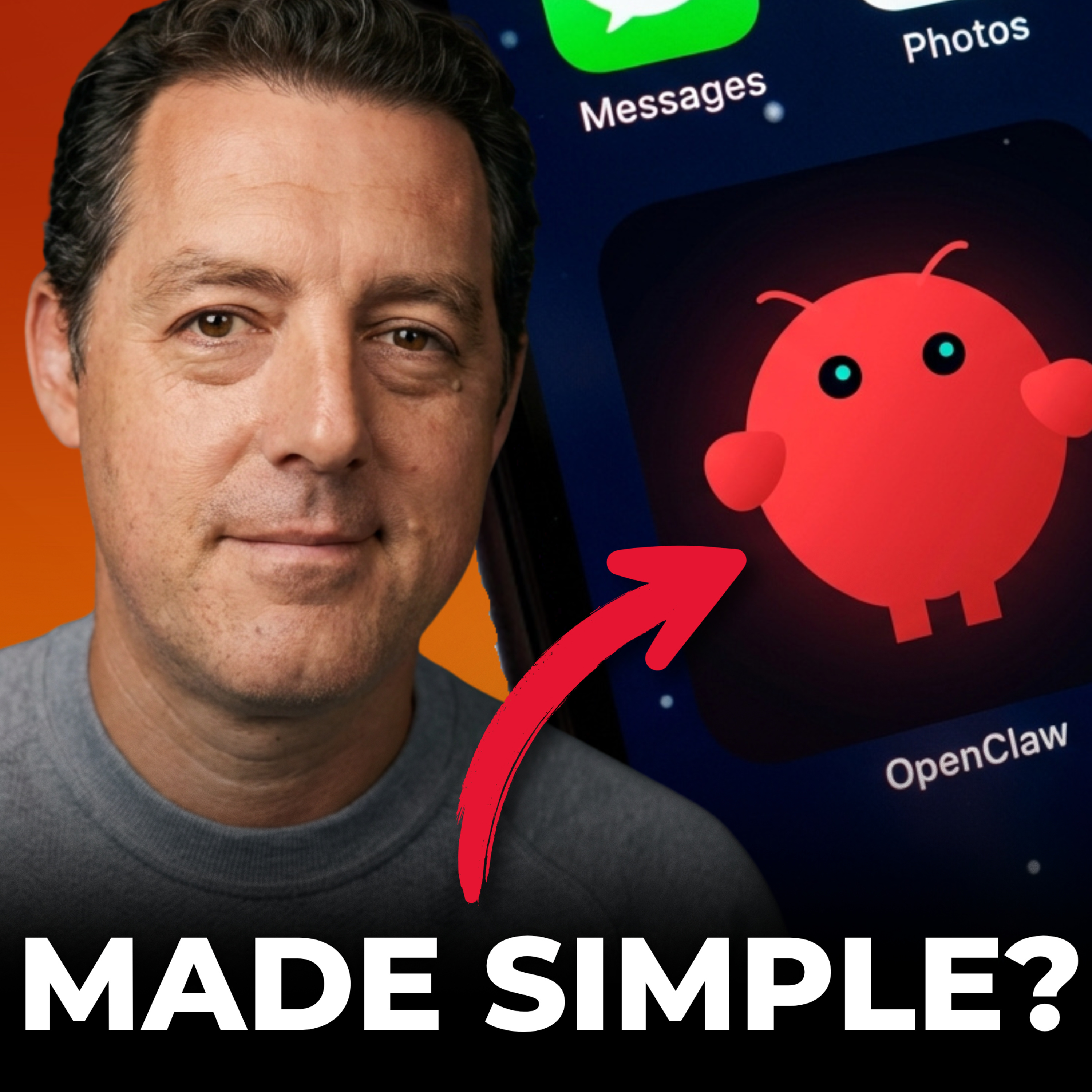
Anthropic's policy preventing users from leveraging their Pro/Max subscriptions for external tools like OpenClaw is seen as a 'fumble.' It creates a 'sour taste' for the community of builders and early adopters who are not only driving usage and paying more because of these tools, but also providing crucial feedback and stress-testing the models.
Agentic frameworks like OpenClaw are pioneering a new software paradigm where 'skills' act as lightweight replacements for entire applications. These skills are essentially instruction manuals or recipes in simple markdown files, combining natural language prompts with calls to deterministic code ('tools'), condensing complex functionality into a tiny, efficient format.
Despite massive context windows in new models, AI agents still suffer from a form of 'memory leak' where accuracy degrades and irrelevant information from past interactions bleeds into current tasks. Power users manually delete old conversations to maintain performance, suggesting the issue is a core architectural challenge, not just a matter of context size.
The excitement around tools like OpenClaw stems from their ability to empower non-programmers to create custom software and workflows. This replicates the feeling of creative power previously exclusive to developers, unlocking a long tail of niche, personalized applications for small businesses and individuals who could never build them before.
The most powerful applications for personal AI agents go beyond simple task automation. They involve managing and analyzing overwhelming personal data streams, such as tracking health inputs to diagnose issues or filtering the signal from the noise of constant notifications.
A significant security paradox exists where technical users immediately flag agentic AI as too risky for corporate environments due to its large attack surface. However, these same users are comfortable experimenting with their own personal data, revealing a clear divide in risk tolerance between professional and personal contexts.
Power users of AI agents believe the ideal user interface is not graphical but conversational. They prefer text-based interactions within existing chat apps and see voice as the ultimate endgame. The goal is an invisible assistant that operates autonomously and only prompts for input when absolutely necessary, making traditional UIs feel like friction.
The primary hurdle for potential AI agent users isn't the technical setup; it's the inability to imagine what to do with the tool. Even technically proficient individuals get stuck on the "what can I do with this?" question, indicating that mainstream adoption requires clear, relatable examples and blueprints, not just easier installation.
While a multi-model approach—using the best AI for each specific task—is theoretically optimal, its practical implementation is difficult. A major roadblock is the need to create and maintain different optimized prompts for each model. This overhead leads users to default to a single, powerful model for simplicity.
The safest and most practical hardware for running a personal AI agent is not a new, expensive device like a Mac Mini or Raspberry Pi. Instead, experts recommend wiping an old, unused computer and dedicating it solely to the agent. This minimizes security risks by isolating the system and is more cost-effective.