Get your free personalized podcast brief
We scan new podcasts and send you the top 5 insights daily.
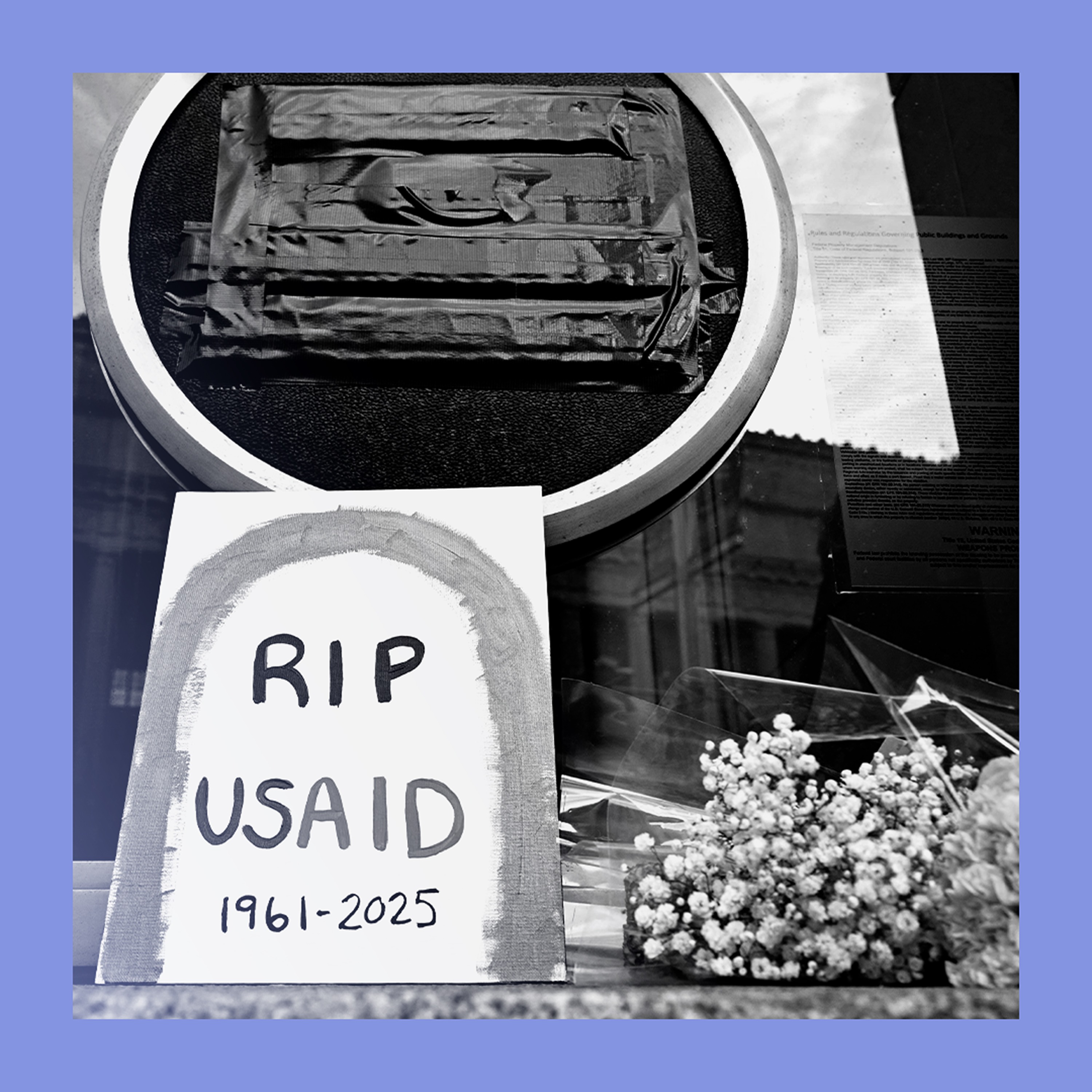
Myanmar's revolutionary forces were gaining until two external factors reversed their momentum. China cut supply lines to ethnic armed groups it previously backed, and the closure of USAID forced rebels to divert 60% of their military budget to humanitarian aid, enabling a junta comeback.

Related Insights
Observing the USSR's fall, the Chinese Communist Party drew key lessons to ensure its survival: use overwhelming force against dissent, prioritize the Party's power monopoly even at the cost of economic efficiency, and aggressively assimilate ethnic minorities to prevent separatism.

The widely condemned election is not for public legitimacy but serves as a potential internal political mechanism. Many in the military brass consider their leader, Min Aung Hlaing, to be inept and may use the election's outcome as a pretext to displace him and install new leadership.
Widespread suffering alone doesn't trigger a revolution. Historically, successful uprisings require a politically savvy, well-organized group with a clear agenda and influential leadership. Disparate and unorganized populations, no matter how desperate, tend to see their energy dissipate without causing systemic change.

The shift to a less adversarial China policy may be a strategic maneuver to avoid supply chain disruptions. The U.S. appears to be biding its time—likely for 5+ years—to wean itself off dependence on Chinese rare earth minerals, which are critical for both industry and defense manufacturing.

Despite dismantling traditional aid programs to save taxpayer money, Trump's new strategy of bailing out allies, countering China, and securing supply chains is projected to be incredibly expensive. This new approach of weaponized aid could ultimately exceed previous USAID spending levels, contradicting its cost-saving premise.
The US assumes its democratic values create a trust advantage. However, unpredictable actions, like threatening to cut off tech access to partners, undermine this trust and create an opening for China. China is exploiting this by positioning itself as a more reliable, if not more ideologically aligned, long-term supplier, especially in the Global South.

The military regime uses a counter-intuitive two-pronged strategy. It sends waves of poorly trained conscripts as cannon fodder to exhaust rebel ammunition, a primitive tactic. Simultaneously, it employs advanced Chinese UAVs and motorized paragliders to terrorize civilian areas, a modern innovation.
The loss of US aid didn't just defund specific projects; it dismantled an entire operational 'architecture.' The collapse of shared resources, like UN-funded logistics and transportation, created cascading failures across the sector, showing how the entire humanitarian value chain can depend on a single keystone funder.
A CIA task force analyzed 38 variables to predict political instability, including common assumptions like poverty and inequality. They found only two were highly predictive: 1) a country being a partial democracy, or “anocracy,” and 2) its political parties organizing around identity (race, religion) rather than ideology.

The recent uptick in global conflicts, from Ukraine to the Caribbean, is not a series of isolated events. It's a direct result of adversaries perceiving American weakness and acting on the historical principle that nations expand their influence until they are met with sufficient counter-force.
