Get your free personalized podcast brief
We scan new podcasts and send you the top 5 insights daily.
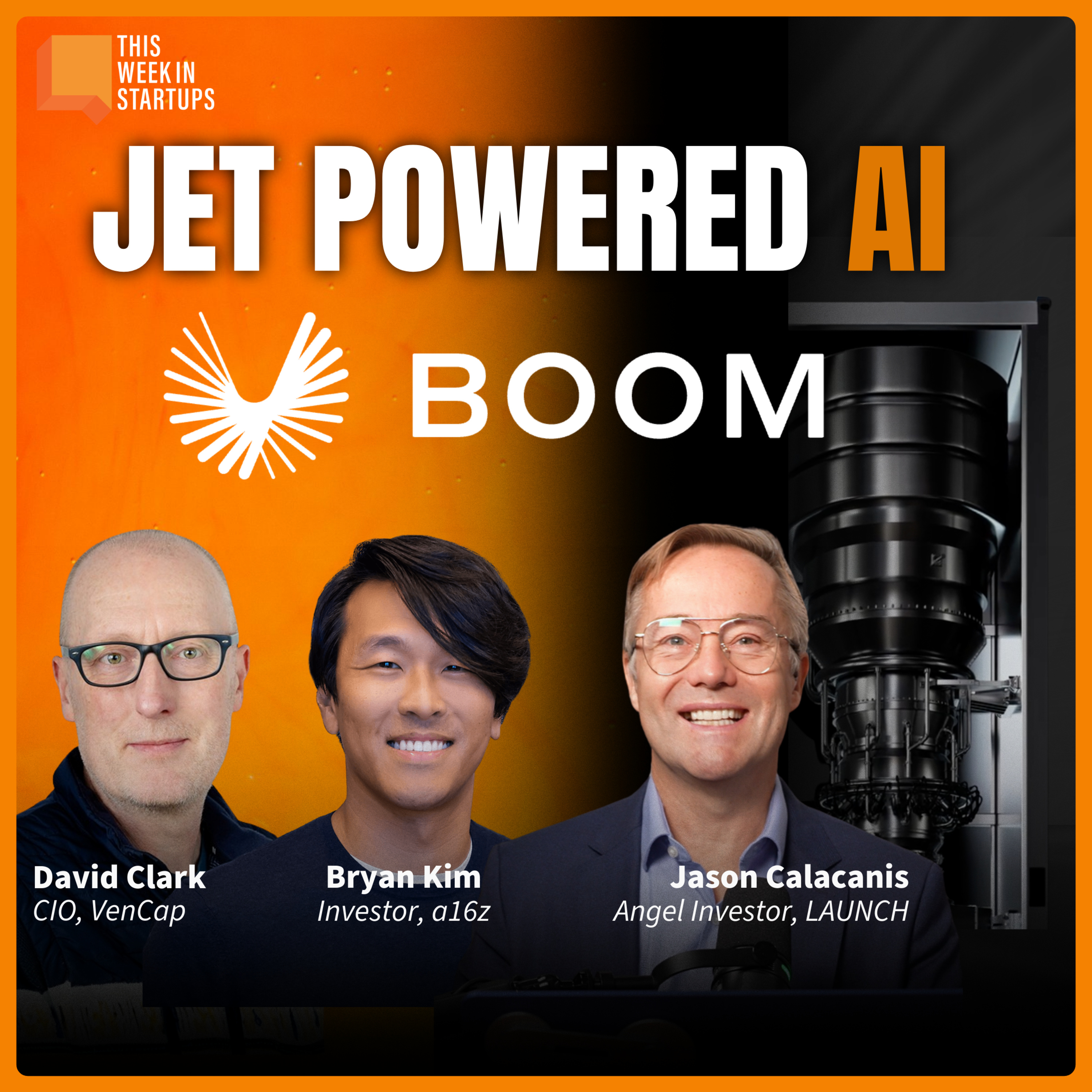
Boom Supersonic is adapting its proprietary jet engine, originally for supersonic flight, into "SuperPower" ground turbines for AI data centers. This strategic move provides a path to profitability years sooner, generating the massive capital required to complete its Overture passenger airliner project.

Related Insights
The capital expenditure for AI infrastructure mirrors massive industrial projects like LNG terminals, not typical tech spending. This involves the same industrial suppliers who benefited from previous government initiatives and were later sold off by investors, creating a fresh opportunity as they are now central to the AI buildout.

Musk's long-standing resistance to a SpaceX IPO has shifted due to the rise of AI. The massive capital raise is primarily aimed at establishing a network of space-based data centers, a strategic convergence of his space and AI ventures, rather than solely funding Mars colonization.
To overcome energy bottlenecks, political opposition, and grid reliability issues, AI data center developers are building their own dedicated, 'behind-the-meter' power plants. This strategy, typically using natural gas, ensures a stable power supply for their massive operations without relying on the public grid.
While AI models and coding agents scale to $100M+ revenues quickly, the truly exponential growth is in the hardware ecosystem. Companies in optical interconnects, cooling, and power are scaling from zero to billions in revenue in under two years, driven by massive demand from hyperscalers building AI infrastructure.

xAI's 500-megawatt data center in Saudi Arabia likely isn't just for running its own models. It's a strategic move for Musk to enter the lucrative data center market, leveraging his expertise in large-scale infrastructure and capitalizing on cheap, co-located energy sources.

Boom Supersonic accelerates development by manufacturing its own parts. This shrinks the iteration cycle for a component like a turbine blade from 6-9 months (via an external supplier) to just 24 hours. This rapid feedback loop liberates engineers from "analysis paralysis" and allows them to move faster.
Boom Supersonic's move to power data centers with its engines isn't a failure, but a strategic way to fund its capital-intensive vision. This mirrors early Tesla's survival tactic of doing contract engineering for other automakers. Such projects can be a crucial source of non-dilutive capital for deep tech companies.
The massive physical infrastructure required for AI data centers, including their own power plants, is creating a windfall for traditional industrial equipment manufacturers. These companies supply essential components like natural gas turbines, which are currently in short supply, making them key beneficiaries of the AI boom.
The astronomical power and cooling needs of AI are pushing major players like SpaceX, Amazon, and Google toward space-based data centers. These leverage constant, intense solar power and near-absolute zero temperatures for cooling, solving the biggest physical limitations of scaling AI on Earth.
The extreme 65x revenue multiple for SpaceX's IPO isn't based on traditional aerospace. Investors are pricing in its potential to build the next generation of AI infrastructure, leveraging the fact that lasers transmit data fastest through the vacuum of space, making it the ultimate frontier for data centers.
